Socio Today
Israeli Prime Minister Benjamin Netanyahu is scheduled to engage in high-level diplomatic discussions with Lebanese President Joseph Aoun on Thursday, April 16, 2026, marking a significant and potentially transformative shift in the volatile relationship between the two neighboring states. This planned interaction represents the first direct communication between the top leaders of Israel and Lebanon in over three decades, coming at a time of intense regional conflict and heightened international diplomatic pressure. The announcement, which has sent ripples through the geopolitical landscape of the Middle East, was first confirmed by Israeli officials following preliminary reports from international mediators.
Gila Gamliel, Israel’s Minister of Innovation, Science, and Technology and a prominent member of Netanyahu’s Likud Party, provided the first official confirmation from the Israeli side during a broadcast on Israeli Army Radio. Gamliel characterized the upcoming dialogue as a "historic step," noting that it follows years of total diplomatic silence and severed communication channels between Tel Aviv and Beirut. According to Gamliel, the primary objective of this engagement is to transition from a strategy of mere deterrence to a more permanent resolution of threats, specifically targeting the influence of the Iranian-backed militant group Hezbollah, while simultaneously offering a path toward prosperity for the Lebanese state.
The Catalyst for Dialogue: International Mediation and Recent Escalations
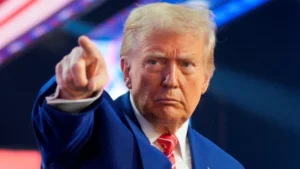
The impetus for this sudden diplomatic opening appears to be rooted in a combination of military exhaustion and aggressive mediation by the United States. U.S. President Donald Trump initially broke the news of the meeting via his Truth Social platform, stating that the leaders of Israel and Lebanon would speak on Thursday for the first time in 34 years. This timeline traces back to the early 1990s, an era defined by the aftermath of the Lebanese Civil War and the 1991 Madrid Conference, which sought to establish a framework for peace in the region.
The diplomatic breakthrough follows a rare and clandestine meeting held in Washington, D.C., on Tuesday, April 14, 2026. During that session, the Israeli and Lebanese ambassadors to the United States met face-to-face to lay the groundwork for direct negotiations. This encounter was the first of its kind between senior officials of the two nations since 1993. While the specifics of the Washington meeting remained largely confidential, it is understood that the primary focus was the establishment of a framework for a sustained ceasefire and the eventual demarcation of disputed land borders.
Chronology of the 2026 Conflict
The current push for diplomacy emerges from the shadows of a brutal conflict that erupted earlier this year. On March 2, 2026, the long-standing tensions between Israel and Hezbollah escalated into full-scale warfare. Hezbollah, operating from its strongholds in Lebanon and receiving significant support from Tehran, launched a series of sophisticated strikes against northern Israeli territories. This prompted a massive military response from the Israel Defense Forces (IDF), which initiated "Operation Northern Shield" (or similar strategic offensives) to neutralize the threat.
Since the onset of hostilities in March, the humanitarian and physical toll has been catastrophic:
- Casualties: More than 2,000 individuals have been reported killed in Lebanon due to a relentless campaign of Israeli airstrikes targeting Hezbollah infrastructure, command centers, and weapons caches.
- Displacement: The conflict has triggered a massive internal migration crisis, with over one million Lebanese citizens displaced from their homes, particularly in the southern regions and the Beqaa Valley.
- Ground Incursion: Tel Aviv took the significant step of deploying ground troops into southern Lebanon, establishing a buffer zone to prevent cross-border raids and rocket fire, a move that drew widespread international condemnation and calls for an immediate withdrawal.
Conflicting Stances and Official Responses
Despite the optimism expressed by Israeli officials, the response from Beirut has been characterized by caution and a degree of internal contradiction. While the Israeli government has been vocal about the upcoming call, Lebanese authorities have maintained a more guarded posture. Official sources within the Lebanese government initially told reporters that they were unaware of any planned direct contact and had not received formal notification through established diplomatic channels.
However, President Joseph Aoun issued a statement on Thursday that, while not explicitly confirming the call with Netanyahu, underscored Lebanon’s prerequisites for any negotiation. President Aoun emphasized that a comprehensive ceasefire is the "natural starting point" for direct talks. Lebanon’s position remains firm: diplomatic engagement cannot proceed effectively while Israeli jets continue to patrol Lebanese airspace and ground forces remain on Lebanese soil.
In contrast, Prime Minister Netanyahu has outlined a more assertive set of objectives. From the Israeli perspective, the dialogue is not merely about stopping the fire but about fundamentally altering the security architecture of the border. Netanyahu has stated that Israel’s goals are twofold: the total dissolution of Hezbollah’s military capabilities and the achievement of a "peace through strength." This indicates that Israel is unlikely to agree to a ceasefire without significant concessions regarding Hezbollah’s presence south of the Litani River.
The Role of Hezbollah and the Iranian Factor
A central challenge to the success of any Netanyahu-Aoun dialogue is the domestic political reality within Lebanon. Hezbollah is not only a military force but also a significant political entity with deep roots in the Lebanese government and society. The group’s Secretary-General has historically rejected direct negotiations with the "Zionist entity," viewing such moves as a betrayal of the resistance.
The Israeli government, through Minister Gamliel, has made it clear that the current military and diplomatic strategy is aimed at "eradicating every potential threat" posed by Hezbollah. This hardline stance suggests that Israel views President Aoun as a potential partner who might be leveraged to marginalize Hezbollah, though analysts remain skeptical about Aoun’s ability to deliver such a result without triggering a new internal conflict within Lebanon.
Furthermore, the regional influence of Iran cannot be overlooked. Tehran views Lebanon as a vital frontline in its "Axis of Resistance." Any move toward a bilateral peace or a formal ceasefire between Beirut and Tel Aviv would represent a significant strategic blow to Iranian interests in the Levant.
Humanitarian and Economic Implications
Beyond the military and political maneuvers, the potential for dialogue offers a glimmer of hope for a Lebanese economy that has been in a state of freefall for years. The 2026 conflict exacerbated an already dire situation, destroying critical infrastructure, including bridges, power plants, and telecommunications hubs.
Minister Gamliel alluded to this in her statement, suggesting that a successful dialogue would "ultimately bring prosperity and progress to Lebanon as a country." For Lebanon, a cessation of hostilities and a move toward normalized border relations could reopen vital trade routes and encourage the return of international investment, particularly in the offshore energy sector, which was partially settled by a maritime border deal in 2022 but has since been stalled by the war.
Analysis of Potential Outcomes
As the world watches the scheduled events of April 16, several scenarios emerge:
- The Tactical Pause: The dialogue may result in a temporary "humanitarian pause," allowing for the delivery of aid and the exchange of prisoners, without addressing the underlying structural issues of Hezbollah’s disarmament.
- The Diplomatic Deadlock: Given the starkly different prerequisites—Lebanon demanding a ceasefire first and Israel demanding Hezbollah’s dissolution first—the talks could collapse before they begin, leading to a renewed intensification of the conflict.
- The Historic Realignment: In the most optimistic scenario, the involvement of the United States could facilitate a multi-stage roadmap. This would likely involve the withdrawal of Israeli forces in exchange for the deployment of the Lebanese Armed Forces (LAF) and an expanded UNIFIL mandate in the south, effectively pushing Hezbollah back from the border.
The international community, including the United Nations and the European Union, has expressed a cautious welcome to the news of the dialogue. A spokesperson for the UN Secretary-General noted that "any direct communication between the parties is a positive step toward de-escalation," while urging both sides to exercise maximum restraint.
As Thursday progresses, the eyes of the Middle East remain fixed on the communication lines between Tel Aviv and Beirut. Whether this dialogue serves as the foundation for a lasting peace or merely a brief intermission in a long-standing tragedy remains to be seen. What is certain, however, is that the stakes have never been higher for the millions of civilians caught in the crossfire of this decades-old rivalry.