Socio Today
The pursuit of youthful, resilient skin has driven the cosmetics and dermatology industries for decades, prompting endless debates over topical treatments, advanced serums, and lifestyle interventions. Among the more intriguing concepts gaining traction in modern wellness discussions is the idea of "happy cells"—a metaphorical term often invoked to explore whether positive emotional states and mental well-being can actively protect the skin, mitigate the physiological impacts of stress, and promote long-term skin longevity. While the notion that happiness alone can keep wrinkles at bay is an oversimplification, contemporary dermatological science increasingly points to a complex, bidirectional communication pathway between the human brain, the endocrine system, and cutaneous health.
To understand the intersection of psychological health and dermatology, researchers are examining how emotional states influence the body’s physical resilience. Although phrases like "happy cells" are helpful metaphors rather than precise biological classifications, they open the door to serious scientific inquiry into how mental stress disrupts skin barrier recovery and how positive emotional coping mechanisms might help buffer these adverse effects.
Empirical Evidence: Human Studies on Stress and Skin Barrier Recovery
Scientific investigations into the relationship between psychological states and skin function have yielded compelling, albeit nuanced, insights. In a prominent clinical study involving 60 healthy young adults, researchers utilized a controlled procedure known as tape-stripping to temporarily disrupt the stratum corneum—the outermost protective barrier of the skin. Following this controlled micro-trauma, participants were subjected to either brief psychological stressors or neutral control conditions.
The results of the study revealed a notable correlation: individuals who reported higher levels of positive affect or demonstrated stronger positive moods during the testing period exhibited accelerated recovery rates of the epidermal skin barrier, particularly when navigating stressful circumstances. This finding suggests that psychological resilience and positive emotional framing may directly or indirectly modulate the skin’s capacity to withstand environmental and mechanical insults and efficiently repair its protective functions.
Conversely, extensive broader medical literature corroborates the inverse phenomenon: chronic psychological distress, anxiety, and elevated cortisol levels are frequently associated with delayed wound healing, exacerbated inflammatory skin conditions such as eczema and psoriasis, and impaired tissue regeneration. However, scientists urge caution when interpreting these findings. The aforementioned human studies did not directly measure microscopic markers of aging, such as collagen degradation, biological skin age, changes in cellular Sirtuin activity, or the accumulation of senescent cells. Therefore, while empirical data supports a tangible link between mental state and acute tissue recovery, it does not yet definitively prove that sustained happiness can fundamentally extend the lifespan of skin cells or halt the intrinsic biological aging process.
The Biological Mechanism: Why and How Stress Impacts the Integumentary System
To comprehend why emotional and psychological states manifest physically on the skin’s surface, one must examine the intricate physiological networks connecting the central nervous system, the endocrine system, and the immune system. When an individual experiences prolonged or unmanaged stress, the body activates the hypothalamic-pituitary-adrenal (HPA) axis, triggering the release of stress hormones such as cortisol and adrenaline.
If these stress responses remain chronically elevated without adequate rest and recovery periods, they can instigate systemic low-grade inflammation, disrupt normal sleep architecture, alter behavioral habits, and hinder the body’s natural cellular repair mechanisms. The skin, as the body’s largest organ and a primary immunological interface, is acutely sensitive to these systemic fluctuations. Hormonal imbalances and immune suppression can compromise the epidermal barrier, diminish microcirculation, and reduce the skin’s ability to bounce back from environmental stressors, ultraviolet (UV) radiation, and physical trauma.

Dermatologists emphasize that psychological well-being is merely one piece of a much larger puzzle. Skin health is ultimately governed by a multifactorial matrix that includes chronological age, cumulative UV exposure, underlying systemic diseases, pharmacological treatments, nutritional intake, daily hygiene and skincare habits, and environmental pollution. Consequently, emotional positivity should be viewed as a vital component of holistic bodily health rather than a standalone pharmaceutical remedy for dermatological aging.
The Molecular Frontier: Exploring Sirtuins and Cellular Senescence
In the quest to understand skin longevity at a microscopic level, researchers have increasingly turned their attention to Sirtuins—a family of evolutionarily conserved proteins that regulate critical cellular pathways, including energy metabolism, DNA repair, and responses to oxidative stress. Among these, SIRT1 has emerged as a primary focus of scientific inquiry due to its putative role in defending skin cells against oxidative damage, supporting tissue repair, and modulating cellular aging.
Fibroblasts, specialized cells residing within the dermis, are largely responsible for synthesizing and maintaining extracellular matrix proteins, particularly collagen and elastin, which provide the skin with structural integrity, firmness, and elasticity. Laboratory studies indicate that Sirtuins play a pivotal role in preserving fibroblast function and helping these cells cope with biological stressors. Furthermore, in vitro experiments have demonstrated fluctuating Sirtuin levels in fibroblasts subjected to oxidative stress or cellular senescence—a state in which cells permanently cease division while remaining metabolically active and secreting pro-inflammatory factors.
Despite these fascinating discoveries in cellular biology, a significant gap remains between laboratory findings and clinical reality. To date, there is a lack of direct clinical evidence proving that experiencing positive emotions or psychological happiness directly upregulates SIRT1 expression in human skin tissue. While mental wellness, molecular biology, and cellular preservation are interconnected facets of human physiology, science has yet to establish a direct causal chain where joy activates Sirtuins to actively reverse or prevent cellular skin aging.
Distinguishing Barrier Recovery from Cellular Senescence Reversal
A common misconception in consumer skincare discourse is the conflation of temporary skin recovery with the permanent reversal of biological aging. It is crucial to draw a sharp methodological and physiological distinction between epidermal barrier recovery and the mitigation of cellular senescence.
Epidermal barrier recovery refers to the rapid restoration of the skin’s moisture retention and protective shielding capabilities following minor irritations, chemical peels, or physical disruptions. Cellular senescence, on the other hand, represents a deep-seated, irreversible arrest of the cell cycle driven by telomere attrition, DNA damage, or chronic oxidative stress.
While targeted skincare regimens, hydration, and positive lifestyle interventions can significantly enhance barrier function and improve the immediate tactile texture and appearance of the skin, these improvements do not automatically translate to a reduction in biological skin age or a decrease in the number of senescent cells. Consequently, experts advocate for evaluating skin recovery, wound healing, collagen quality, Sirtuin expression, and cellular senescence as distinct, independently measured biological parameters.
Actionable Habits for Supporting Long-Term Skin Longevity
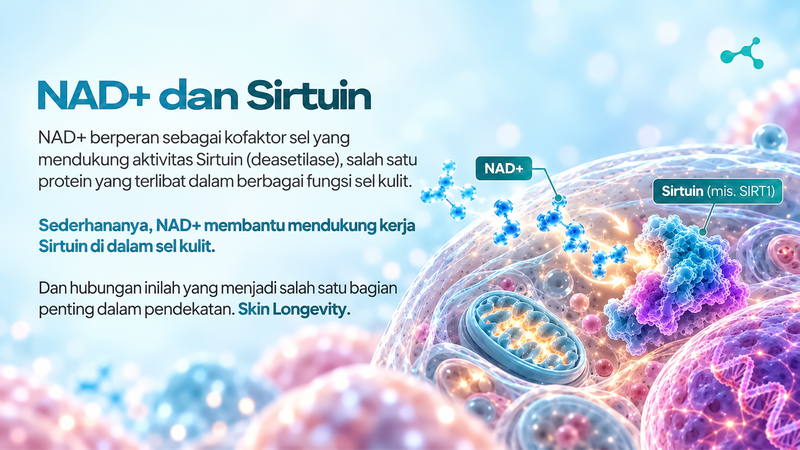
While the direct causal pathways connecting emotional state, molecular Sirtuin activation, and senescence inhibition continue to be explored through ongoing clinical research, dermatologists and wellness experts emphasize that foundational lifestyle habits remain the most reliable strategy for supporting skin health and overall longevity.
Drawing from comprehensive health frameworks—such as the integrated "FOURGENIC" approach pioneered by wellness advocates like Dr. Dedy Chandra—maintaining resilient skin requires a harmonious combination of four core pillars: Healthy Life, Proper Nutrition, Eligible Skincare, and Targeted Treatments.
- Healthy Life: Prioritizing restorative, consistent sleep and effective stress-management techniques helps regulate cortisol levels, mitigating the systemic inflammation that accelerates skin degradation. Regular physical activity further enhances systemic circulation, delivering essential oxygen and nutrients to cutaneous tissues.
- Nutrition: Adopting a balanced diet rich in antioxidants, essential fatty acids, vitamins, and minerals provides the biochemical building blocks necessary for cellular repair, collagen synthesis, and defense against oxidative stress.
- Eligible Skincare: Selecting evidence-based topical products tailored to an individual’s specific skin type and barrier requirements ensures daily protection against UV radiation, pollution, and moisture loss.
- Professional Treatments: Integrating medical-grade aesthetic treatments and clinical consultations under the guidance of licensed dermatologists allows for proactive monitoring and personalized intervention as the skin’s needs evolve over time.
Future Directions in Dermatological and Psychological Research
As the scientific community continues to explore the intricate connections between mind and body, future research endeavors must adopt multidisciplinary methodologies. Upcoming clinical studies are expected to simultaneously evaluate psychological parameters—such as stress scores, coping mechanisms, and sleep quality—alongside objective dermatological markers, including skin barrier recovery rates, oxidative stress biomarkers, Sirtuin activity levels, and cellular senescence indicators. Furthermore, robust longitudinal studies will be essential to determine whether sustained psychological well-being yields long-term, measurable preservation of skin architecture and biological youthfulness.
Until such definitive long-term data becomes universally established, the concept of "happy cells" remains a captivating metaphor that highlights the profound connection between mental health and physical vitality, rather than an absolute medical guarantee that positive thinking alone can halt the aging process.
Practical Steps for Advanced Skin Longevity
For individuals observing early signs of aging—such as fine lines, a loss of firmness, or diminished skin elasticity—taking a proactive, scientifically grounded approach is the most effective path forward. Modern aesthetic clinics are increasingly offering specialized therapeutic interventions designed to complement daily routines and support cellular-level skin health.
Among the emerging options in clinical dermatology are advanced treatments focusing on metabolic and cellular cofactors, such as the Glow Sirtuin NAD protocols offered by specialized centers like DL Beauty Clinic. These treatments are formulated to support cellular energy production and tissue vitality. Professional practitioners typically begin with a comprehensive clinical evaluation to assess individual skin conditions, barrier integrity, and aging markers, ensuring that patients receive a customized care plan tailored to their unique physiological profile.
By bridging the gap between healthy daily habits, evidence-based skincare, professional medical guidance, and a balanced mental outlook, individuals can cultivate a comprehensive, sustainable approach to skin longevity that honors both the science of dermatology and the holistic needs of the human body.