 Socio Today
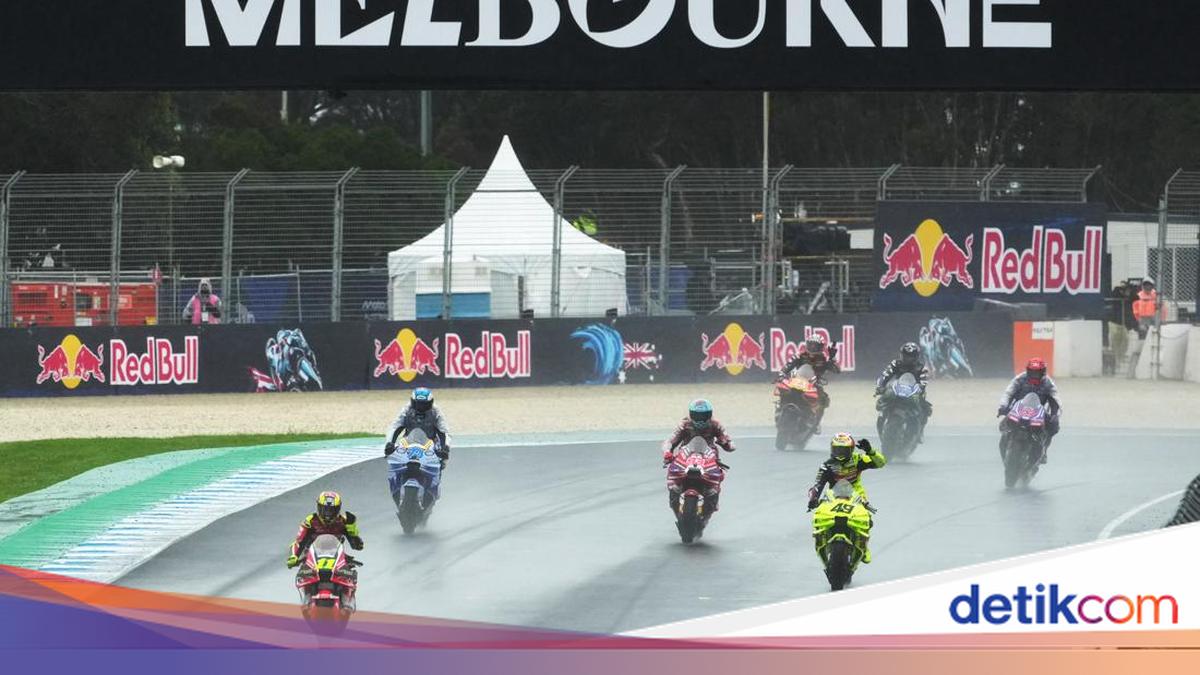
The 2026 MotoGP Australian Grand Prix at the historic Phillip Island Grand Prix Circuit has been officially cancelled following severe and unpredictable weather conditions that rendered medical helicopters entirely non-operational. The eleventh-hour decision, announced by race direction after extensive consultations with safety officers, teams, and track officials, prioritizes rider safety above all else. This dramatic development brings an abrupt and bittersweet conclusion to the premier class’s long-standing tenure at the coastal Victorian circuit, which is scheduled to relinquish its hosting rights to the Adelaide Street Circuit beginning in the 2027 season.
The cancellation affects the premier class main race, leaving teams, riders, and tens of thousands of international and domestic racing fans deeply disappointed. However, the prevailing sentiment within the paddock, spearheaded by high-ranking team executives such as Ducati Team Manager Davide Tardozzi, is one of strict adherence to mandatory safety protocols. Without guaranteed air medical evacuation pathways, race officials determined that proceeding with the high-speed competition would introduce an unacceptable level of risk to the competing athletes.
Unforeseen Fog and the Critical Role of Medical Evacuation
According to reports from paddock insiders and motorsport publication GPOne, the primary catalyst for the cancellation was not heavy rainfall or high-velocity winds typically associated with Phillip Island’s coastal microclimate, but rather an unexpected and dense fog rolling in from the broader Melbourne region. This meteorological anomaly severely restricted visibility, preventing medical evacuation helicopters from safely navigating the airspace between the circuit and regional trauma hospitals.
In modern Grand Prix motorcycle racing, the presence of a fully operational medical helicopter is a non-negotiable prerequisite for any track session to commence. Dorna Sports, the International Motorcycling Federation (FIM), and race direction operate under strict safety guidelines stipulating that if an injured rider requires rapid transport to a specialized medical facility and air support is unavailable due to weather, the race must be halted or delayed. Despite meteorologists initially projecting manageable weather windows, the unforecasted fog created a logistical impasse that could not be resolved within the permitted timetable.
Ducati Team Manager Davide Tardozzi was quick to emphasize that the decision, while disappointing from a sporting and championship perspective, was unequivocally the correct one. Speaking to media outlets in the paddock, Tardozzi stressed that rider safety remains the paramount pillar of Grand Prix racing, superseding championship points, manufacturer titles, and commercial television schedules.
"Keselamatan pebalap adalah yang utama, itu selalu menjadi syarat pertama," Tardozzi stated, reinforcing his perspective in Italian before translating his thoughts for international journalists. "It is true that today, reasonably speaking, we might have lost an opportunity to secure valuable championship points, but for Ducati, the physical safety and well-being of the riders always comes first. This is not a matter of whether we agree or disagree with the organizers. The decision was forced upon us because the medical helicopter could not arrive or operate safely. If a serious accident were to occur, rapid evacuation would be impossible. Therefore, we must respect the protocols and adapt to the circumstances."
Historical Ghosts: The Shadow of Carl Fogarty’s Career-Ending Crash
The cancellation at Phillip Island also dredged up painful historical memories for Davide Tardozzi and the broader Ducati racing family. Tardozzi explicitly linked the stringent modern safety requirements to a legendary tragedy that occurred at the very same Victorian circuit over two decades ago.
In the year 2000, Carl "King" Fogarty, one of the most successful and iconic figures in the history of the Superbike World Championship (WorldSBK), suffered a catastrophic crash at Phillip Island. Fogarty, who secured four WorldSBK world titles in 1994, 1995, 1998, and 1999 aboard Ducati machinery, was revered for his relentless aggression and unmatched trackcraft. However, an accident between Turns 3 and 4 during a race weekend at Phillip Island resulted in severe, irreparable shoulder trauma that ultimately brought an abrupt and permanent end to his professional racing career.
Tardozzi, who witnessed the devastating aftermath of Fogarty’s accident firsthand, explained that the psychological and physical scars of that era still influence his approach to safety today. The Ducati manager noted that the hazards of motorsport demand absolute vigilance, and no race victory or championship battle is worth a rider’s long-term health.
"I have already reminded our riders of this reality: at this very circuit, I personally witnessed the end of a legendary career," Tardozzi reflected. "Fogarty’s journey as a professional rider concluded right there between Turns 3 and 4 following that horrific incident. Having experienced such a severe trauma at Phillip Island in the past, I never want to see history repeat itself—not for any of our Ducati riders, and not for any competitor on the grid."
Tardozzi further clarified that the weekend’s events could have proceeded smoothly had the meteorological forecasts accounted for the localized fog phenomenon. He noted that while standard weather projections indicated acceptable racing conditions, the unquantifiable variable of the Melbourne fog disrupted the logistical chain essential for motorsport operations.
The End of an Era: Phillip Island’s Bitter Farewell
The cancellation of the 2026 Australian Grand Prix marks a melancholy final chapter for Phillip Island’s modern MotoGP era. For decades, the sweeping, high-speed coastal layout has been universally praised by riders, teams, and fans as one of the ultimate tests of motorcycle racing skill. Featuring iconic turns such as Stoner Corner, Siberia, and Lukey Heights, the circuit routinely delivered some of the most thrilling wheel-to-wheel battles in motorsport history.
However, the venue has long grappled with the volatile nature of Bass Strait weather. Situated on the southernmost tip of Victoria, the circuit is regularly subjected to sudden gusts of wind, plummeting track temperatures, and unpredictable precipitation. Over the years, these elements have forced numerous schedule adjustments, session cancellations, and race distance reductions.
The 2026 event held additional significance as the final scheduled MotoGP round at Phillip Island before the Australian Grand Prix officially transitions to the newly developed Adelaide Street Circuit starting in 2027. The move to Adelaide, backed by regional tourism authorities and state government investments, aims to secure a more stable commercial and logistical environment for the event. Unfortunately, the inability to run the final premier class race due to atmospheric conditions leaves a profound sense of unfinished business for the thousands of loyal "Aussie fans" who had traveled from across the globe to bid farewell to the legendary circuit.
Broader Implications for the 2026 MotoGP Championship
From a competitive standpoint, the cancellation of the Phillip Island main race introduces unique dynamics into the 2026 MotoGP World Championship standings. With zero points awarded for the premier class grand prix, title contenders lose a crucial scoring opportunity late in the season. Teams and riders locked in tight championship battles must immediately pivot their focus to the remaining flyaway rounds and the season finale, carrying the psychological weight of an unresolved weekend.
Manufacturers like Ducati, KTM, Aprilia, Yamaha, and Honda now face a compressed schedule as personnel logistics gear up for the subsequent overseas destination. Engineers and data analysts, who typically spend Sunday evening dissecting race telemetry and tire wear data, are instead forced to pack down their garages with machinery that never turned a competitive wheel in anger during the main event.
Furthermore, the incident underscores the ongoing evolution of safety standards within Grand Prix motorcycle racing. Over the past decade, Dorna Sports and the FIM have instituted sweeping reforms aimed at reducing trackside hazards, improving run-off areas, upgrading airfence technology, and mandating advanced rider safety gear such as airbag-equipped leather suits. The strict enforcement of medical helicopter availability protocols demonstrates that administrative bodies are willing to make unpopular, high-stakes decisions to protect the grid, even when faced with the immense financial and logistical pressures of cancelling a blue-ribbon international event.
As the paddock departs Victoria and looks toward the future of the Australian Grand Prix in Adelaide, the events of the 2026 weekend at Phillip Island will long be remembered. It stands not only as a poignant, weather-dictated farewell to one of motorsport’s most beloved cathedrals of speed, but also as a definitive reminder that in the high-stakes arena of modern motorcycle racing, human life and safety will eternally take precedence over the checkered flag.