 Socio Today
The global threat of clean water scarcity has escalated from a distant environmental projection into an immediate socioeconomic and public health crisis. Positioned centrally within the United Nations Sustainable Development Goals (SDGs) framework—specifically under Goal 6: Clean Water and Sanitation, slated for achievement between 2015 and 2030—the crisis is driven by a convergence of global climate anomalies and severe anthropogenic pressures. Rapid urbanization, large-scale industrialization, unchecked population growth, and the aggressive exploitation of natural resources have severely compromised freshwater reservoirs worldwide.
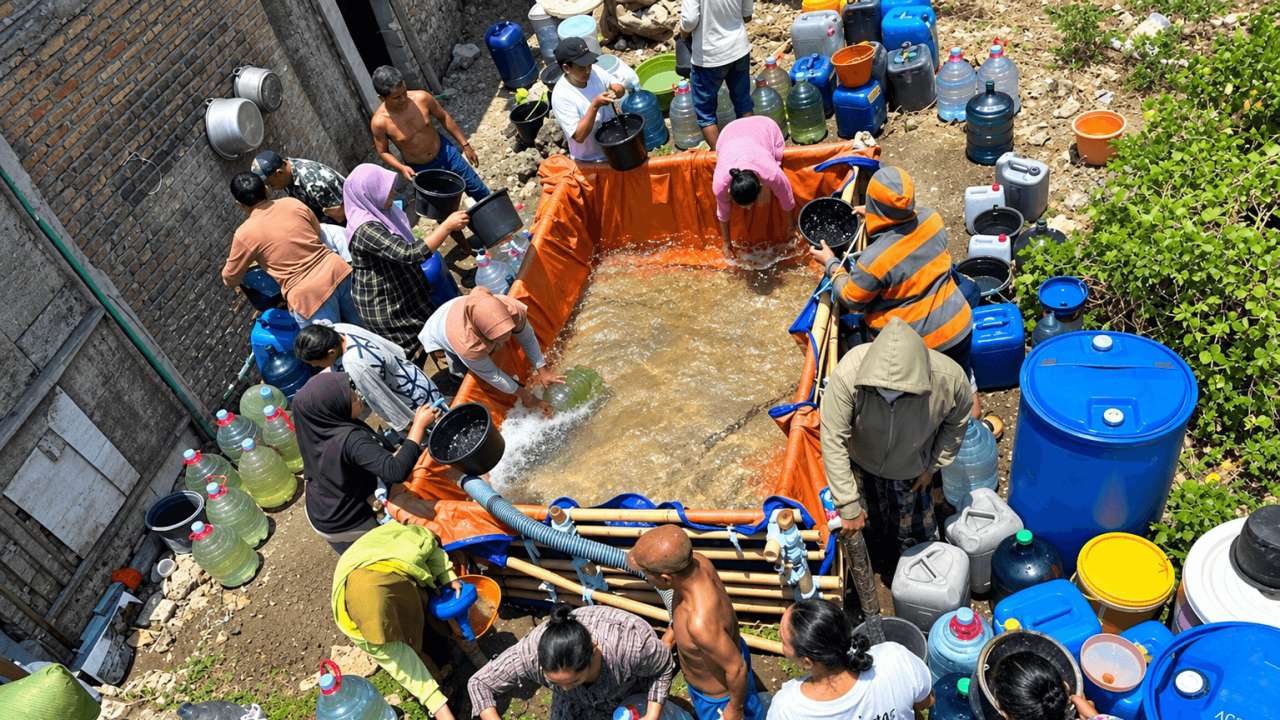
This macro-level crisis has manifested acutely at the regional level, most notably across Central Java. Over preceding months, numerous communities within the province experienced severe disruptions in accessing reliable water supplies, severely impacting regional agriculture, disrupting domestic stability, and elevating health risks, particularly among vulnerable demographics exposed to substandard water quality. As governments and international agencies grapple with infrastructural deficiencies and policy shortcomings, regional stakeholders are increasingly looking toward localized frameworks. Among these, cultural traditions that embed ecological stewardship into community memory are emerging as vital, untapped resources for sustainable resource management.
The Anatomy of Global Water Scarcity and Regional Realities
To understand the severity of the water crisis in regions like Central Java, one must examine the intersection of climate variability and human-induced environmental degradation. Meteorological shifts have altered traditional rainfall patterns, shortening wet seasons and intensifying dry spells. Simultaneously, intensive agricultural practices, land-use conversions, and unregulated groundwater extraction have depleted aquifers at rates far exceeding natural replenishment.
In Central Java, the consequences have been stark. Agricultural yields have plummeted in areas reliant on seasonal irrigation, forcing rural households to travel significant distances or rely on erratic water truck distributions. Furthermore, reliance on compromised water sources from shrinking rivers or contaminated shallow wells has heightened the prevalence of waterborne illnesses among children and the elderly.
Experts emphasize that resolving these challenges requires a multi-pronged approach encompassing infrastructural investment, adaptive regional policymaking, and systemic environmental education. However, infrastructure and policy alone often fail to secure community-level behavioral changes. Consequently, cultural avenues that foster an intrinsic, value-based connection between communities and their water sources are gaining recognition as essential components of long-term ecological mitigation.
Unpacking the Cultural Significance of Tradition
Anthropological perspectives provide critical insight into why cultural traditions endure and how their core principles can be harnessed for contemporary problem-solving. Celebrated anthropologist Clifford Geertz posited that cultural traditions are not merely aesthetic displays or static social products; rather, they serve as the externalized storage systems of thought and emotion. They represent the collective memory of how past generations successfully—or unsuccessfully—interacted with their surrounding environments.
When communities observe traditional rituals, they are engaging with codified wisdom designed to regulate human behavior in harmony with ecological realities. In many indigenous and localized cultures, symbols and rituals associated with natural resources function as moral guides. By translating historical survival strategies into sacred or ceremonial formats, ancestral societies ensured the preservation of vital ecosystems without the aid of modern environmental science.
For contemporary society, the challenge lies in decoding these traditions. Rather than viewing rituals as obsolete or purely spiritual practices, modern conservationists are tasked with extracting the practical ecological ethics embedded within them and translating those ethics into actionable strategies for modern resource management.
The Procession of Laku Banyu Panguripan

A prime example of a cultural practice intersecting with ecological awareness is the Laku Banyu Panguripan tradition in Kudus, Central Java. On January 3, 2026, the thoroughfares stretching from the city square to the historic Menara Kudus (Kudus Tower) illuminated with hundreds of torches carried by thousands of participants. This grand procession formed the core of the celebrations marking the 491st anniversary (ta’sis) of the Menara Kudus, traditionally commemorated on the 19th day of Rajab in the Islamic calendar.
The centerpiece of the Laku Banyu Panguripan ritual is water—banyu. The procession featured the transport of 554 sacred kendi (traditional earthenware vessels) containing water sourced from Zamzam, various historical springs (belik) scattered across Kudus, and the burial sites (punden) of the revered Walisongo (the nine saints of Java). These vessels were carried in a solemn march from the regency pavilion to the grounds of Menara Kudus, where the waters were ceremoniously united into two massive, specially prepared earthenware urns.
Following a communal prayer session, the blended water was distributed to the gathered public. Hundreds of attendees eagerly queued with empty bottles to secure a portion of the water, which is widely believed to hold spiritual blessings. This spiritual reverence is deepened by the preparatory ritual: prior to the procession, the collective water sources undergo a complete recitation of the Quran nineteen times.
However, beyond its spiritual dimensions, the Laku Banyu Panguripan ritual encapsulates a profound ecological philosophy. The systematic gathering of water from diverse regional springs and its subsequent reunification symbolizes the interconnectedness of hydrological systems and underscores the community’s shared dependence on a unified water supply.
Historical Roots and Ecological Stewardship
The historical lineage of Laku Banyu Panguripan is deeply intertwined with the spiritual journey of Raden Ja’far Shadiq, commonly known as Sunan Kudus, and his disciples during their propagation of Islam in the region. Historical accounts and local folklore indicate that the early propagation efforts went hand-in-hand with infrastructural and ecological development. As the disciples established settlements and centers of learning, they intentionally designated, protected, and maintained natural springs and water sources to sustain the growing population.

These water sources served a dual purpose: they facilitated ritual ablutions and spiritual practices while functioning as the primary lifeblood for daily social and agricultural needs. By embedding the maintenance of these water sources into religious and cultural frameworks, early leaders created a self-sustaining system of environmental protection.
Centuries later, many of these historical springs continue to provide reliable water for local communities. In various Kudus villages, such as Desa Terban in the Jekulo district, communities maintain annual traditions like resik-resik sendang (spring-cleaning rituals) and local harvest offerings (sedekah bumi) centered around sacred water bodies like Sendang Pengilon. These practices ensure the physical upkeep of the springs while reinforcing community responsibility for their preservation.
The Intersection of Sacred Ecology and Environmental Science
A fascinating dynamic of these water-centric traditions is the role played by local belief systems in preventing environmental degradation. In many parts of Kudus, the ecological integrity of the areas surrounding historical springs has been preserved largely due to cultural taboos and beliefs regarding their sacred or mystical nature.
Venerated sites are often flanked by centuries-old, large trees and dense native vegetation. Local reverence—often accompanied by warnings against desecration—creates a de facto conservation zone. Because community members view these sites with deep respect and apprehension, commercial exploitation, illegal logging, and industrial encroachment are effectively deterred without the need for heavy-handed policing.
From a modern scientific perspective, this traditional practice aligns perfectly with hydrological and ecological principles. The preservation of large trees with deep root systems, alongside diverse understory vegetation, is critical for maintaining watershed health. These vegetative covers facilitate rainwater infiltration, reduce surface runoff, prevent soil erosion, and regulate groundwater recharge rates, thereby ensuring a steady, high-quality flow from natural springs throughout the year.

The convergence of traditional reverence and scientific necessity highlights the utility of sacred natural sites in modern conservation strategies. While spiritual beliefs provide the immediate impetus for protection, the resulting ecological outcome directly mitigates the threats of local water depletion and regional water stress.
Collaborative Pathways for Government and Local Communities
As climate change introduces unprecedented volatility into weather patterns and hydrological cycles, regional governments and local communities must forge closer collaborations to scale up traditional conservation wisdom. Relying solely on top-down bureaucratic interventions has frequently proven insufficient in addressing localized environmental degradation. Conversely, indigenous and traditional knowledge systems offer ready-made frameworks that already command community trust and compliance.
Experts suggest that integrating cultural ecological knowledge into formal regional policy can significantly enhance climate adaptation strategies. Municipal and village-level governments in Central Java and surrounding regions have structural opportunities to institutionalize these values. Potential pathways include incorporating local environmental ethics into regional school curricula, designing public awareness campaigns anchored in regional heritage, and utilizing village-level deliberations (musyawarah) to formulate grassroots conservation bylaws.
Furthermore, leveraging traditions like Laku Banyu Panguripan not merely as tourist attractions or commercial cultural festivals, but as active platforms for ecological education, can transform public consciousness. When participants in the torchlit procession and water-uniting rituals understand the scientific rationale behind their ancestral practices, the preservation of water sources transitions from an act of ritual compliance to an intentional act of ecological survival.
Conclusion

The global clean water crisis demands comprehensive, multifaceted solutions that bridge modern scientific innovation with indigenous wisdom. Traditions such as Laku Banyu Panguripan in Kudus demonstrate that historical communities possessed sophisticated understandings of environmental interdependence long before the advent of modern ecological science.
By recognizing water springs not just as utilities or sacred relics, but as interconnected lifelines requiring rigorous protection, local communities have established a resilient defense against environmental scarcity. As Central Java and the broader global community navigate an increasingly uncertain climatic future, revitalizing and applying the ecological philosophies embedded within cultural heritage will remain an indispensable strategy for safeguarding the essential resource of water for generations to come.