Socio Today
Turkish Foreign Minister Hakan Fidan has issued an urgent diplomatic appeal for the immediate restoration of maritime traffic through the Strait of Hormuz, warning that the current blockade of the world’s most vital energy corridor threatens to destabilize the global economy and escalate regional conflict beyond repair. The call from Ankara comes in the wake of a directive from United States President Donald Trump, who ordered the U.S. Navy to implement a total blockade of the strategic waterway following the collapse of high-stakes peace negotiations with the Iranian leadership in Pakistan. The situation, which has been deteriorating since the outbreak of hostilities between a U.S.-Israeli coalition and Iran in late February 2026, has now reached a critical flashpoint that risks a broader international conflagration.
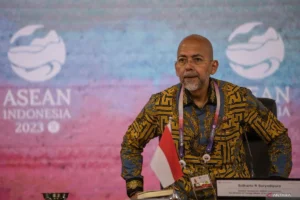
Speaking to the state-run Anadolu Agency on Monday, April 13, 2026, Fidan emphasized that Turkey views the freedom of navigation as a non-negotiable pillar of international law. He argued that while the geopolitical grievances between Washington and Tehran are profound, the weaponization of the Strait of Hormuz—through which roughly a fifth of the world’s daily oil consumption passes—is a measure that the international community cannot afford. Fidan’s remarks reflect a growing anxiety among middle powers and NATO allies who find themselves caught between the aggressive posturing of the Trump administration and the retaliatory measures of the Islamic Republic.
The Strategic Importance of the Strait of Hormuz
The Strait of Hormuz is a narrow waterway connecting the Persian Gulf with the Gulf of Oman and the Arabian Sea. At its narrowest point, the shipping lanes are only two miles wide in either direction, making it a natural bottleneck and one of the world’s most sensitive geopolitical "choke points." For decades, it has served as the primary exit route for petroleum exports from the Middle East, including those from Saudi Arabia, the United Arab Emirates, Kuwait, and Iraq.
Since the conflict erupted in February 2026, the strait has been under de facto Iranian control, with Tehran effectively restricting the movement of vessels perceived as hostile or linked to the U.S.-Israeli alliance. However, the situation shifted from a localized maritime threat to a global crisis when Iran began granting selective passage to vessels from "friendly" nations, most notably China. These preferential transit rights, coupled with unconfirmed reports that Tehran intended to levy "transit tolls" on all commercial shipping, prompted the drastic response from the White House.
The Collapse of the Pakistan Peace Summit
The current blockade is the direct result of a failed diplomatic effort hosted by Pakistan earlier this month. The summit was intended to address Iran’s nuclear ambitions and de-escalate the naval skirmishes that have plagued the Persian Gulf for weeks. However, the talks reportedly reached an impasse when the Iranian delegation refused to grant international inspectors unconditional access to its nuclear facilities, citing violations of its national sovereignty.
President Trump, known for his "maximum pressure" doctrine, responded to the diplomatic failure with a sweeping military mandate. In a characteristically blunt announcement shared via social media, Trump declared that the U.S. Navy would no longer tolerate Iranian "extortion" in the strait. He framed the blockade as a necessary step to "cleanse" the waterway of Iranian naval mines and ensure that Tehran could no longer profit from its geographical leverage.
"Effective immediately, the United States Navy, the Best in the World, will begin the process of a BLOCKADE on all ships attempting to enter, or exit, the Strait of Hormuz," Trump stated. He further warned that any Iranian military personnel who targeted U.S. assets or peaceful commercial vessels would be "CRUSHED TO PIECES," signaling a shift from containment to active kinetic engagement.
Turkey’s Diplomatic Balancing Act
For Turkey, the crisis presents a multifaceted challenge. As a NATO member with significant energy dependencies and a long land border with Iran, Ankara has historically sought to act as a bridge between the West and the Islamic Republic. Minister Fidan’s statement was a careful exercise in strategic neutrality. He made a clear distinction between the military objectives of the U.S.-led coalition and the global necessity of keeping the strait open.
"There is a fundamental difference between keeping the Strait of Hormuz open and being part of the war against Iran," Fidan told Anadolu Agency. "No nation truly desires the latter. Negotiations with Iran must be pursued, methods of persuasion must be utilized, and the strait must be opened as soon as possible."
Fidan’s emphasis on "persuasion" and "diplomacy" suggests that Turkey is concerned about the humanitarian and economic fallout of a prolonged blockade. Turkey relies heavily on regional stability for its own economic recovery, and any disruption in the flow of energy or a surge in oil prices would have immediate domestic repercussions for the Turkish government.
Chronology of the 2026 Gulf Crisis
The current escalation is the culmination of a series of events that began in early 2026:
- Late February 2026: Tensions between Israel and Iran escalate into direct military strikes, drawing the United States into a coalition to protect regional assets and allies.
- March 2026: Iran begins harassing commercial tankers in the Strait of Hormuz, deploying fast-attack craft and sea mines. Global oil prices see their first major spike, surpassing $120 per barrel.
- Early April 2026: Pakistan facilitates a peace summit in Islamabad. Despite initial optimism, the talks collapse over the nuclear issue and the demand for the lifting of all economic sanctions.
- April 12, 2026: President Trump announces the total blockade of the Strait of Hormuz.
- April 13, 2026: U.S. Central Command (CENTCOM) confirms that the blockade of all Iranian ports has commenced. Iran’s Khatam Al-Anbiya military command declares the blockade "illegal piracy" and threatens to target all ports in the Persian Gulf and the Arabian Sea in retaliation.
Military and Economic Implications
The U.S. Central Command, which oversees military operations in the Middle East, has moved carrier strike groups and additional minesweeping assets into the region to enforce the blockade. The objective is not only to prevent Iranian exports but to physically secure the shipping lanes from Iranian interference. However, enforcing a blockade in such confined waters is fraught with risk. Iran’s Revolutionary Guard Corps (IRGC) possesses a vast arsenal of anti-ship missiles, submarines, and drone swarms designed specifically for asymmetric warfare in the Gulf.
The economic implications are already being felt across global markets. Following the announcement of the blockade, Brent Crude futures surged by 15% in a single day of trading. Analysts warn that if the strait remains closed for more than a few weeks, the world could see oil prices exceeding $200 per barrel, potentially triggering a global recession.
Furthermore, the "China factor" remains a volatile variable. Beijing, which is the largest importer of Iranian oil, has so far remained relatively quiet but has previously warned against the disruption of global supply chains. If the U.S. Navy begins intercepting Chinese-flagged vessels or those carrying Iranian crude to Chinese ports, the conflict could expand into a direct confrontation between the world’s two largest superpowers.
Iran’s "Reciprocal Insecurity" Doctrine
Tehran’s response to the blockade has been one of defiance. The Khatam Al-Anbiya Central Command, the nerve center for Iran’s military operations, issued a stern warning that the security of the region is indivisible. "If the security of the ports of the Islamic Republic of Iran in the waters of the Persian Gulf and the Arabian Sea is threatened, no port in the Persian Gulf and the Arabian Sea will be safe," the command stated.
This doctrine of "reciprocal insecurity" suggests that Iran may use its missile capabilities to target major transit hubs and oil terminals in neighboring countries, such as Saudi Arabia’s Ras Tanura or the UAE’s Jebel Ali. Such a move would effectively shut down all maritime commerce in the region, regardless of the U.S. Navy’s presence.
Analysis: The Path Forward
The international community now looks toward potential mediators to break the deadlock. While Turkey has taken the lead in calling for a peaceful resolution, other regional actors, such as Qatar and Oman, are also reportedly working behind the scenes. However, the path to de-escalation is narrow. The Trump administration appears committed to a total cessation of Iran’s nuclear program, while Tehran views its nuclear and maritime leverage as essential for its survival.
The immediate priority for global diplomats is to establish a "humanitarian and commercial corridor" that would allow non-belligerent vessels to pass through the strait under international monitoring. However, as Minister Fidan noted, such an arrangement requires Iran’s cooperation and the U.S.’s willingness to temper its blockade.
As the U.S. Navy begins its operations and Iran readies its coastal defenses, the world remains on edge. The Strait of Hormuz, once a symbol of global interconnectedness, has become the epicenter of a conflict that could redefine the geopolitical landscape of the 21st century. Whether diplomacy can prevail over the "crush to pieces" rhetoric remains the defining question of the hour.