Socio Today
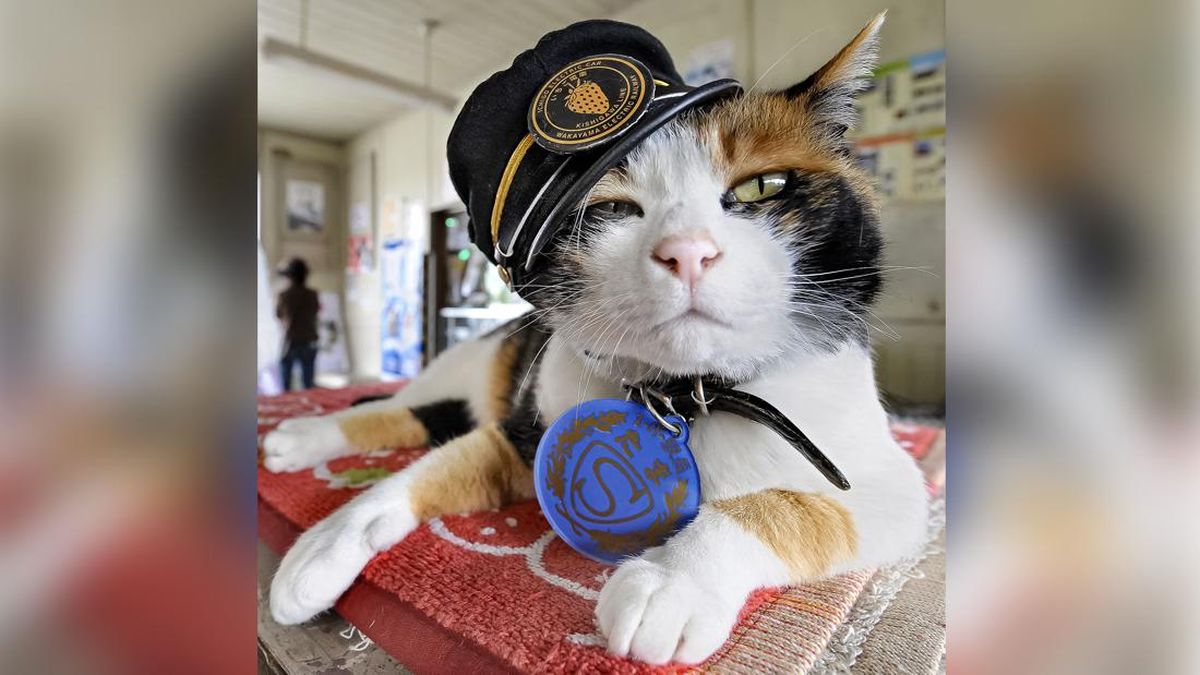
The tradition of feline leadership in Japan’s railway industry reached a new milestone as Yontama, a calico cat, was officially inaugurated as the station manager of Kishi Station in Kinokawa, Wakayama Prefecture. The ceremony, which took place in early 2026, drew a diverse crowd of feline enthusiasts, professional photographers, and local dignitaries, all gathered to witness the continuation of a legacy that has arguably saved a rural railway from the brink of extinction. Mitsunobu Kojima, the President of Wakayama Electric Railway, presided over the event, bestowing a ceremonial medal upon Yontama to signify her formal appointment. The atmosphere at the station was one of celebration and optimism, reflecting the profound impact these animals have had on the local economy and the identity of the Kishigawa Line.
The appointment of Yontama follows the passing of her predecessor, Nitama, who served the station with distinction for nearly a decade. Nitama, who had been a beloved figure among commuters and tourists alike, was posthumously elevated to the status of "Honorary Eternal Stationmaster," joining the legendary Tama, the original feline manager who first brought international fame to the rural line in 2007. The succession plan highlights the structured nature of the railway’s feline management system, where cats undergo a period of "training" and "apprenticeship" before assuming full responsibilities.
The Succession of the Calico Lineage
Yontama’s rise to the position of station manager is part of a carefully managed tradition that began out of economic necessity. In the mid-2000s, the Kishigawa Line was facing severe financial deficits and was threatened with closure due to declining ridership. The appointment of the original Tama cat in 2007 transformed the line’s fortunes, creating a phenomenon known in Japan as "Neko-nomics." This term describes the significant economic impact generated by cat-related tourism and branding.
Yontama, whose name literally translates to "Four-Tama" (representing the fourth in the spiritual lineage of station cats), has been prepared for this role for several years. She initially served as an assistant and relief manager at nearby stations, such as Idakiso Station, to acclimate her to the sounds of trains, the presence of large crowds, and the flashbulbs of cameras. Her formal induction at Kishi Station marks her transition into a primary leadership role, where she will oversee the daily "operations" of the terminal, which largely involve greeting passengers from her glass-enclosed office and wearing her custom-made station master’s cap.
Introducing Rokutama: The Next Generation of Feline Staff
Alongside Yontama’s promotion, the Wakayama Electric Railway introduced its newest recruit, a young calico named Rokutama. The story of Rokutama’s acquisition reflects a growing emphasis on animal welfare within the company’s corporate social responsibility framework. According to official statements from the operator, Rokutama was a rescue cat found during the spring season. The railway company had proactively reached out to animal welfare officers, requesting to be notified if a calico kitten in need of a home was discovered—specifically one with the temperament suited for station life.
The response came within days, and Rokutama was brought into the fold. Her official profile, which the company released to the public, reads more like a personality sketch than a traditional resume. Rokutama is described as a cat who enjoys eating and playing independently but possesses a distinct dislike for loud noises and the process of having her claws trimmed. Staff members have characterized her as "stubborn but not aggressive," a set of traits that suggests she will hold her own in the busy environment of a tourist-heavy railway station.
Rokutama is currently serving in a trainee capacity. Her schedule is designed to allow her to work shifts on days when the senior cats are resting, providing her with the necessary exposure to the public without the pressure of full-time duties. This gradual integration ensures that the cats remain healthy and unstressed, a priority that President Kojima has emphasized repeatedly during press briefings.
The Economic and Cultural Impact of Neko-nomics
The phenomenon of feline stationmasters is more than a mere marketing gimmick; it is a vital survival strategy for rural Japanese infrastructure. Japan’s rural areas have long struggled with depopulation and the resulting decline in public transport usage. The Kishigawa Line, a 14.3-kilometer stretch connecting Wakayama City to Kinokawa, was losing roughly 500 million yen annually before Tama’s appointment.
Research conducted by Katsuhiro Miyamoto, a professor emeritus at Kansai University, estimated that Tama contributed approximately 1.1 billion yen (roughly $7.3 million USD) to the local economy in her first year alone. This revenue was generated through increased ticket sales, the sale of cat-themed merchandise, and the growth of local businesses—such as cafes and souvenir shops—that sprang up to cater to the influx of "pilgrims" visiting the station.
The success of the Kishigawa Line has inspired similar initiatives across Japan and the world, from "cat cafes" to other animal-themed transit hubs. However, the Wakayama Electric Railway remains the gold standard for this model. The station building at Kishi was even redesigned in 2010 to resemble a giant cat’s face, complete with ears on the roof and "eyes" that light up at night.
The Role of the President as "Cat Interpreter"
During the inauguration ceremony, President Mitsunobu Kojima added a touch of humor and personality to the proceedings by acting as a translator for Yontama and Rokutama. Kojima, who has been the driving force behind the railway’s feline-centric branding, addressed the crowd by "interpreting" the cats’ thoughts. He noted that while Yontama was ready for her responsibilities, Rokutama was still "learning the ropes" and asked the public for their patience as the young recruit adjusted to the limelight.

This lighthearted approach serves a dual purpose: it humanizes the corporate entity and strengthens the emotional bond between the railway and its patrons. By treating the cats as genuine members of the staff, the company fosters a sense of community and loyalty among passengers that a standard commercial campaign could not achieve.
Challenges and Considerations in Feline Management
While the use of animals in public roles is widely celebrated in Japan, it also brings responsibilities regarding animal ethics and health. The Wakayama Electric Railway has established strict protocols to ensure the well-being of its feline employees. These include:
- Limited Working Hours: The cats are not on duty 24/7; they have designated shifts and frequent days off.
- Climate-Controlled Environments: The station manager’s office is equipped with air conditioning and heating to ensure the cats are comfortable in all seasons.
- Veterinary Care: Regular check-ups are mandatory, and the cats’ diets are strictly monitored.
- Public Interaction Rules: Passengers are encouraged to view the cats through the glass or from a respectful distance to prevent the animals from becoming overwhelmed by physical contact.
The transition from Nitama to Yontama was managed with sensitivity to these factors. Nitama’s decade of service was marked by high levels of public engagement, and her retirement and subsequent passing were handled with a level of decorum usually reserved for high-ranking human officials, including a formal funeral service attended by hundreds.
Future Implications for Rural Revitalization
The story of Yontama and Rokutama is a microcosm of Japan’s broader struggle to revitalize its aging and shrinking rural regions. As young people migrate to urban centers like Tokyo and Osaka, rural municipalities are forced to find creative ways to maintain essential services. The Kishigawa Line’s success suggests that "soft power"—culture, branding, and unique experiences—can be just as effective as hard infrastructure investment in sustaining local economies.
Looking ahead, the Wakayama Electric Railway plans to continue expanding its "cat-themed" offerings. There are discussions regarding the integration of more digital experiences, such as virtual reality tours led by "digital versions" of the cats, to reach international audiences who may not be able to travel to Wakayama in person. However, the heart of the operation remains the physical presence of the calico managers.
As Yontama begins her tenure and Rokutama starts her journey as a trainee, the legacy of the original Tama lives on. These cats are more than just mascots; they are symbols of resilience, creativity, and the enduring bond between humans and animals. For the people of Wakayama, the sight of a calico cat in a station master’s hat is not just a tourist attraction—it is the sound of a train whistle that continues to blow against all odds.