Socio Today
Bogor has long maintained a dual identity within the landscape of West Javanese tourism. On one hand, the city is defined by its urban density, sprawling shopping districts, and the perennial gridlock of the legendary Puncak Pass. On the other hand, a quieter, more rugged secret remains tucked away in the eastern reaches of the Bogor Regency. The district of Sukamakmur has emerged as a sanctuary for those seeking a reprieve from modernity, offering a combination of high-altitude serenity, adrenaline-inducing roads, and natural landscapes that appear largely untouched by the rapid industrialization seen in other parts of the province. Central to this burgeoning ecotourism hub are Puncak Khayangan and Curug Sejoli, two destinations that represent the pinnacle of Sukamakmur’s geographical and aesthetic appeal.
Geographical Context and the Rise of East Bogor Tourism
Sukamakmur is situated in the eastern part of Bogor Regency, bordering the Cianjur and Bekasi regencies. Historically, this area was primarily known for its agriculture, specifically coffee and rice production. However, in recent years, the district has seen a significant shift toward nature-based tourism. This shift is partly due to the saturation of the traditional Puncak area (Cisarua), which often faces severe traffic congestion and overdevelopment.
The geography of Sukamakmur is characterized by the Jonggol Highlands, a series of ridges and valleys that provide a natural barrier between the coastal plains of northern Java and the volcanic peaks of the interior. Puncak Khayangan, sitting at an elevation of approximately 1,420 meters above sea level (masl) in Wargajaya Village, serves as a primary vantage point for this region. The climate here is significantly cooler than the Bogor city center, with temperatures often dropping to 18-20 degrees Celsius, creating an ideal environment for the "sea of clouds" phenomenon that has made the area famous on social media.
Navigation and Infrastructure: The Journey to Sukamakmur
Reaching Sukamakmur is an endeavor that requires both technical driving skill and psychological patience. For travelers originating from Jakarta or Depok, the most common route involves traversing Sentul City, heading toward Babakan Madang, and navigating a series of increasingly narrow village roads. Alternatively, residents of Bekasi or Cibubur typically utilize the Jonggol route, which offers a different but equally challenging set of gradients.
While the distance from central Jakarta is a relatively modest 60 to 75 kilometers, the transit time rarely reflects this proximity. On a standard day, the journey can take between 2.5 and 3.5 hours. The primary reason for this discrepancy is the terrain. Once travelers pass the Sukamakmur Market area, the infrastructure shifts from standard provincial asphalt to narrow, high-elevation roads. The route is defined by sharp hairpins and steep inclines that run parallel to deep ravines, demanding total concentration from drivers and riders alike.
Regional development analysts note that Sukamakmur is a key component of the proposed "Puncak 2" or "Poros Tengah Timur" (PTT) road project. This infrastructure initiative aims to connect Sentul to Cianjur, providing an alternative to the congested Puncak 1 route. While the project has faced funding and environmental hurdles, the existing roads already serve as a vital artery for local tourism, bringing much-needed economic activity to the mountain villages.
Puncak Khayangan: The Summit of the Gods
The name "Khayangan" is derived from Sundanese and Indonesian mythology, referring to the celestial abode of the gods. Upon reaching the summit, the nomenclature becomes self-explanatory. The peak offers a 360-degree panoramic view of the surrounding valleys and distant mountain ranges.

The management of Puncak Khayangan is largely community-based, reflecting a growing trend in Indonesian tourism where local villagers take ownership of natural assets. This model ensures that the economic benefits of tourism remain within the village of Wargajaya. Currently, access to the site is remarkably affordable, with entrance fees ranging from Rp15,000 to Rp20,000 per person. Parking fees are standardized at approximately Rp5,000 for motorcycles and Rp10,000 for cars, making it one of the most cost-effective high-altitude destinations in West Java.
The ascent to the peak typically requires 60 to 90 minutes of hiking, depending on the individual’s physical condition. The trail is divided by three main resting posts (Pos), spaced roughly 300 to 500 meters apart. These posts serve not only as rest areas but also as social hubs where hikers can interact with local guides.
The Chronology of the Climb: Challenges and Landmarks
The hiking trail to Puncak Khayangan is notorious among local trekking communities for its "knee-to-forehead" inclines. Two specific sections of the trail have gained a reputation for their difficulty:
- Tanjakan Naga Merah (Red Dragon Incline): A steep, reddish-clay section that becomes particularly treacherous during the rainy season.
- Tanjakan Jakatarub: Named after a figure from Javanese folklore, this section tests the respiratory endurance of hikers as the oxygen levels slightly thin and the gradient increases.
Midway through the climb, hikers encounter the "Mata Cai Kahuripan" (Spring of Life), a natural water source that provides a refreshing pause. For many, the ultimate reward is the meteorological display at the summit. During the early morning hours, the valleys below are often submerged in a thick layer of white mist. This "sea of clouds" creates an illusion of being on an island in the sky, with only the highest peaks of neighboring hills piercing through the white expanse.

Curug Sejoli: The Twin Falls Symphony
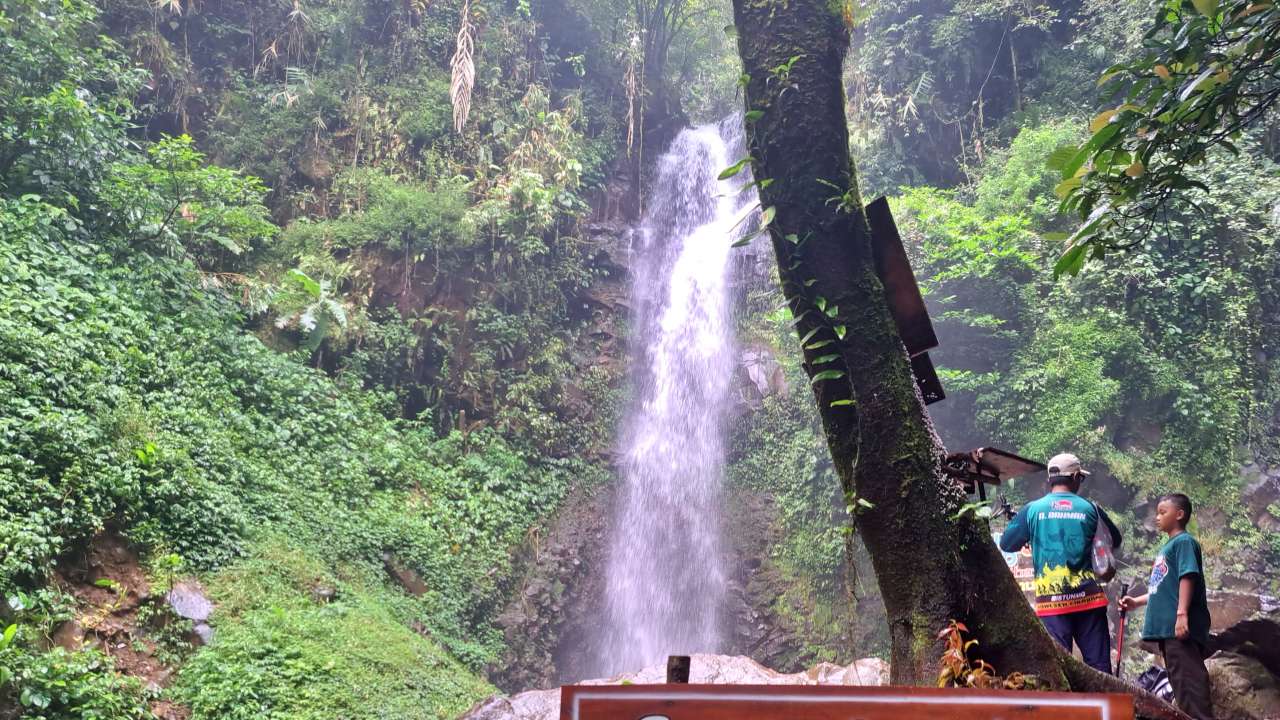
Located approximately 580 meters from the summit area is the entrance to Curug Sejoli. In the Indonesian language, "Sejoli" refers to a pair of lovers, a name inspired by the waterfall’s unique structure. The site features two parallel streams of water cascading down a single moss-covered cliff face, falling in unison into a natural pool below.
The transition from the peak to the waterfall represents a shift from the grandeur of the sky to the intimacy of the earth. The trail to Curug Sejoli is characterized by a steep descent through dense vegetation. While the walk down takes only 15 to 20 minutes, the return trip is a rigorous uphill climb that requires significant stamina.
Unlike the more commercialized waterfalls in the Sentul or Cisarua areas, Curug Sejoli maintains a primitive aesthetic. The cliff walls are draped in vibrant green moss and tropical creepers, and the water remains exceptionally cold and clear. Local residents believe the water possesses rejuvenating properties, and it is common to see hikers using the falls as a form of "natural massage" to soothe muscles weary from the trek.
Economic and Environmental Implications
The rise of Sukamakmur as a tourist destination has significant implications for the local economy. Traditionally reliant on subsistence farming, many households in Wargajaya have diversified into the service sector. The establishment of "Warungs" (small stalls), homestays, and guiding services has provided a secondary income stream that is less dependent on harvest cycles.

However, environmentalists warn that the rapid influx of tourists poses a risk to the fragile highland ecosystem. Issues such as waste management and soil erosion on the hiking trails are becoming more prevalent. Local authorities and community groups have responded by implementing stricter "carry-in, carry-out" policies for trash and limiting the number of overnight campers during peak periods to prevent land degradation.
Logistics, Safety, and Strategic Recommendations
For those planning a visit to the Sukamakmur highlands, professional guides and local authorities emphasize several critical safety protocols:
- Vehicle Integrity: The descent from Sukamakmur is as dangerous as the ascent. Continuous braking on steep declines can lead to "brake fade" or total brake failure due to overheating. Drivers are advised to use engine braking and ensure their cooling systems and tires are in peak condition before departing.
- Weather Monitoring: The Jonggol Highlands are prone to sudden, heavy downpours. Given the clay-heavy soil of the Puncak Khayangan trail, hiking during or immediately after a storm is not recommended due to the risk of slips and minor landslides.
- Time Management: To experience the "sea of clouds," visitors are encouraged to arrive at the base camp by 4:00 AM or 5:00 AM. Arriving late in the morning not only misses the cloud phenomenon but also places the hiker under the intense heat of the tropical sun during the most difficult parts of the climb.
Conclusion: The Future of Sukamakmur
Sukamakmur stands at a crossroads between remaining a "hidden gem" and becoming a mainstream tourist hub. The allure of Puncak Khayangan and Curug Sejoli lies in their perceived authenticity and the physical challenge they present. As Bogor Regency continues to develop its eastern corridor, the challenge will be to maintain the "wild" character of these sites while improving infrastructure for safety and accessibility.
For the modern urbanite, Sukamakmur offers more than just a photo opportunity; it provides a visceral reminder of the rugged beauty of the Indonesian archipelago. Whether it is the exhaustion of the Jakatarub incline or the icy spray of the twin falls, the experience in East Bogor is a testament to the enduring appeal of the natural world in an increasingly digital age. Through sustainable management and responsible visitation, Puncak Khayangan and Curug Sejoli can continue to serve as the "Khayangan" of Bogor for generations to come.