Socio Today
The Israeli military intercepted a civilian humanitarian convoy in international waters on Monday, May 18, 2026, resulting in the detention of dozens of international activists, including two prominent Indonesian journalists from the Republika news outlet. Bambang Noroyono and Thoudy Badai were part of the "Global Sumud Flotilla," a large-scale maritime initiative aimed at delivering essential medical supplies and food aid to the besieged Gaza Strip. The interception occurred in the Eastern Mediterranean, approximately 70 nautical miles from the coast, a zone clearly defined as international waters under the United Nations Convention on the Law of the Sea (UNCLOS).
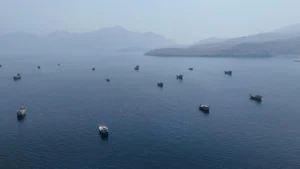
The Global Sumud Flotilla, a coalition of more than 50 vessels representing civil society organizations from dozens of nations, set sail last week from the port of Marmaris, Turkey. The mission was organized as a direct response to the escalating humanitarian catastrophe in the Gaza Strip, which has faced a tightened blockade and continuous military aggression over the past several years. The detention of the journalists has sparked immediate condemnation from press freedom advocates and the Indonesian government, raising urgent questions regarding the safety of media personnel in conflict zones and the legality of military operations against civilian vessels in neutral waters.
The Interception and the "SOS" Protocol
According to reports from Al Jazeera and eyewitness accounts transmitted before communications were jammed, Israeli naval commandos boarded the lead vessels of the flotilla in the early hours of Monday. The military action was described as a swift interception involving speedboats and helicopters. Among those taken into custody were nine Indonesian nationals, including the two Republika journalists who were embedded with the mission to document the delivery of aid.
Before his communication equipment was seized, Bambang Noroyono managed to upload a short "SOS" video to social media, a pre-arranged protocol for participants in the event of a military boarding. In the footage, Noroyono appeared calm but firm, stating that he was being "kidnapped" by Israeli forces while performing his duties as a journalist. He urged the Indonesian government to take immediate diplomatic steps to secure their release and reaffirmed the mission’s commitment to the Palestinian cause.
"If you are seeing this video, please inform the government of the Republic of Indonesia that I am currently being abducted by Zionist Israeli soldiers," Noroyono stated in the video message. "I request the Indonesian government to free me from this abduction and to continue its unwavering support for Palestinian independence." This video has since gone viral in Indonesia, prompting a massive public outcry and calls for the Ministry of Foreign Affairs to intervene.
Official Reaction from Republika and the Media Community
The management of Republika, one of Indonesia’s oldest and most respected media institutions, issued a stern statement following the confirmation of the arrests. Editor-in-Chief Andi Muhyiddin condemned the Israeli military’s actions as a blatant violation of international law and an assault on the freedom of the press.
"The interception of a humanitarian mission in international waters is a serious breach of universal human rights and the civil liberties of global citizens," Muhyiddin said in an official statement released via Republika’s digital platforms. He emphasized that the journalists and the accompanying volunteers were unarmed and posed no security threat. "They did not carry weapons; they carried solidarity, logistics, medicine, and the conscience of the world for the civilians of Gaza who face ongoing starvation and blockade."
Muhyiddin further stressed that the safety of Bambang Noroyono and Thoudy Badai is the company’s highest priority. He called on international journalist organizations, including Reporters Without Borders (RSF) and the Committee to Protect Journalists (CPJ), to join the demand for their immediate and unconditional release. "We stand with humanitarian volunteers worldwide and reject any form of criminalization against those providing aid to a besieged population," he added.
Chronology of the Global Sumud Flotilla 2026
The 2026 mission was the result of months of coordination between international NGOs, including the Freedom Flotilla Coalition and various Turkish humanitarian agencies. The timeline of the event highlights the scale of the operation:
- May 10, 2026: More than 50 ships, including cargo vessels and passenger boats, gather at the port of Marmaris, Turkey. The vessels are loaded with over 5,000 tons of aid, including specialized medical equipment, flour, and clean water systems.
- May 12, 2026: The flotilla officially departs Turkey. Organizers hold a press conference emphasizing the non-violent nature of the mission and their intent to sail directly to the Port of Gaza.
- May 15, 2026: The convoy enters the Eastern Mediterranean. They are shadowed by several unidentified naval vessels, suspected to be Israeli reconnaissance ships.
- May 17, 2026: The flotilla issues a final radio broadcast stating their coordinates and reiterating that they are in international waters, carrying only civilian aid and personnel.
- May 18, 2026 (04:00 AM): Israeli naval forces begin the interception. Communications from the ships are cut off shortly after.
- May 18, 2026 (18:56 WIB): News reaches Jakarta of the detention of the two Republika journalists and seven other Indonesian volunteers.
Supporting Data: The Humanitarian Context in Gaza
The Global Sumud Flotilla was launched at a time when Gaza’s humanitarian situation has reached an unprecedented nadir. According to 2026 projections by United Nations agencies, over 90% of the population in the Gaza Strip lives below the poverty line, with food insecurity affecting nearly every household. The blockade, which has been in place in varying degrees since 2007, has decimated the local economy and left the healthcare system on the brink of total collapse.
Data from the World Health Organization (WHO) indicates that by mid-2026, more than 40% of essential medicines are out of stock in Gaza’s hospitals. Furthermore, the lack of fuel for electricity and water desalination plants has left hundreds of thousands of people without access to potable water. The flotilla’s cargo—specifically the high-tech medical scanners and surgical kits—was intended to address critical shortages in Gaza City’s remaining functional clinics.
The term "Sumud," an Arabic word meaning "steadfastness," was chosen for the mission to reflect the resilience of the Palestinian people. The coalition included participants from over 30 countries, including doctors, lawyers, parliamentarians, and journalists, all aiming to challenge the maritime blockade which the UN has previously described as a form of collective punishment.
Diplomatic Implications and International Law
The detention of Indonesian citizens by the Israeli military presents a complex diplomatic challenge for Jakarta. Indonesia does not maintain formal diplomatic relations with Israel, which complicates direct negotiation efforts. Traditionally, Indonesia relies on third-party mediators, such as the United Nations or friendly nations like Turkey and Jordan, to handle consular issues involving Israel.
Legal experts have pointed out that the interception of the flotilla likely violates the San Remo Manual on International Law Applicable to Armed Conflicts at Sea. While a blockading power has certain rights, the interception of a humanitarian mission in international waters—especially one that has declared its cargo and invited international inspection—is highly contentious. Under Article 98 of UNCLOS, every state is required to render assistance to any person found at sea in danger of being lost; however, the military boarding of aid ships is often viewed by the international community as an act of aggression.
In Jakarta, the Ministry of Foreign Affairs is expected to summon representatives from the UN and relevant international bodies to demand information on the whereabouts of the nine Indonesians. Historically, Indonesia has been one of the most vocal supporters of Palestinian sovereignty, and this incident is expected to further strain the already volatile regional geopolitics.
Analysis: The Risk to Global Journalism
The arrest of Bambang Noroyono and Thoudy Badai underscores the increasing dangers faced by journalists covering humanitarian crises and unconventional warfare. By detaining members of the press who are embedded with aid missions, state actors risk creating "information blackouts" in areas where human rights abuses are most likely to occur.
Journalism in the Eastern Mediterranean has become increasingly perilous. The CPJ has noted a rising trend of "maritime censorship," where military forces seize cameras, laptops, and satellite phones from journalists on aid ships to prevent the documentation of boarding operations. The detention of the Republika team is seen by many as an attempt to suppress the narrative of the Global Sumud Flotilla and to deter future media coverage of efforts to break the Gaza blockade.
Conclusion and Future Outlook
As of Monday evening, the exact location of the detained journalists remains unknown, though it is suspected they have been taken to the port of Ashdod for processing and potential deportation. The international community is watching closely to see how the Israeli government handles the high-profile detainees.
The Global Sumud Flotilla incident of May 2026 serves as a grim reminder of the persistent conflict in the Middle East and the high cost of humanitarian activism. For Indonesia, the event is not merely a matter of foreign policy but a deeply personal issue involving the safety of its citizens and the integrity of its press. The coming days will be critical for diplomatic efforts as the world calls for the safe return of those who sailed not with weapons, but with the hope of bringing relief to a besieged population.