Socio Today
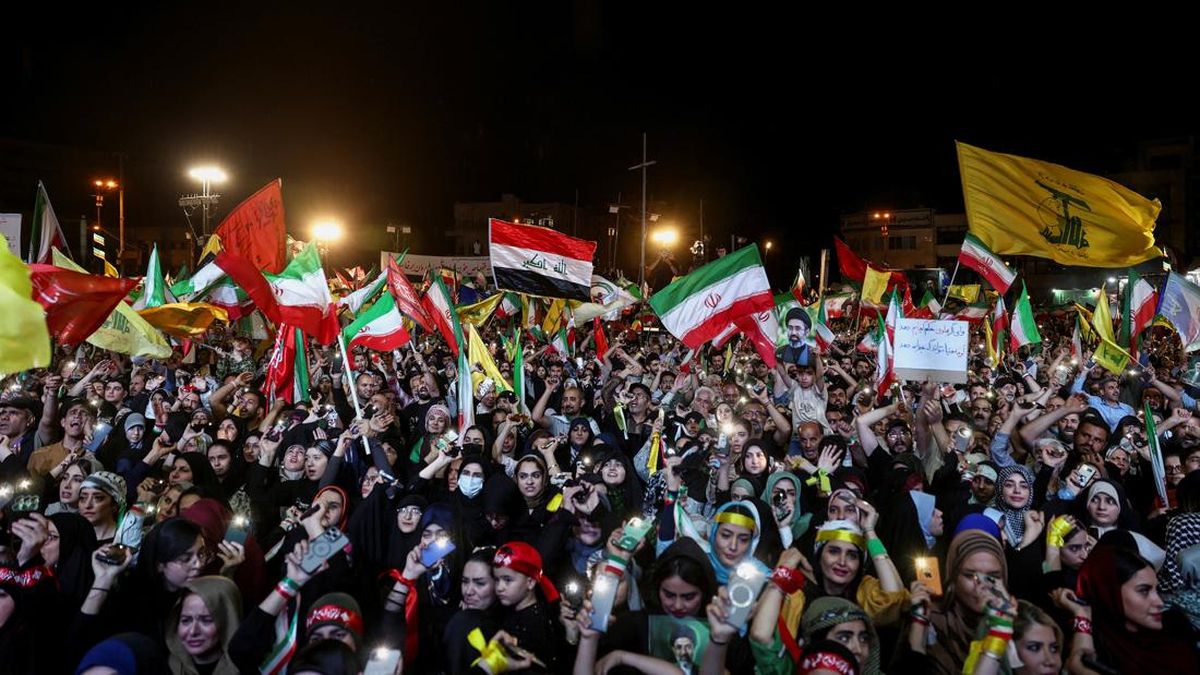
The streets of major Iranian cities became the stage for intense political unrest on Saturday as dozens of demonstrators gathered outside Ministry of Foreign Affairs offices to voice their vehement opposition to a proposed peace agreement with the United States. The protests, which took place in the capital of Tehran and the holy city of Mashhad, were triggered by recent statements from senior diplomat and lead negotiator Abbas Araghchi regarding the finalization of a deal that could fundamentally alter the geopolitical landscape of the Middle East. These demonstrations highlight a deepening fracture within the Iranian political establishment, pitting hardline factions against diplomatic negotiators who are attempting to navigate a path toward sanctions relief and the de-escalation of naval tensions.
In Mashhad, a city known for its conservative religious influence, the scene was particularly charged. Video footage released by the Fars news agency depicted groups of women dressed in traditional black chadors gathered in front of the regional Ministry of Foreign Affairs building. They were seen waving red and black flags—symbols often associated with martyrdom and religious mourning—while chanting slogans that directly targeted the nation’s top diplomats. "Death to the dishonorable Araghchi, the infiltrator," the protesters shouted, using the term "infiltrator" (nofuzi), a heavy political accusation in the Iranian context often used to describe those perceived as selling out national interests to Western powers.
The Catalyst: A Friday Night Revelation
The immediate cause of the public outcry was a televised interview conducted on Friday, June 12, in which Abbas Araghchi outlined the parameters of a potential agreement currently on the negotiating table. Araghchi, a veteran diplomat who has long been a central figure in Iran’s international relations, suggested that a breakthrough was imminent. He revealed that the deal involves a reciprocal de-escalation of naval pressure: the United States would agree to lift its naval blockade on Iranian ports, which has severely crippled the country’s maritime trade, in exchange for Iran ensuring the unhindered flow of traffic through the Strait of Hormuz.
However, it was Araghchi’s comments regarding the future management of the waterway that drew the most fire from domestic critics. "The management of the Strait of Hormuz will not be the same as before," Araghchi stated during the state television broadcast. He acknowledged that while the strait remains one of Iran’s "primary deterrent instruments," the new agreement would necessitate a shift in how Teheran exercises its influence over the strategic chokepoint. To hardline critics, this signaled a catastrophic concession of Iranian sovereignty and a weakening of the nation’s most potent military leverage against foreign intervention.
Unverified Reports of Escalating Tension in Tehran
While the footage from Mashhad was widely circulated by state-adjacent media, reports from Tehran suggested that the capital was also experiencing significant friction. Unverified videos appearing on various social media platforms showed crowds gathered in front of the central Ministry of Foreign Affairs headquarters. The chants in Tehran were broader in their scope, targeting not only Araghchi but also Mohammad Bagher Ghalibaf, the Speaker of the Iranian Parliament and a key figure in the country’s conservative bloc who has been involved in the high-level oversight of the negotiations.
"Araghchi, resign!" and "Ghalibaf, resign!" were among the slogans heard in the capital. The inclusion of Ghalibaf in the protesters’ ire is significant; it suggests that the opposition to the deal is not merely a fringe movement but a reflection of a rift that extends into the heart of the conservative establishment. For these protesters, any deal brokered under the current conditions is seen as a betrayal of the principles of the Islamic Revolution and a submission to "Maximum Pressure" tactics employed by the Trump administration.
The Geopolitical Stakes: The Strait of Hormuz and Global Energy
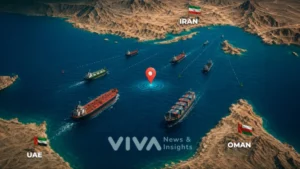
To understand the intensity of the protests, one must look at the strategic importance of the Strait of Hormuz. Located between the Persian Gulf and the Gulf of Oman, the strait is the world’s most important oil transit chokepoint. Approximately one-fifth of the world’s total oil consumption—roughly 21 million barrels per day—passes through this narrow waterway. For Iran, the ability to threaten a closure of the strait has long been its "ultimate weapon" in diplomatic standoffs.
Hardline factions, including elements within the Islamic Revolutionary Guard Corps (IRGC), argue that the proposed deal would effectively neuter Iran’s maritime defense strategy. They contend that by agreeing to internationalize the management or monitoring of the strait, Iran is forfeiting its role as the primary guardian of the Persian Gulf. The protesters’ assertion that the deal "does not serve Iranian interests" is rooted in the belief that economic relief gained from lifting the naval blockade is not worth the loss of strategic deterrence.
The Role of External Mediators: The Pakistan-Trump Connection
The diplomatic push that led to this moment has been characterized by an unusual alignment of international actors. President Donald Trump, who famously withdrew the United States from the 2015 nuclear deal (JCPOA), has recently expressed a renewed interest in a "grand bargain" that would encompass not just nuclear issues but also regional security and maritime conduct. Acting as a pivotal mediator in this process has been Pakistan.
On Saturday, June 13, both President Trump and officials in Islamabad indicated that a formal signing ceremony could take place as early as Sunday, June 14. This aggressive timeline has added to the sense of urgency and panic among Iranian hardliners. While the U.S. and Pakistan have projected confidence, the official response from Tehran has remained markedly more cautious. The Iranian government finds itself in a precarious position: desperate for the economic reprieve that the lifting of the naval blockade would provide, yet fearful of the domestic political backlash that a perceived "surrender" to Washington would trigger.
Chronology of the Diplomatic Crisis
The current standoff is the culmination of a week of high-stakes maneuvering:
- June 8-10: Secretive back-channel communications are reported between Iranian and U.S. officials, facilitated by Pakistani diplomats in Muscat and Islamabad.
- June 11: Reports emerge of a draft agreement focusing on "maritime de-escalation" rather than a full return to the JCPOA.
- June 12: Abbas Araghchi appears on state television to prepare the public for "difficult compromises," mentioning the lifting of the port blockades.
- June 13 (Morning): Hardline newspapers in Iran publish editorials condemning the "secret deal" and calling for public resistance.
- June 13 (Afternoon): Protests erupt in Mashhad and Tehran, specifically targeting the Foreign Ministry.
- June 13 (Evening): President Trump tweets about the potential for a "historic end to conflict," while Iranian officials remain silent on the exact timing of a signing.
Internal Power Struggles and Political Implications
The protests represent more than just a disagreement over foreign policy; they are a manifestation of the internal power struggle that has defined Iranian politics for decades. The "pragmatist" wing of the government, which seeks to integrate Iran into the global economy to ensure the survival of the state, is under immense pressure from the "ideological" wing, which views any engagement with the U.S. as a form of "soft war" designed to topple the regime.
By labeling Araghchi an "infiltrator," the protesters are attempting to delegitimize the entire diplomatic process. In the Iranian political lexicon, a nofuzi is someone who works from within the system to undermine it on behalf of foreign intelligence agencies. If this narrative gains traction among the broader population or within the security services, it could make it impossible for the Supreme Leader to endorse the deal without risking significant internal instability.
Analysis of Potential Outcomes
As the Sunday deadline approaches, the situation remains highly volatile. There are three primary scenarios that analysts are currently monitoring:
- The Deal Proceeds: If the Iranian leadership decides that the economic benefits—specifically the resumption of oil exports and the clearing of ports—outweigh the domestic political cost, they may go ahead with the signing. This would likely be accompanied by a massive propaganda campaign framing the deal as a "heroic flexibility" and a victory over the U.S. blockade.
- Delay and Renegotiation: Fearing the scale of the protests, Tehran might request a delay in the signing to "fine-tune" the language regarding the Strait of Hormuz. This would allow them to claim they have secured better terms, though it risks the U.S. walking away from the table.
- Collapse of the Agreement: If the hardline opposition, supported by the IRGC, successfully pressures the Supreme Leader to veto the deal, the negotiations could collapse entirely. This would likely lead to an immediate escalation of tensions in the Persian Gulf and a tightening of the U.S. naval blockade.
The international community is watching closely, as the failure of this deal could lead to a renewed cycle of maritime seizures and military skirmishes in one of the world’s most sensitive regions. For now, the gates of the Ministry of Foreign Affairs in Tehran and Mashhad remain the focal point of a nation’s internal struggle to define its future and its relationship with the world. The chants of the protesters serve as a stark reminder that in Iran, the path to peace is often as treacherous as the path to war.