Socio Today
In a move that has sent shockwaves through global energy markets and redefined the geopolitical landscape of the Middle East, United States President Donald Trump announced on Monday, June 15, 2026, that a comprehensive peace agreement has been reached between the United States and the Islamic Republic of Iran. The announcement, delivered via the President’s Truth Social platform, signals the end of a period of intense military brinkmanship and the immediate cessation of the U.S. naval blockade that had effectively shuttered one of the world’s most vital maritime corridors.
The President’s declaration was characterized by his signature style, emphasizing a definitive end to hostilities and an invitation for global commerce to resume. "The deal with the Islamic Republic of Iran is now done. Congratulations to all!" Trump wrote, marking a pivot from the "maximum pressure" campaigns that characterized his previous term and the early months of 2026. He further clarified the immediate operational changes in the Persian Gulf, stating, "I am hereby fully authorizing the opening of the Strait of Hormuz at no cost, and at the same time authorizing the immediate lifting of the United States Navy blockade."
The economic implications of the announcement were instantaneous. Crude oil futures, which had been trading at record highs due to the blockade, saw a sharp correction as the President signaled a return to normalcy for energy exports. "Ships of the world, start your engines. Let the oil flow!" Trump added, underscoring the administration’s focus on stabilizing global energy prices. While the President provided few technical details regarding the specific clauses of the accord, the broader framework of the peace deal was corroborated by international mediators.
The Role of Pakistani Mediation and the Swiss Summit
The breakthrough appears to be the culmination of months of "back-channel" diplomacy, with Pakistan emerging as the primary intermediary. Pakistani Prime Minister Shehbaz Sharif confirmed the news early Monday morning, providing a more structured outline of the agreement. Sharif noted that the deal followed "intensive talks" aimed at preventing a full-scale regional war that many feared was imminent following the naval escalations of early 2026.
"After intensive talks, we are pleased to announce that a peace agreement between the United States and the Islamic Republic of Iran has been reached," Sharif posted on the social media platform X (formerly Twitter). The Pakistani Prime Minister highlighted that the agreement is not merely a maritime ceasefire but a comprehensive cessation of hostilities. According to Sharif, both nations have committed to an "immediate and permanent cessation of all military operations on all fronts," specifically mentioning the inclusion of the Lebanese theater, where tensions involving Iran-backed groups had reached a fever pitch.
The formalization of this historic rapprochement is set to take place on neutral ground. A high-stakes signing ceremony is scheduled for June 19, 2026, in Switzerland. This summit is expected to bring together top diplomats from Washington and Tehran, potentially marking the first face-to-face high-level meeting between the two nations’ leadership in decades. The choice of Switzerland as a venue continues the country’s long-standing tradition as a protecting power and a neutral facilitator for U.S.-Iranian relations.

Financial Incentives: The $27 Billion Asset Release
Central to the success of the negotiations was a significant financial concession by the United States. Reports accompanying the peace announcement indicate that the U.S. has pledged to unfreeze approximately $27 billion (Rp 427 trillion) in Iranian assets. These funds, which had been held in international accounts due to various sanction regimes, have long been a point of contention for Tehran.
The release of these assets is viewed by analysts as the "linchpin" of the deal, providing the Iranian government with a much-needed economic lifeline in exchange for verifiable de-escalation. The memorandum of understanding (MoU) regarding the transfer of these funds is expected to be part of the documents signed in Switzerland on Friday. While the Trump administration has previously criticized the release of funds to Iran under prior administrations, the current context suggests a strategic trade-off aimed at securing the Strait of Hormuz and dismantling the immediate threat of a wider Middle Eastern conflict.
Strategic Importance of the Strait of Hormuz
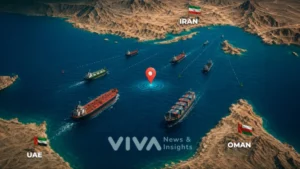
The reopening of the Strait of Hormuz is perhaps the most significant immediate outcome of the deal. Often described as the world’s most important oil transit point, the Strait is a narrow waterway between Oman and Iran that connects the Persian Gulf with the Gulf of Oman and the Arabian Sea.
Statistically, the Strait of Hormuz is the primary artery for the global energy market:
- Volume: Approximately 20% to 30% of the world’s total oil consumption passes through the Strait daily.
- Liquefied Natural Gas (LNG): Nearly 80% of the LNG from Qatar, one of the world’s largest exporters, must traverse this route.
- Geopolitics: The Strait is only 21 miles wide at its narrowest point, with shipping lanes in both directions being only two miles wide.
The U.S. naval blockade, which the President has now ordered to be lifted, had created a "choke point" that threatened to collapse the economies of several energy-dependent nations in Europe and Asia. By allowing the "oil to flow" again, the Trump administration is looking to alleviate inflationary pressures at home while simultaneously removing a primary trigger for Iranian military retaliation.
Background Context: The Road to the 2026 Crisis
To understand the weight of this peace accord, one must look at the timeline of events leading up to June 2026. Following the contested geopolitical shifts of 2024 and 2025, the Middle East saw a resurgence of "proxy" conflicts. The situation reached a critical point in early 2026 when maritime incidents in the Gulf of Oman led the United States to deploy a massive carrier strike group and implement what it termed a "defensive blockade" to prevent the alleged smuggling of advanced weaponry.
Iran responded by threatening to mine the Strait of Hormuz, a move that would have effectively ended global oil shipments from the region. For several months, the world watched as the two nations stood on the precipice of war. The "permanent cessation of military operations" mentioned by Prime Minister Sharif suggests that the deal covers not just the naval standoff, but also the cessation of drone and missile exchanges that had become frequent across the region’s "gray zones."

Preliminary Timeline of the 2026 Peace Accord
- January 2026: Tensions escalate in the Persian Gulf following several drone attacks on commercial tankers.
- March 2026: The U.S. Navy implements a restricted maritime zone, effectively blockading major Iranian ports.
- April 2026: Pakistan, acting as a neutral mediator, begins shuttle diplomacy between Washington and Tehran. Secret meetings are reportedly held in Islamabad.
- May 2026: Reports of a draft "Peace Memorandum" begin to surface in diplomatic circles in Geneva.
- June 10, 2026: A temporary ceasefire is observed as final terms regarding the $27 billion asset release are negotiated.
- June 15, 2026: President Trump and PM Sharif officially announce the completion of the deal and the reopening of the Strait of Hormuz.
- June 19, 2026: Scheduled official signing ceremony in Switzerland.
Global Reactions and Political Analysis
The reaction from the international community has been a mix of relief and cautious optimism. European Union leaders, who have struggled with energy insecurity since the mid-2020s, welcomed the news. A spokesperson for the European Commission stated that "the restoration of maritime freedom in the Strait of Hormuz is essential for global economic stability."
However, the deal is not without its critics. Hardliners in both Washington and Tehran are expected to scrutinize the details of the $27 billion asset release. Domestic critics of the Trump administration may argue that the deal provides too much "up-front" capital to a regime that has historically funded regional proxies. Conversely, within Iran, hardline factions may view the agreement as a compromise on national sovereignty.
From a geopolitical perspective, this deal represents a significant shift in U.S. foreign policy. It suggests a "transactional" approach to peace—using economic leverage and naval dominance to force a settlement that prioritizes global trade over ideological regime change. By involving Pakistan and choosing Switzerland for the signing, the administration has also acknowledged the necessity of multilateralism in resolving deep-seated regional animosities.
Implications for Energy and Regional Stability
As the U.S. Navy begins the process of withdrawing its blockade assets, the focus turns to the technicalities of the "permanent cessation of military operations." The mention of Lebanon is particularly crucial. If the deal successfully de-escalates the northern border of Israel and reduces the influence of Iranian-backed militias in the Levant, it could pave the way for a broader "Grand Bargain" in the Middle East.
For the energy sector, the "engines" being turned back on means more than just a drop in oil prices. It signifies a restoration of the supply chain that had been fractured for months. Insurance premiums for maritime shipping are expected to plummet, and the backlog of tankers waiting to transit the Strait will likely take weeks to clear, signaling a busy summer for the global shipping industry.
Conclusion and Next Steps
The world now looks toward the Swiss summit on June 19. While the announcements from President Trump and Prime Minister Sharif have provided the framework, the "fine print" of the agreement will be essential in determining if this is a lasting peace or a temporary reprieve. Key questions remain regarding the verification of Iran’s military cessation and the specific conditions under which the $27 billion in assets will be utilized.
For now, the immediate threat of a catastrophic war in the Persian Gulf appears to have been averted. The reopening of the Strait of Hormuz stands as a testament to the power of high-stakes diplomacy and the enduring necessity of the world’s most critical maritime trade routes. As President Trump noted, the engines are starting, and for the first time in months, the global economy can breathe a sigh of relief as the oil begins to flow once more.