Socio Today
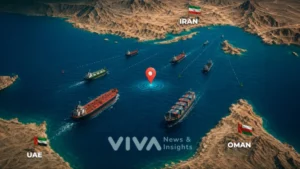
Global energy markets experienced a significant correction during the early hours of Asian trading on Monday, June 15, 2026, following a breakthrough diplomatic announcement that signals the end of the devastating military conflict between the United States and the Islamic Republic of Iran. The de-escalation, facilitated by the mediation of the Pakistani government, has led to the immediate reopening of the Strait of Hormuz and the lifting of the United States’ maritime blockade on Iranian waters. Prime Minister Shehbaz Sharif of Pakistan confirmed the cessation of hostilities, stating that a formal Memorandum of Understanding (MoU) is scheduled to be signed by representatives of both nations on Friday, June 19, 2026, in Geneva, Switzerland.
The news sent immediate ripples through the commodities exchanges. Brent crude, the international benchmark for global oil prices, plummeted by 3.8 percent to settle at $84.02 per barrel. Simultaneously, West Texas Intermediate (WTI), the benchmark for U.S. crude, saw a sharper decline of 4.1 percent, trading at $81.40 per barrel. This downward trend marks a sharp reversal from the triple-digit prices that have plagued the global economy since the outbreak of the conflict earlier this year.
The Diplomatic Breakthrough in Islamabad
The announcement of the peace deal came as a surprise to many geopolitical observers who had feared a protracted war of attrition. Prime Minister Shehbaz Sharif, acting as the primary mediator between Washington and Tehran, delivered the statement from Islamabad, highlighting months of "quiet, persistent back-channel diplomacy." According to the Prime Minister, the agreement focuses on a mutual "return to maritime normalcy," which includes the withdrawal of U.S. naval strike groups from the immediate vicinity of Iranian ports and the dismantling of Iranian naval mines and fast-attack craft deployments within the Strait of Hormuz.
The choice of Geneva as the venue for the signing ceremony on June 19 underscores the involvement of neutral international bodies and the Swiss government’s traditional role as a facilitator for U.S.-Iran relations. The upcoming MoU is expected to outline a roadmap for long-term regional stability, though specific details regarding nuclear enrichment or regional proxy involvement remain under wraps.
Shortly after the Pakistani announcement, U.S. President Donald Trump took to his Truth Social platform to confirm the development. In a characteristic post, the President declared that "oil will flow again," and assured the international community that the U.S. maritime blockade would be dismantled immediately. "We are bringing the prices down for the American worker. The Strait is open. A great deal for the world!" the President wrote, signaling a shift from his previous "maximum pressure" military rhetoric toward an "energy-first" economic victory.
Chronology of the 2026 Conflict
To understand the magnitude of today’s market reaction, one must look at the volatile timeline that led to this crisis. The conflict, which many analysts have dubbed the "Hundred-Day Energy War," began on February 28, 2026, following a series of escalations in the Persian Gulf.
- February 28, 2026: Hostilities officially broke out following a drone skirmish in the Gulf of Oman. Iran announced the closure of the Strait of Hormuz, citing national security concerns. The U.S. responded by deploying two carrier strike groups and initiating a total maritime blockade of Iranian oil exports.
- March 17, 2026: Brent crude surged past the $100 mark as the realization of a prolonged supply disruption hit the markets. Images from the Ruhr Oel refinery in Gelsenkirchen, Germany, showed tankers sitting idle at fuel depots, symbolizing the paralysis of the European energy sector.
- April 2026: Global oil prices hit their peak at $120 per barrel. The "energy shock" triggered double-digit inflation in several emerging economies and forced the International Energy Agency (IEA) to coordinate a massive release of strategic petroleum reserves.
- May 10, 2026: Pakistan, maintaining a delicate balance between its partnership with the U.S. and its shared border with Iran, offered to host secret talks in Islamabad.
- June 1, 2026: Rumors of a "maritime ceasefire" began to circulate, though both Washington and Tehran initially denied that a deal was close.
- June 15, 2026: The official announcement of the peace deal and the subsequent 4% drop in oil prices.
Prior to the outbreak of war in February, Brent crude had been trading at a relatively stable $70 per barrel. The nearly 70% increase at the height of the war had threatened to tip the global economy into a deep recession, making today’s news a welcome relief for central banks and consumers alike.
Impact on Global Energy Infrastructure
The conflict had a particularly grueling impact on European and Asian refineries. The Ruhr Oel refinery in Gelsenkirchen, operated by BP Gelsenkirchen GmbH, serves as a case study for the localized effects of the war. During the peak of the blockade, the refinery was forced to operate at 60% capacity due to the lack of sour crude typically sourced from the Middle East. With the reopening of the Strait of Hormuz, logistics experts expect a "flush" of delayed shipments to reach European ports within the next 14 to 21 days.
The Strait of Hormuz is the world’s most important oil transit chokepoint. Approximately 20 to 21 million barrels of oil pass through the narrow waterway daily, representing about 20% of global petroleum consumption. The closure of this artery was the primary driver behind the $120 per barrel peak. Industry analysts at Goldman Sachs and Morgan Stanley had previously warned that if the blockade continued into the third quarter of 2026, prices could have reached $150.
Official Reactions and Global Sentiment
The reaction from the international community has been one of cautious optimism. In London, a spokesperson for the British government welcomed the news, stating that the "restoration of the freedom of navigation is paramount for global food and energy security."
In Tehran, the Iranian Ministry of Foreign Affairs issued a brief statement confirming that "technical arrangements" were being made to facilitate the passage of commercial vessels. While the tone from Tehran remains more reserved than President Trump’s, the economic necessity of the deal is clear. Iran’s economy has been under immense strain due to the blockade, with its currency reaching record lows against the dollar in May.
Energy analysts, however, warn that the "peace dividend" might take time to fully manifest at the gas pump. "While the paper markets (futures) are reacting instantly with a 4% drop, the physical movement of oil takes time," said Marcus Valerius, a senior energy analyst at a London-based firm. "We have a massive backlog of tankers. We also have to consider the insurance premiums. Maritime insurance for the Gulf spiked by 500% during the war. Those rates won’t come down until the signing on Friday is finalized and the mines are confirmed to be cleared."
Broader Economic and Geopolitical Implications
The mediation by Pakistan marks a significant shift in the geopolitical landscape of South Asia. By successfully navigating the demands of a Republican-led U.S. administration and the ideological rigidity of the Iranian leadership, Islamabad has positioned itself as a pivotal diplomatic player. This successful mediation is likely to result in increased economic aid or favorable trade terms for Pakistan from both the West and regional partners.
For the United States, the end of the conflict allows the Trump administration to pivot back to domestic economic issues ahead of mid-term legislative cycles. The high cost of gasoline had become a significant political liability. By securing the "reopening of the taps," the administration is looking to claim a victory for its "America First" energy policy without the need for a full-scale ground invasion.
The broader implications for OPEC+ are also being monitored. The cartel is expected to hold an emergency meeting in early July to discuss production quotas. During the war, several members—including Saudi Arabia and the UAE—increased production to make up for the Iranian shortfall. With Iranian oil now poised to return to the market, OPEC+ will face the challenge of managing a potential supply glut to prevent prices from crashing below the $70 mark.
Looking Ahead to the Geneva MoU
The eyes of the world are now fixed on Geneva for the June 19 signing. The Memorandum of Understanding is expected to include several key pillars:
- Security Guarantees: A commitment to non-aggression in the Persian Gulf and the Gulf of Oman.
- Monitoring Mechanisms: The possible deployment of neutral observers (perhaps from the UN or a coalition of neutral nations) to monitor shipping lanes.
- Sanctions Relief: A phased approach to lifting the maritime blockade in exchange for Iranian transparency regarding its naval movements.
As of Monday afternoon, market volatility remains high, but the prevailing sentiment is one of relief. The $84.02 Brent price reflects a market that is pricing in a successful signing on Friday. Should the Geneva talks hit a last-minute snag, analysts warn that prices could snap back to the $100 level instantly. However, for the first time in nearly four months, the "war premium" on global energy is beginning to evaporate, offering a glimmer of hope for a stabilized global economy in the second half of 2026.