Socio Today
The global landscape of personal finance and lifestyle priorities has undergone a seismic shift over the last decade, with traveling emerging as a fundamental necessity rather than a luxury for the contemporary generation. This phenomenon, often categorized under the "experience economy," posits that the investment in personal experiences yields a significantly higher long-term value than the traditional accumulation of material assets. For millennials and Gen Z, the pursuit of global exploration is no longer a peripheral activity but a central pillar of their identity, driven by a desire for self-actualization, cultural immersion, and psychological resilience.
The Generational Pivot: From Assets to Experiences
Historically, previous generations—notably the Baby Boomers and early Gen X—defined success through the acquisition of tangible assets. The traditional "life roadmap" involved securing stable employment, purchasing a home, and investing in high-value goods such as automobiles. These milestones provided a sense of security and social standing within a localized community. However, the socio-economic landscape for the millennial generation has changed the calculus of fulfillment.
Rising real estate prices in urban centers, the shift toward a gig economy, and a more fluid job market have made traditional markers of adulthood less attainable or, in some cases, less desirable. Consequently, there is a marked trend toward "experiential capital." According to recent consumer behavior studies, millennials are more likely to spend their discretionary income on concerts, dining, and, most prominently, travel. This demographic views travel as a form of non-traditional investment—one that pays dividends in the form of memories, broadened perspectives, and personal growth that remain intact regardless of economic volatility.
Technological Catalysts and the Visual Economy
The surge in travel as a lifestyle choice cannot be divorced from the rapid advancement of technology. The proliferation of high-speed internet, smartphones, and social media platforms has transformed the way the world is perceived. Platforms like Instagram and TikTok have democratized travel inspiration, moving it away from curated brochures and into the hands of real-time influencers and peers. This "visual economy" creates a constant feedback loop where the aesthetic and emotional appeal of natural landscapes and foreign cultures are broadcast globally, fueling a collective desire for exploration.
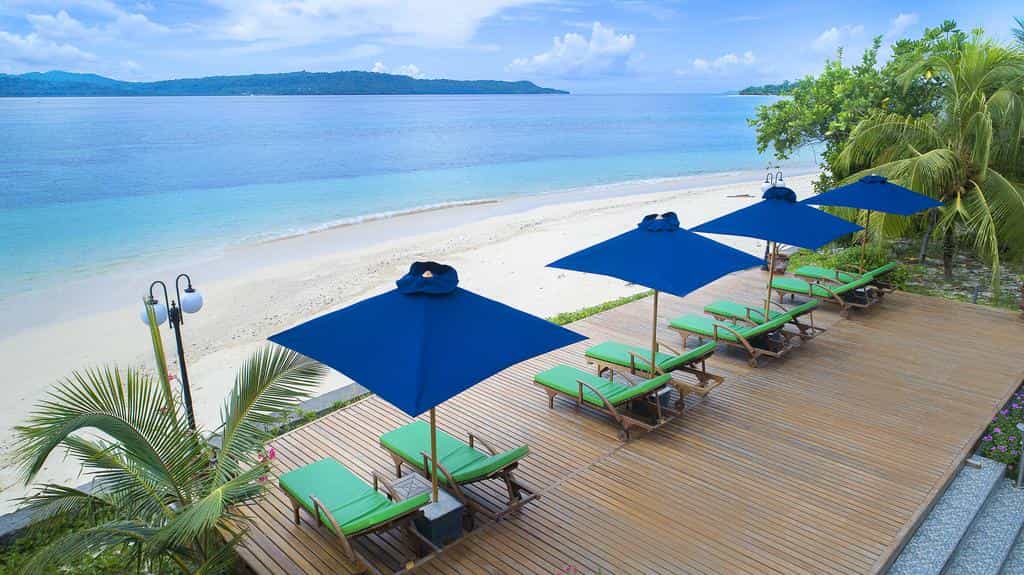
Furthermore, the "travel-tech" ecosystem—encompassing everything from ride-sharing apps and digital maps to decentralized accommodation platforms like Airbnb—has lowered the barrier to entry. Information that was once the exclusive domain of travel agents is now accessible to anyone with a smartphone, allowing for more spontaneous and cost-effective journeys. This technological empowerment has given the younger generation the confidence to venture into remote or non-traditional destinations, further solidifying travel as a sustainable lifestyle.
Psychological Implications: Finding the True Self
Sociologists suggest that the modern obsession with travel is rooted in a search for authenticity. In an increasingly digital and automated world, the "lifestyle travel" movement offers a return to the tactile and the real. By stepping out of their "safe zones" or domestic bubbles, individuals are forced to confront challenges that are absent in their daily routines. This process of navigating unfamiliar environments serves as a catalyst for self-discovery.
The original premise of lifestyle traveling suggests that by exploring places that were previously feared or unknown, individuals can uncover their true identity. This is supported by psychological research into "transformative travel," which indicates that extended periods of travel can lead to increased open-mindedness, enhanced creativity, and a more robust sense of self-reliance. For many, the "journey" is less about the destination and more about the internal shifts that occur when one is forced to adapt to a new set of cultural and social variables.
Strategic Framework for Adopting a Travel-Centric Lifestyle
Transitioning from occasional vacationing to a travel-integrated lifestyle requires more than just a passport; it necessitates a fundamental shift in mindset. For those seeking to adopt this lifestyle, industry experts and seasoned travelers suggest a three-pillared approach focused on psychological readiness, operational flexibility, and cultural adaptability.
1. Psychological Readiness: The Power of Resolve
The first step in making travel a lifestyle is the transition from "thinking" to "acting." Many prospective travelers are paralyzed by the wait for the "perfect" financial moment. However, the lifestyle travel philosophy advocates for starting with current resources. This requires a strengthening of will and the courage to face uncertainty. It is an acknowledgment that the "outside world" is rarely as daunting as it appears in one’s imagination. By prioritizing the journey over the accumulation of a specific "savings goal," individuals can begin to integrate travel into their lives incrementally, whether through domestic exploration or budget-conscious international trips.

2. Operational Flexibility: Embracing the Flow
A common pitfall for novice travelers is the over-scheduled itinerary. While planning is essential for safety and logistics, a rigid schedule often acts as a barrier to the most meaningful experiences. Lifestyle travel thrives on the "flow"—the ability to react to local recommendations, unexpected weather changes, or spontaneous opportunities.
Experts suggest creating a broad framework for a journey but leaving space for the unplanned. This flexibility allows travelers to engage with local wisdom and hidden gems that are rarely found in mainstream guides. By surrendering the need for total control, the traveler moves from being a mere observer to an active participant in the environment, allowing the journey to unfold organically.
3. Cultural Adaptability: Developing Global Competence
The third pillar is the ability to adapt to diverse social structures, languages, and cultural norms. To truly live the travel lifestyle, one must move beyond the "tourist" mindset and toward that of a "global citizen." This involves a willingness to learn basic local phrases, respect traditional customs, and navigate different social etiquettes.
Adaptability is not just a survival skill; it is the key to deeper engagement. Those who can adjust their behavior and expectations to match their surroundings are more likely to build genuine connections with local communities. This "cultural intelligence" (CQ) is one of the most valuable assets a person can possess in the modern globalized economy, making travel an investment that enhances professional as well as personal life.
The Economic Impact and Future Outlook
The rise of lifestyle travel has profound implications for the global tourism industry. There is a visible shift away from "mass tourism" toward "niche" or "impact-driven" travel. Destinations are increasingly being evaluated on their authenticity and sustainability rather than just their luxury offerings. This has led to the rise of the "Digital Nomad" phenomenon, where individuals combine remote work with constant travel, effectively blurring the lines between career and leisure.

Governments and local economies are also reacting. Many countries have introduced "Digital Nomad Visas" to attract this demographic, recognizing that lifestyle travelers contribute more to the local economy over a longer period than short-term tourists. This trend suggests that the integration of travel into daily life will only accelerate as remote work becomes a standard practice across various industries.
Socio-Economic Analysis: The Long-Term Value of Experience
While critics argue that prioritizing travel over asset accumulation is financially irresponsible, a deeper analysis suggests otherwise. The "Experience Economy" theory argues that material goods undergo "hedonic adaptation"—the joy of a new car or a new gadget fades quickly as the owner becomes accustomed to it. In contrast, experiences tend to increase in value over time. They are resistant to the "comparison trap" because every individual’s journey is unique.
Furthermore, the skills gained through lifestyle travel—problem-solving, cross-cultural communication, and emotional resilience—are highly transferable to the modern workforce. In a world where technical skills are rapidly becoming obsolete due to AI and automation, these "human-centric" skills gained on the road are becoming increasingly valuable. Thus, the "investment in experience" is not just a romantic notion; it is a strategic approach to personal development in the 21st century.
Conclusion: A Legacy of Memories
As the millennial generation moves toward middle age and Gen Z enters the workforce, the emphasis on lifestyle travel is expected to remain a dominant cultural force. The shift from "having" to "being" represents a maturation of societal values, where the richness of one’s life is measured by the breadth of their horizons rather than the square footage of their home.
Ultimately, the goal of lifestyle travel is to ensure that when an individual reflects on their life in their later years, they are greeted by a tapestry of diverse cultures, challenging adventures, and profound self-realizations. By strengthening determination, remaining flexible, and mastering the art of adaptation, anyone can transform the world into their home. The world is vast, and for those brave enough to explore it, it offers a form of wealth that no bank can hold and no market crash can diminish. Traveling, therefore, is not an escape from life, but an insurance policy for a life well-lived.