Socio Today
Jakarta, Indonesia – Astra Honda Motor (AHM) has acknowledged and is addressing customer complaints circulating on social media regarding alleged engine oil leaks in the newly launched Honda Vario 160 scooter. The concerns emerged shortly after the model’s official market introduction, sparking discussion among consumers and raising questions about the product’s initial quality.
Thomas Wijaya, Executive Vice President Director of AHM, stated that the company is committed to investigating and resolving any issues reported by customers through its official network of Honda service centers, known as AHASS (Astra Honda Authorized Service Station).
"If there are any inputs or needs from consumers, please come to our network, to AHASS," Wijaya told reporters in Jakarta on Friday, July 17th. He emphasized that all customer feedback is taken seriously and will be thoroughly examined.
While AHM has confirmed its intention to investigate, Wijaya did not immediately provide specific details about the potential causes of the alleged leaks. He explained that the company’s protocol involves a comprehensive assessment of each reported unit to accurately diagnose the problem. This approach underscores AHM’s commitment to understanding the specifics of each case before making any definitive statements.
Wijaya also reiterated AHM’s unwavering focus on product quality, a cornerstone of the Honda brand in Indonesia. "We have produced products with good quality, of course, which have passed various tests. Now, we will certainly see what the condition is like," he stated, reinforcing the company’s confidence in its manufacturing processes while remaining open to addressing any deviations.
The controversy gained traction following a social media post, initially on TikTok, that showcased alleged oil seepage from the engine area of a Honda Vario 160. The original poster claimed the issue appeared only about a day after they took delivery of their new scooter. Although the original post was later removed by the user, similar content was re-shared by other accounts, amplifying the concern across online platforms.
Despite these emerging concerns, Wijaya indicated that the market demand for the Vario 160 has remained robust. This suggests that the alleged issues, while significant for the affected consumers, have not yet broadly impacted the model’s overall market reception.
Background and Market Context

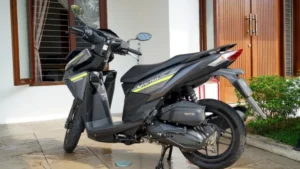
The Honda Vario 160 was launched with significant fanfare, aiming to capture a larger share of the competitive automatic scooter market in Indonesia. The model boasts a 156.9cc, four-valve, eSP+ liquid-cooled engine. Its maximum power output remains unchanged at 15.19 horsepower, peaking at 8,500 rpm. Beyond its mechanical specifications, the Vario 160 also features updated aesthetics and enhanced features, appealing to a younger and more style-conscious demographic. AHM currently offers the Vario 160 in three variants: CBS priced at Rp 28.2 million, CBS Nitro at Rp 28.7 million, and ABS at Rp 31.4 million. These pricing tiers position the Vario 160 as a mid-to-high range option within the 150cc-160cc scooter segment.
The Indonesian motorcycle market is one of the largest globally, with automatic scooters dominating sales due to their practicality and ease of use in urban environments. Brands like Honda, Yamaha, and Suzuki vie for market dominance, and new model launches are closely watched by consumers and industry analysts alike. Product quality and reliability are paramount in this fiercely competitive landscape, where customer satisfaction directly translates to sales and brand reputation.
Chronology of Events
- Recent Launch: The Honda Vario 160 was officially introduced to the Indonesian market.
- Emergence of Complaints: Shortly after its release, social media platforms, notably TikTok, began featuring posts from consumers alleging engine oil leaks on their newly acquired Vario 160 units.
- User Removal and Resharing: The original TikTok post detailing the issue was reportedly deleted by its creator. However, the content was subsequently reposted by other users, leading to wider dissemination of the concerns.
- AHM’s Official Response: Astra Honda Motor, through its Executive Vice President Director Thomas Wijaya, publicly acknowledged the social media discussions and stated the company’s commitment to addressing customer complaints via its authorized service network (AHASS).
- Current Status: AHM is awaiting reports from affected customers to be brought to AHASS for inspection and diagnosis.
Supporting Data and Industry Trends
The Indonesian motorcycle industry has shown resilience, with automatic scooters consistently being the best-selling segment. In 2023, total motorcycle sales in Indonesia reached over 6 million units, with automatic scooters accounting for a significant majority. Honda has historically been a dominant player in this market, with its various Vario models being perennial best-sellers.
The Vario series, in particular, has cultivated a reputation for reliability and fuel efficiency. The introduction of the Vario 160, with its larger engine capacity and modern features, was intended to further solidify Honda’s market position. However, early reports of potential mechanical defects, even if isolated, can significantly impact consumer perception. A study by the Indonesian Consumers Foundation (YLKI) has previously highlighted that product defects reported within the warranty period can lead to significant financial and reputational damage for manufacturers.
Broader Implications and Analysis
The alleged engine leaks, if widespread, could pose a significant challenge for AHM. The company has built its brand on a foundation of quality and customer trust. Any perceived lapse in this area, especially with a new model, can erode that trust and affect future sales.
- Customer Trust and Brand Reputation: The swift and transparent handling of these complaints is crucial. A perceived lack of response or inadequate resolution could lead to negative word-of-mouth, amplified by social media.
- Warranty and After-Sales Service: AHM’s commitment to using the AHASS network for resolution is a standard and effective approach. The efficiency and thoroughness of these service centers in diagnosing and rectifying the issue will be key. Customers will be looking for prompt repairs and clear explanations.
- Product Development and Quality Control: This incident raises questions about the pre-production testing and quality control measures for the Vario 160. While manufacturing defects can occur in any production run, early and recurring issues can point to systemic problems that need immediate attention.
- Market Competition: Competitors like Yamaha, which also offers popular scooter models in the same segment, will be closely monitoring the situation. Any perceived weakness in Honda’s new offering could present an opportunity for rivals.
AHM’s proactive acknowledgment of the issue and their stated commitment to customer service are positive first steps. The company’s ability to effectively address these concerns will be a critical determinant of the Vario 160’s long-term success and the continued strength of the Honda brand in the Indonesian market. The coming weeks will likely see further developments as more customers report their experiences and AHM provides updates on its investigation and resolution process.