Socio Today
A celestial projectile, confirmed as a rare and scientifically invaluable meteorite, has provided unprecedented insights into the potential origins of life on Earth. This extraordinary space rock, which spectacularly penetrated the roof of a New Jersey home on July 16, 2024, before coming to rest in a bedroom, has been found to harbor ancient organic compounds and traces of primordial saltwater. Scientists are hailing the "Hillsborough meteorite" as a unique time capsule, offering a pristine glimpse into the chemical conditions that may have fostered life in the early solar system. Its exceptional state of preservation, attributed to the homeowner’s swift and astute actions, has allowed researchers to conduct a forensic examination that promises to reshape our understanding of astrobiology and planetary evolution.
A Fiery Arrival: The Hillsborough Impact Event
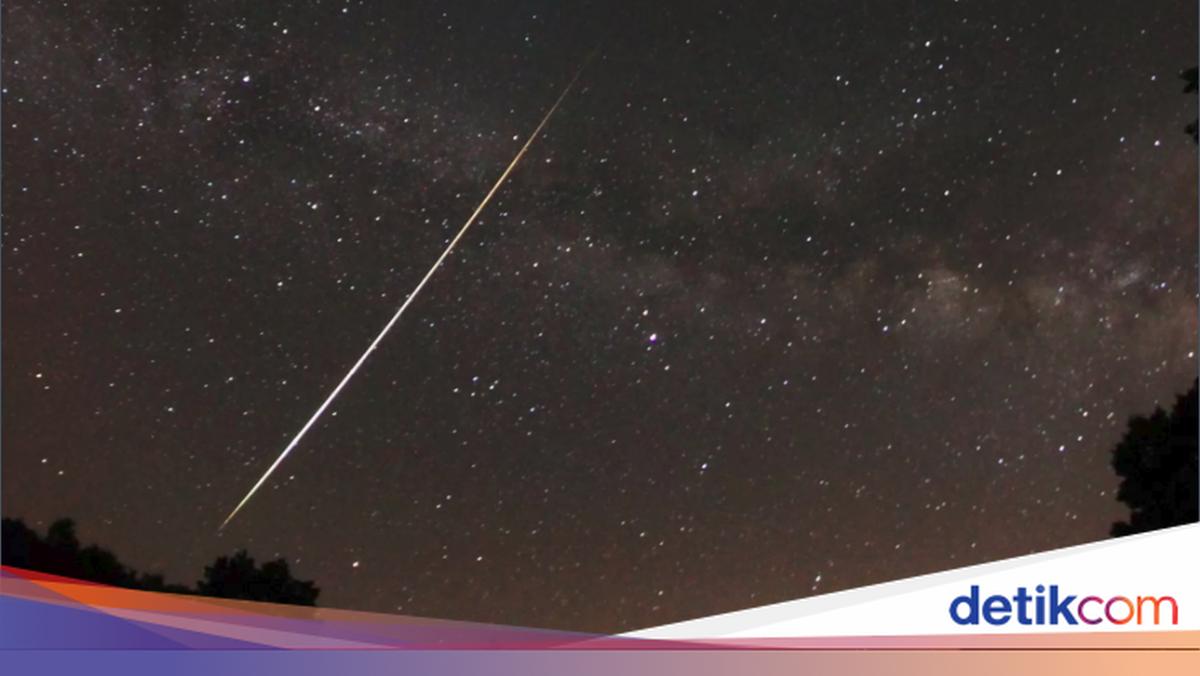
The dramatic sequence of events began on the afternoon of July 16, 2024, when a brilliant fireball streaked across the daytime sky over New York, visible to countless eyewitnesses. This luminous phenomenon signaled the fiery descent of an extraterrestrial object, a meteoroid, entering Earth’s atmosphere at an estimated speed of approximately 61,000 kilometers per hour (about 38,000 miles per hour). As the object plunged through the atmosphere, intense friction and pressure caused it to heat incandescently and subsequently fragment into multiple pieces. One such fragment, a significant portion weighing roughly 50 kilograms (approximately 110 pounds), maintained its trajectory, eventually impacting a residential property in Hillsborough, New Jersey.
The impact was sudden and forceful. The extraterrestrial projectile tore through the roof of a suburban house, creating a direct path into the living space below. The homeowner, who was present at the time, recounted the astonishing experience. "I was in the house when I heard a very loud bang," the resident reported to researchers. "When I entered the master bedroom, I saw a hole in the ceiling. I smelled a very strong sulfur odor and observed numerous black fragments and dust covering the bed, carpet, and surrounding area." Miraculously, despite the significant damage to the property and the unexpected nature of the event, no one was injured. The homeowner’s immediate reaction to the scene of impact would prove to be a pivotal moment for scientific discovery.
Preservation Prowess: The Homeowner’s Crucial Intervention
What transpired next was critical in elevating the Hillsborough meteorite from a mere curiosity to an unparalleled scientific specimen. Recognizing the unusual nature of the debris and the pungent, unearthly odor, the homeowner exercised remarkable foresight and caution. Instead of directly handling the fragments, they donned gloves, carefully wrapped the meteorite pieces in aluminum foil, and then stored them in a sealed glass jar. This series of rapid, thoughtful actions effectively isolated the extraterrestrial material from its new terrestrial environment.
This swift containment was paramount. Most meteorites, upon landing, are immediately exposed to Earth’s atmosphere, moisture, and terrestrial organic matter. This exposure can rapidly contaminate their delicate extraterrestrial chemistry, altering their original composition and making it challenging for scientists to discern true cosmic signatures from terrestrial impurities. By minimizing contact with human skin, preventing moisture absorption, and sealing the fragments, the homeowner inadvertently created a pristine sample, preserving its unique chemical fingerprint in a state rarely achieved in meteorite falls. Scientists universally lauded this exemplary response, acknowledging that it single-handedly maximized the scientific yield of this extraordinary event.
A Celestial Anomaly: Classification and Scientific Significance
Subsequent analysis quickly confirmed the extraterrestrial origin of the fragments and led to its formal designation as the "Hillsborough meteorite." Researchers, publishing their findings in the prestigious journal Science Advances, classified the rock as a CM1/2 carbonaceous chondrite. This classification places the Hillsborough meteorite among the most primitive and scientifically valuable meteorites known to exist.
Carbonaceous chondrites are a rare type of stony meteorite, representing only about 4% of all meteorites that fall to Earth. They are considered relics from the earliest days of our solar system, essentially unaltered fragments of the protoplanetary disk from which the Sun and planets formed some 4.5 billion years ago. The "CM" designation refers to the Mighei-type carbonaceous chondrites, characterized by a high abundance of carbon compounds, water-bearing minerals, and often a fine-grained matrix. The "1/2" subtype further indicates an extremely low degree of aqueous alteration on its parent asteroid, signifying that it has undergone minimal chemical changes since its formation, preserving its original chemical inventory to an exceptional degree.
What makes the Hillsborough meteorite particularly extraordinary, even among CM chondrites, is its pristine condition. The rapid and meticulous recovery prevented significant contamination, a problem that plagues the study of many other meteorites. This unblemished state allows scientists to study its original composition with an unprecedented level of accuracy, providing a clearer, unadulterated picture of the chemistry prevalent in the early solar system.
Echoes of Life’s Genesis: Organic Compounds and Ancient Brine
The true scientific marvel of the Hillsborough meteorite lies in its internal composition. Forensic analysis revealed the presence of salt crystals, a diverse array of organic compounds, and various types of amino acids—the fundamental building blocks of proteins and, by extension, life itself. Crucially, these components were found to have formed when the meteorite’s parent asteroid still contained significant amounts of ancient saltwater billions of years ago.
Peter Jenniskens, a renowned meteor astronomer from the SETI Institute and NASA Ames Research Center, who played a leading role in the research, elaborated on these profound findings. "Forensic studies of this meteorite fragment show preserved materials from near the surface of a small primitive asteroid where concentrated brine once flowed," Jenniskens stated. He emphasized the groundbreaking nature of this discovery: "Such a process was previously unknown for this type of protoplanetary world." This suggests that liquid water, a prerequisite for life as we know it, existed and interacted with organic matter on primitive asteroids far from the Sun in the early solar system, a revelation that significantly broadens our understanding of habitable environments beyond Earth.
The presence of amino acids and other complex organic molecules within the meteorite directly supports the hypothesis that extraterrestrial impacts played a crucial role in delivering the essential chemical ingredients for life to early Earth. For billions of years, a continuous bombardment of carbonaceous asteroids and comets is believed to have supplied Earth with vast quantities of water and organic compounds, effectively seeding our planet with the raw materials from which life eventually emerged. The Hillsborough meteorite provides direct, exceptionally well-preserved evidence for this crucial delivery mechanism. Jenniskens evocatively captured the significance of the chemical fingerprint within the meteorite: "In a sense, you can imagine it like smelling the atmosphere of early Earth at the time of life’s beginnings."
Broader Implications: Rewriting the Astrobiological Narrative
The findings from the Hillsborough meteorite have far-reaching implications for astrobiology, planetary science, and our understanding of the origins of life. The discovery solidifies the role of carbonaceous asteroids as potential cosmic nurseries for prebiotic chemistry. It suggests that the chemical processes necessary for synthesizing complex organic molecules and even the presence of liquid water were not exclusive to Earth or its immediate vicinity in the early solar system but were widespread on primitive asteroid bodies.
This strengthens the "panspermia" hypothesis, which posits that life or its precursors could be transported across space. While not suggesting fully formed life, it provides compelling evidence for the delivery of life’s fundamental building blocks. The detailed chemical analysis of this pristine sample offers scientists an unparalleled opportunity to reconstruct the specific environmental conditions and chemical reactions that occurred on the parent asteroid. This, in turn, allows for more accurate modeling of the conditions that might have existed on early Earth, guiding research into how simple organic molecules transitioned into self-replicating systems.
Furthermore, the Hillsborough meteorite opens new avenues for research into exoplanetary habitability. If complex organic chemistry and liquid water could exist on small, primitive asteroids, it suggests that the chemical ingredients for life might be abundant throughout the universe, increasing the probability of life arising elsewhere. The study of such meteorites helps scientists understand the chemical inventory of nascent planetary systems and the processes that lead to the formation of planets, moons, and ultimately, potentially life-bearing worlds.
A Collaborative Scientific Endeavor
The analysis of the Hillsborough meteorite involved a dedicated team of international scientists from various institutions, including the SETI Institute, NASA Ames Research Center, and other collaborating universities. Such interdisciplinary efforts are typical in meteorite research, drawing expertise from geology, chemistry, astronomy, and astrobiology. The publication in Science Advances underscores the rigor of the research and the significance of its findings to the broader scientific community.
The rapid response of the homeowner, combined with the swift mobilization of scientific resources, has transformed a disruptive impact event into a scientific triumph. This tiny fragment of the cosmos, inadvertently delivered to a New Jersey bedroom, now serves as a powerful testament to the dynamic interplay between space and Earth, offering profound insights into the ancient processes that laid the groundwork for our existence. As scientists continue to delve into its secrets, the Hillsborough meteorite promises to remain a cornerstone in our quest to understand where we come from and whether we are alone in the universe.