Socio Today
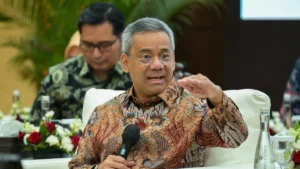
Jakarta, VIVA – On Sunday, July 19, 2026, Indonesia’s Minister of Finance, Purbaya Yudhi Sadewa, affirmed the government’s steadfast commitment to bolstering the nation’s Micro, Small, and Medium Enterprises (MSME) sector as a cornerstone strategy to fortify the Rupiah’s exchange rate against the US dollar. This proactive stance comes amidst persistent global market volatilities that continue to exert pressure on emerging market currencies, including Indonesia’s. The Minister underscored that a robust domestic economy, particularly driven by a thriving MSME sector, is the most effective bulwark against external financial shocks and a key determinant for the Rupiah’s long-term appreciation.
Background on Rupiah Volatility and Global Headwinds
The Indonesian Rupiah, like many other currencies in developing economies, has frequently experienced periods of fluctuation against major global currencies, most notably the US dollar. These movements are often influenced by a complex interplay of internal and external factors. Domestically, inflation rates, interest rate differentials with advanced economies, and political stability play significant roles. Globally, however, the dominant forces often emanate from the monetary policies of major central banks, particularly the U.S. Federal Reserve, shifts in global commodity prices, and broader geopolitical developments.
In the period leading up to Minister Sadewa’s statement, global economic sentiments have been particularly challenging. Persistent inflation in major economies, leading to aggressive interest rate hikes by central banks like the Federal Reserve, has often triggered capital outflows from emerging markets as investors seek higher, safer returns in developed economies. This ‘flight to quality’ phenomenon typically puts downward pressure on emerging market currencies. Furthermore, ongoing geopolitical tensions, supply chain disruptions, and fluctuating energy prices have contributed to an environment of heightened uncertainty, making currency markets more susceptible to speculative movements. Minister Sadewa explicitly acknowledged these "global sentiments in the world market that we cannot control," highlighting the necessity for robust internal economic resilience.
Historically, the Rupiah has demonstrated both resilience and vulnerability. For instance, in late 2024 and early 2025, the Rupiah experienced significant pressure, depreciating by several percentage points against the dollar, reaching levels not seen in years, primarily due to the U.S. Federal Reserve’s hawkish stance and strong dollar index. While Bank Indonesia (BI) has actively intervened through market operations and interest rate adjustments to manage volatility, the government recognizes that sustainable currency strength ultimately derives from underlying economic fundamentals. This context provides a crucial backdrop for the government’s renewed focus on the MSME sector as a strategic economic stabilizer.
The Pivotal Role of MSMEs in Indonesia’s Economy
Indonesia’s MSME sector is not merely an economic segment; it is the very backbone of the nation’s economy, playing an indispensable role in employment generation, income distribution, and regional development. Comprising an estimated 64.2 million businesses, MSMEs collectively contribute over 60% to Indonesia’s Gross Domestic Product (GDP) and absorb nearly 97% of the total workforce. This vast network of small businesses spans across diverse sectors, from agriculture and manufacturing to services and creative industries, underpinning the livelihoods of millions of Indonesian households.
The resilience of MSMEs was particularly evident during the COVID-19 pandemic, when they proved to be more adaptable than larger corporations in navigating economic disruptions, albeit with significant government support. Their inherent flexibility, localized supply chains, and direct connection to local communities allowed them to recover relatively quickly, showcasing their importance as economic shock absorbers. Beyond their numerical contributions, MSMEs are also vital for fostering innovation, promoting local culture through unique products, and driving equitable economic growth across Indonesia’s sprawling archipelago, including remote and rural areas.
However, despite their immense potential, MSMEs often face significant challenges, including limited access to finance, lack of technological adoption, difficulties in market access, and insufficient managerial capabilities. Addressing these structural impediments has been a long-standing priority for successive Indonesian governments. The current administration’s emphasis on MSME empowerment is therefore not a novel concept but an intensification of existing efforts, framed within the broader context of national economic stability and currency strength.

Government’s Targeted Intervention: Interest Rate Reduction
A cornerstone of the government’s strategy, as highlighted by Minister Purbaya, is the substantial reduction in micro business loan interest rates for MSME actors. "President Prabowo has even ensured that loan interest rates for Micro Businesses (UMi) can decrease from 22 percent to eight percent," Sadewa stated. This dramatic reduction from 22 percent to a mere 8 percent represents a significant policy shift designed to alleviate the financial burden on micro-enterprises and stimulate their growth.
This policy is a direct response to one of the most persistent hurdles faced by small businesses: the high cost of capital. Traditionally, micro-enterprises, due to their perceived higher risk profiles and lack of collateral, have been subject to exorbitant interest rates from conventional lenders or informal financing sources. The 22 percent rate, while potentially reflecting the risk, made it exceedingly difficult for many nascent businesses to turn a sustainable profit, hindering expansion and job creation. The new 8 percent rate aligns more closely with subsidized rates offered through various government programs, making financing significantly more accessible and affordable.
This move is not merely about providing cheaper loans; it’s about unlocking the growth potential of millions of micro-entrepreneurs. With lower interest payments, businesses will have more capital to invest in inventory, equipment, or marketing, thereby increasing their productivity and competitiveness. This policy is expected to inject dynamism into the grassroots economy, encouraging new business formations and the expansion of existing ones. The Ministry of Finance, in conjunction with other government bodies, is committed to ensuring the smooth implementation and widespread awareness of this new interest rate regime, making it accessible to eligible MSMEs across the nation.
Broader Economic Strategy and Investment Climate
Minister Purbaya elaborated that the benefits of a strong MSME sector extend far beyond just the businesses themselves; they are integral to creating an attractive investment climate for both domestic and foreign capital. "Because people will invest in places where the economy grows well, and social and political stability is maintained," he explained. A thriving MSME sector contributes to robust economic growth, which in turn signals stability and potential to investors.
Indonesia’s economic growth trajectory has generally been positive, often hovering around the 5% mark in pre-pandemic years. Maintaining this growth, especially through diversified sectors like MSMEs, is crucial. Investors look for countries with predictable economic policies, a growing consumer base, and a stable political environment. When MSMEs prosper, they contribute to job creation, higher household incomes, and increased domestic consumption, all of which are powerful indicators of a healthy and expanding economy. This virtuous cycle – where MSME growth leads to economic stability, which attracts investment, further fueling growth – is a core tenet of the government’s long-term economic vision.
Furthermore, the government’s commitment to MSMEs is part of a broader strategy to enhance economic equity and reduce regional disparities. By empowering small businesses in various regions, the government aims to ensure that economic development is inclusive, rather than concentrated in urban centers. This focus on equitable growth inherently contributes to social and political stability, as it addresses potential grievances arising from economic inequality. The Ministry of Finance, under Minister Sadewa’s leadership, is tasked with coordinating these efforts, ensuring that fiscal policies, investment incentives, and regulatory frameworks are aligned to support this comprehensive economic strategy.
Expert Perspectives and Market Reactions
The announcement of reduced interest rates for micro-businesses and the emphasis on MSME-led growth have garnered attention from economic analysts and industry stakeholders. Observers generally view the policy positively, recognizing the critical role of MSMEs. Dr. Citra Dewi, a senior economist at the Institute for Economic and Financial Development (INDEF), commented, "Reducing interest rates for micro-enterprises is a crucial step. It directly addresses the capital access issue, which has historically constrained MSME growth. This, combined with sustained economic growth, can indeed provide a stronger foundation for Rupiah stability." She further added, "However, the challenge lies in effective implementation, ensuring the funds reach the intended beneficiaries, and complementing this with non-financial support like training and market access."

From the perspective of MSME associations, the move is a welcome relief. Mr. Budi Santoso, Chairman of the National MSME Association, stated, "This significant interest rate cut from 22% to 8% is a game-changer for countless micro-entrepreneurs. It will free up capital, allowing them to invest more in their businesses and create more jobs. This demonstrates a clear commitment from President Prabowo’s administration to the welfare of the common people." He also emphasized the need for simplified application processes and greater outreach to ensure all eligible businesses can benefit.
Bank Indonesia (BI), while maintaining its independence in monetary policy, is likely to view the government’s fiscal support for MSMEs as a complementary effort to its own mandate of maintaining Rupiah stability and controlling inflation. A stronger, more resilient domestic economy reduces the external vulnerability of the Rupiah, making BI’s task somewhat easier. Any measures that enhance the productive capacity of the economy and attract stable investment flows would align with BI’s objectives for macroeconomic stability. While BI focuses on managing liquidity and interest rates to anchor inflation and stabilize the currency, the government’s MSME policies aim to strengthen the real sector, creating a robust internal demand and supply dynamic that inherently supports currency strength.
Challenges and Future Outlook
Despite the positive implications of these policy measures, significant challenges remain. The global economic landscape is notoriously unpredictable. Future shifts in U.S. monetary policy, unexpected geopolitical events, or sudden swings in commodity prices could still exert pressure on the Rupiah, regardless of domestic strengths. While a strong MSME sector provides a buffer, it cannot entirely insulate the currency from extreme external shocks.
Domestically, the effective implementation of the reduced interest rate scheme will be crucial. Ensuring that micro-entrepreneurs are aware of the program, can easily access the loans, and have the necessary financial literacy to manage their businesses effectively are ongoing challenges. The administrative burden and potential for bureaucratic hurdles must be minimized. Furthermore, access to finance is just one piece of the puzzle. MSMEs also require support in terms of digitalization, market access (both domestic and international), product quality improvement, and managerial training to truly thrive and contribute maximally to the economy. The previous reference to Wamen Helvi Moraza’s statement on strengthening PLUT KUMKM (Integrated Business Service Center for Cooperatives and MSMEs) underscores the government’s recognition of the need for holistic support beyond just financial aid.
Looking ahead, the government’s strategy for the MSME sector is poised to be a long-term commitment. Minister Purbaya’s affirmation that "we will ensure from the Ministry of Finance and the government that the UMKM economy is paid attention to going forward" signals a sustained focus. The success of this strategy will not only be measured by the Rupiah’s exchange rate but also by tangible improvements in MSME growth rates, job creation figures, and the overall prosperity of Indonesian households. The integration of MSMEs into global value chains, fostering innovation, and promoting sustainable business practices will be critical for Indonesia to leverage its demographic dividend and achieve its ambitious economic development goals.
Conclusion
Minister of Finance Purbaya Yudhi Sadewa’s declaration on July 19, 2026, unequivocally highlights the Indonesian government’s strategic pivot towards empowering the MSME sector as a primary mechanism to stabilize and strengthen the Rupiah against the US dollar. By drastically cutting micro business loan interest rates from 22 percent to 8 percent, the administration, under President Prabowo’s directive, is taking concrete steps to reduce financial barriers for millions of small enterprises. This policy is not merely an isolated financial measure but an integral component of a broader economic strategy aimed at fostering sustainable growth, attracting investment through enhanced social and political stability, and building intrinsic resilience against uncontrollable global market sentiments. While challenges persist, particularly in navigating global uncertainties and ensuring effective policy implementation, the sustained focus on MSMEs is poised to be a transformative force, underpinning Indonesia’s journey towards greater economic prosperity and a more robust national currency.