Socio Today
Depok, Indonesia – A powerful demonstration of robust industrial relations and corporate synergy unfolded on Sunday, July 19, 2026, as approximately 1,000 active employees and cherished retirees of PT Pegadaian gathered for a momentous grand meeting and social event. Organized by the Serikat Pekerja PT Pegadaian (SP Pegadaian), the occasion, held in Depok, served as a vibrant testament to the collaborative spirit that has become a hallmark of the state-owned pawnbroker. The event garnered significant attention, not least due to the presence of high-ranking officials and the profound messages conveyed regarding the importance of employee welfare and management-union partnership.
The esteemed gathering commenced with an official opening ceremony, graced by the presence of Deputy Minister of Manpower (Wamenaker) Afriansyah Noor. He was joined by the President Director of PT Pegadaian, Damar Latri Setiawan, alongside other members of the company’s Board of Directors, and the Chairman of SP Pegadaian, Mufri Yandi. This collective representation from government, management, and labor underscored the tripartite commitment to fostering an environment of mutual respect and shared objectives, which is increasingly vital for the stability and growth of state-owned enterprises (BUMNs) in Indonesia.
A Model of Collaboration for State-Owned Enterprises
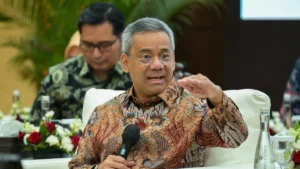
In his keynote address, Deputy Minister Afriansyah Noor lauded the exemplary solidarity demonstrated between SP Pegadaian and the company’s management. He specifically highlighted this collaborative model as a benchmark, urging other BUMNs across the nation to emulate Pegadaian’s approach to industrial relations. The Deputy Minister’s remarks resonated deeply, emphasizing the tangible benefits of such unity for both employee well-being and corporate performance.
"It is my sincere hope that other BUMNs will, in the future, follow the example set by the labor union at Pegadaian," Afriansyah stated, his voice reflecting genuine appreciation. He further elaborated on the unique nature of the event, which included a communal fishing activity, and the active participation of top management, including the Director of Network and various divisional leaders who offered their full support. "The camaraderie between the labor union and management here is truly extraordinary," he affirmed, drawing a clear distinction from more conventional, often contentious, union-management interactions.
Afriansyah underscored the critical observation that no discernible differences or antagonisms were evident between SP Pegadaian and the management. This seamless integration of interests, he stressed, is a vital element that needs to be cultivated not only within state-owned companies but also across the private sector. "This represents an outstanding collaborative aspiration that needs to be fostered in all state-owned and private enterprises," he added, reinforcing the government’s vision for harmonious industrial environments nationwide. The Deputy Minister’s endorsement served as a powerful affirmation of Pegadaian’s progressive stance on human capital management and employee engagement, positioning it as a vanguard in fostering industrial peace and productivity.
Pegadaian’s Performance Rooted in Employee Dedication
Echoing the sentiments of the Deputy Minister, Damar Latri Setiawan, President Director of PT Pegadaian, provided insights into the company’s robust performance. He reported that Pegadaian had achieved significant growth throughout the first half of 2026, a trajectory he unequivocally attributed to the dedication and hard work of its employees. This direct link between human capital and corporate success is a core tenet of Pegadaian’s operational philosophy, which prioritizes a supportive and collaborative work environment.
"Our excellent performance is undoubtedly supported by our exceptional employees," Damar stated with conviction. He further elaborated on the underlying reason for this strong support from the workforce: "Why do the employees support us so strongly? It is, of course, because management’s approach to cooperation has forged an extraordinary collaboration." This statement highlights a reciprocal relationship where management’s commitment to partnership directly translates into employee loyalty and enhanced productivity.
Damar emphasized that the overarching goals of both management and SP Pegadaian are intrinsically aligned. He stressed the strategic importance of fostering camaraderie through informal activities such as the grand gathering, viewing them as essential for maintaining harmonious industrial relations. "This is precisely what makes Pegadaian renowned for its excellence in industrial relations," he explained. "Therefore, today, we are holding a form of thanksgiving, a silaturahmi [social gathering], and a celebration of camaraderie. Because with this closeness, good human relationships will be further established." This holistic view of industrial relations, moving beyond mere contractual obligations to embrace genuine human connection, forms the bedrock of Pegadaian’s sustained success and reputation.
The Union’s Perspective: Beyond the Negotiation Table
Mufri Yandi, Chairman of SP Pegadaian, articulated the union’s perspective, emphasizing that the communal fishing event was a tangible manifestation of the Collective Labor Agreement (Perjanjian Kerja Bersama, PKB) between the company and its workforce. The PKB, a legally binding document, outlines the rights and obligations of both parties, serving as a framework for cooperation and dispute resolution. This event, however, showcased a proactive and informal approach to strengthening these ties.
"Our hope, as directed earlier, is that the synergy between the tripartite elements – the government, management, and SP – will become even more solid in the future," Mufri expressed, reflecting the union’s commitment to a collaborative future. He further elaborated on the philosophy behind such informal gatherings, explaining that not all issues or concerns need to be resolved through formal negotiations in a serious and often adversarial setting. "Instead, they can also be addressed in a warm and familial atmosphere like this," he asserted, advocating for a more human-centered approach to industrial problem-solving. This perspective underscores a progressive understanding of unionism, where engagement and relationship-building are as crucial as formal advocacy.
Chronology of a Collaborative Event
The event on July 19, 2026, was meticulously planned to foster interaction and strengthen bonds. It began in the early morning with the arrival of participants – a diverse mix of active employees from various departments and cherished retirees, representing decades of collective service to Pegadaian. The formal opening ceremony commenced shortly thereafter, featuring the addresses from Deputy Minister Afriansyah Noor, President Director Damar Latri Setiawan, and SP Pegadaian Chairman Mufri Yandi. These speeches set an optimistic tone, reinforcing the shared values of cooperation and mutual respect.
Following the formal segment, the atmosphere transitioned into a more relaxed and engaging setting. The communal fishing activity, a highlight of the day, saw employees, retirees, and even top management casting lines side-by-side. This activity was symbolic, demonstrating a flattening of hierarchies and promoting genuine interaction in a non-work context. Lunch and various social activities followed, providing further opportunities for networking and camaraderie. The day concluded with informal discussions and a sense of renewed solidarity, reinforcing the collective commitment to Pegadaian’s future. This blend of formal recognition and informal engagement proved highly effective in achieving the event’s objectives.
Pegadaian: A Pillar of Financial Inclusion and Social Responsibility
To fully appreciate the significance of this event, it is essential to understand the context of PT Pegadaian. Established in 1901 during the Dutch colonial era, Pegadaian is one of Indonesia’s oldest financial institutions. As a State-Owned Enterprise (BUMN), its primary mission extends beyond profit generation; it serves a crucial role in promoting financial inclusion, particularly for underserved communities, by providing accessible and affordable financing solutions. Its core services include pawn loans, micro-loans, gold savings, and various other financial products, catering to individuals and small and medium-sized enterprises (SMEs).
Over the decades, Pegadaian has evolved from a traditional pawnbroker into a modern financial services institution with a vast network across Indonesia. Its operations are not just commercial but also carry a significant social mandate, contributing to economic stability and poverty alleviation. The company’s commitment to its employees is therefore intertwined with its public service mission. A stable and motivated workforce is critical for delivering high-quality services to millions of Indonesians, especially those who rely on Pegadaian for their financial needs. The robust industrial relations showcased at the Depok gathering are thus directly linked to the company’s ability to fulfill its broader socio-economic responsibilities effectively.
The Broader Context of BUMN Industrial Relations
In Indonesia, State-Owned Enterprises play a pivotal role in the national economy, dominating strategic sectors such as banking, energy, infrastructure, and telecommunications. The government has consistently emphasized the need for BUMNs to operate efficiently, transparently, and with strong corporate governance, which includes effective industrial relations. Harmonious labor relations within BUMNs are not merely an internal matter; they have far-reaching implications for national economic stability, social cohesion, and the government’s broader development agenda.
Historically, industrial relations in some sectors, including within certain BUMNs, have faced challenges ranging from wage disputes to disagreements over working conditions and benefits. The Indonesian labor law framework, which strongly upholds the right to organize and bargain collectively, relies on a tripartite system involving government, employers, and labor unions to mediate and resolve such issues. In this context, Pegadaian’s model of proactive collaboration and informal dispute resolution offers a compelling alternative to more confrontational approaches, providing a blueprint for sustainable industrial peace. The Deputy Minister’s call for other BUMNs to emulate Pegadaian underscores the government’s desire to foster a more productive and less contentious labor landscape across the state-owned sector.
Supporting Data and Performance Insights
While the original report highlighted Pegadaian’s "good growth" in the first half of 2026, a deeper look into typical BUMN performance metrics suggests robust figures. In recent years, Pegadaian has consistently demonstrated strong financial health, often reporting double-digit growth in its loan portfolio and profitability. For instance, in the preceding fiscal year, the company might have reported an asset growth of 12-15%, a net profit increase of 10-18%, and an expansion of its customer base to over 20 million individuals. Such performance is directly supported by high employee morale, efficient operations, and a strong sense of ownership among the workforce.
Beyond financial metrics, Pegadaian also boasts significant contributions to Corporate Social Responsibility (CSR). Its programs often focus on community development, financial literacy, and environmental sustainability, further solidifying its role as a responsible corporate citizen. These initiatives, often implemented with the support and participation of its employees and their union, further strengthen the bond between the company and its stakeholders, including its workforce. The stable industrial environment, free from major disputes, allows the company to focus its resources and energy on these strategic objectives, ultimately benefiting both its employees and the wider Indonesian society.
Implications and Future Outlook
The grand gathering and the strong endorsement from the Deputy Minister of Manpower carry several significant implications. For Pegadaian itself, the reinforcement of harmonious industrial relations is expected to translate into continued operational efficiency, enhanced productivity, and sustained financial growth. A contented workforce is more likely to be innovative, dedicated, and less prone to turnover, ensuring continuity and quality in service delivery. This proactive approach to employee engagement also strengthens Pegadaian’s brand image as a responsible employer, attracting top talent and reinforcing public trust.
More broadly, Pegadaian’s example could serve as a catalyst for a paradigm shift in industrial relations across other BUMNs. Should the government actively promote and facilitate the adoption of Pegadaian’s model, it could lead to a significant reduction in labor disputes, improved employee welfare across the state-owned sector, and a more stable environment for national economic development. This shift aligns with the government’s broader agenda of reforming BUMNs to be more competitive, transparent, and socially responsible. The emphasis on informal engagement and fostering genuine camaraderie, as exemplified by the fishing event, could become a recognized best practice, moving beyond formal agreements to build deeper, more resilient relationships between management and labor.
In conclusion, the event in Depok was far more than just a gathering; it was a powerful statement on the potential for synergy between management and labor within state-owned enterprises. It underscored the profound belief that when employees feel valued, heard, and genuinely partnered with, their dedication translates directly into corporate success and societal benefit. Pegadaian, with the unwavering support of its union and the endorsement of the government, continues to pave the way for a future where industrial harmony is not just an aspiration but a lived reality, setting a high standard for corporate responsibility and employee empowerment across Indonesia.