Socio Today
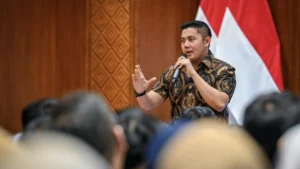
Jakarta, VIVA – A prominent political observer, Agung Baskoro, has voiced significant concerns regarding the operational style of President Prabowo Subianto’s administration, characterizing it as overly centralized around a single figure. Baskoro argues that this "Superman management" approach diminishes the effectiveness and visibility of key governmental roles, including that of Vice President Gibran Rakabuming Raka, various coordinating ministers, and other cabinet members, preventing them from maximizing their potential contributions. His critique, delivered during the "Apa Kabar Indonesia Malam" program on tvOne on Tuesday, October 21, 2025, underscores a call for a fundamental shift towards a more collaborative "super team" model of governance.
An Early Assessment of the Prabowo-Gibran Mandate
President Prabowo Subianto and Vice President Gibran Rakabuming Raka assumed office following a landslide victory in the early 2024 general elections, securing a robust mandate to steer Indonesia through a period of complex domestic and international challenges. Their campaign was largely predicated on promises of continuity with previous successful programs while introducing new initiatives focused on economic growth, social welfare, and national security. The administration, now several months into its term, has been under intense scrutiny from political analysts, civil society groups, and the public, all eager to assess its early performance and policy direction. Baskoro’s observations offer one of the most pointed criticisms regarding the internal dynamics and operational efficiency of the nascent government.
The "Superman Management" Critique and Its Implications
Agung Baskoro articulated his concern by stating, "I think, first, it’s about this ‘Superman management,’ which is too Prabowo-centric, needing to shift towards a ‘super team.’ How can the cabinet manage numerous problems and respond to them effectively?" This statement encapsulates the core of his argument: a perceived over-reliance on the President to personally address and resolve a wide array of issues, often sidelining other critical components of the executive branch.
According to Baskoro, this centralized approach renders the Vice President’s role "between present and absent." In the Indonesian political system, the Vice President is constitutionally mandated to assist the President and can be assigned specific tasks or portfolios. A lack of visible engagement or substantive responsibility for the Vice President could signal an underutilization of a key national leader and a potential weakness in the overall governance structure. Historically, Indonesian Vice Presidents have played crucial roles in specific policy areas, crisis management, or international relations, serving not merely as symbolic figures but as active participants in policy formulation and implementation. The current situation, as described by Baskoro, raises questions about the practical delegation of power and the strategic deployment of the nation’s second-highest office.
Furthermore, Baskoro extended his critique to the coordinating ministers, whose positions, he noted, appear largely symbolic. Indonesia’s cabinet structure features several coordinating ministries (e.g., Coordinating Ministry for Political, Legal, and Security Affairs; Coordinating Ministry for Economic Affairs; Coordinating Ministry for Human Development and Cultural Affairs; Coordinating Ministry for Maritime Affairs and Investment). These ministries are designed to harmonize policies and programs across multiple sector-specific ministries, preventing silos and ensuring integrated governmental action on complex issues. If these crucial coordinating roles are not substantively engaged, it could lead to fragmented policy implementation, inter-ministerial disputes, and a less coherent governmental response to national challenges. Baskoro emphasized, "How can the cabinet handle many problems and respond to them well? So, how do you optimize the Vice President? The Vice President appears to be between present and absent."
He further warned against the continuation of such a pattern, stating, "Because often we see that it is Mr. Prabowo who puts out the fires. And for me, this should not continue because it will make, forgive me, the Vice President, the Coordinating Ministers, and other ministers useless if this pattern is continued." This highlights a potential long-term risk: if the President consistently acts as the sole problem-solver, it could disincentivize initiative among other cabinet members, dilute accountability, and ultimately strain the President’s capacity, potentially leading to burnout and less effective governance overall.
The Imperative for a "Super Team" Approach
In advocating for a shift from "Superman management" to a "super team," Baskoro champions a governance model built on robust coordination, clear delegation, and collective responsibility. This model implies a greater empowerment of the Vice President, coordinating ministers, and individual ministry heads to take proactive roles in their respective domains. A "super team" approach would foster:
- Distributed Leadership: Allowing multiple leaders to take ownership of specific issues, thereby reducing the burden on the President and enhancing responsiveness.
- Enhanced Expertise Utilization: Ensuring that the specialized knowledge and experience of cabinet members are fully leveraged in policy development and problem-solving.
- Improved Inter-Agency Coordination: Strengthening the mechanisms through which ministries collaborate, leading to more integrated and effective policy outcomes.
- Increased Accountability: Clearly defining roles and responsibilities, making it easier to track progress and hold specific officials accountable for results.
- Resilience and Stability: A system less dependent on a single individual is inherently more resilient to unforeseen challenges and changes.
Such a paradigm shift would require deliberate efforts from the President to delegate authority, foster an environment of shared responsibility, and establish clear channels for collaborative decision-making. It would also necessitate a proactive stance from the Vice President and ministers to step into these empowered roles and demonstrate their capacity for effective leadership.
Addressing Challenges in Public Communication
Beyond the internal dynamics of governance, Baskoro also highlighted the critical need for improved public communication from the government. While acknowledging the progress made by institutions like the Presidential Staff Office (KSP) and other communication bodies, he stressed the necessity for clearer communication guidelines. "So that there are no frequent ‘slips of tongue,’ so that the communication isn’t chaotic," he explained.
Consistent and coherent public communication is paramount for any government. Inconsistent messaging, contradictory statements, or a lack of clarity can quickly erode public trust, create confusion among stakeholders, and even deter foreign investment. A unified voice, speaking with authority and consistency, is essential for:
- Maintaining Public Trust: Clear communication builds confidence in the government’s competence and transparency.
- Managing Expectations: Effectively conveying policy goals, challenges, and progress helps manage public expectations and prevent misinformation.
- Projecting Stability and Credibility: A government that communicates clearly and consistently projects an image of stability and reliability to both domestic and international audiences.
- Facilitating Policy Implementation: When the public and various sectors understand government policies, their implementation becomes smoother and more effective.
Baskoro warned that allowing communication inconsistencies to persist "can reduce public trust and that of other international stakeholders." This underscores the broader impact of domestic communication failures on Indonesia’s global standing and its ability to attract foreign investment and partnerships. Establishing a robust communication strategy, including clear protocols for public statements, media engagement, and crisis communication, is therefore not just an internal administrative matter but a strategic imperative for national development.
Economic Imperatives and Program Implementation
Another critical area of concern identified by Baskoro is the government’s handling of economic challenges and the effective implementation of major programs. He pointed to persistent economic contractions as a sign that the President’s economic team needs to be more focused and cohesive. The mention of "two rounds of stimulus provided by the government over the past year" suggests ongoing efforts to counter economic headwinds, but also implies that these measures have yet to yield the desired sustained recovery.
Indonesia, like many global economies, has faced a complex economic landscape in recent years, characterized by global inflation pressures, supply chain disruptions, fluctuating commodity prices, and the lingering effects of geopolitical tensions. Ensuring that major government programs—whether in infrastructure development, social welfare, or economic diversification—truly "touch the grassroots" and deliver tangible benefits to the wider population is a monumental task.
Baskoro’s specific reference to avoiding over-reliance on a "Purbaya Effect" in the economic team is particularly insightful. While not explicitly detailed, this likely refers to an over-dependence on the advice or strategies of a single prominent economist or a specific school of economic thought, potentially personified by figures like Dr. Purbaya Yudhi Sadewa, a well-known economist with significant experience in both the private and public sectors. In the context of "Superman management," this suggests a similar issue within the economic domain: a lack of diverse perspectives or a reluctance to empower a broader team of economic experts, potentially leading to a narrow range of policy responses that may not be fully effective in a complex and dynamic economic environment. A "super team" approach in economics would involve a diverse group of experts, working collaboratively to formulate robust and adaptable policies.
Broader Implications for Governance and Public Trust
The implications of Agung Baskoro’s observations extend beyond mere operational efficiency. A centralized, "Superman" style of governance, if sustained, could have several far-reaching consequences:
- Reduced Innovation and Adaptability: When decision-making is concentrated, it can stifle new ideas and make the government less agile in responding to rapidly evolving challenges.
- Weakened Institutions: An over-reliance on the President can prevent the development of strong, independent institutions and competent bureaucracy, which are essential for long-term stability.
- Public Disillusionment: If key figures like the Vice President and ministers appear ineffective or invisible, it can lead to public disillusionment with the democratic process and the capacity of their elected representatives.
- International Perception: International partners and investors often look for stable, predictable governance structures. A perceived over-centralization or lack of institutional strength could raise concerns about policy consistency and investment security.
Inferred Government Response and Future Outlook
While no official government response to Baskoro’s specific remarks was immediately available, it is plausible that the administration would emphasize its commitment to teamwork and effective governance. Spokespersons might highlight ongoing efforts to coordinate policies, delegate responsibilities, and improve communication channels. They might also point to specific achievements or ongoing programs as evidence of the government’s collective efforts.
Moving forward, the Prabowo-Gibran administration faces the critical task of demonstrating its capacity for inclusive and effective governance. Addressing the concerns raised by analysts like Baskoro will involve a conscious effort to:
- Empower the Vice President: Assign clear and substantive portfolios to Vice President Gibran Rakabuming Raka, allowing him to lead initiatives and represent the administration actively.
- Strengthen Coordinating Ministries: Ensure coordinating ministers are genuinely empowered to resolve inter-ministerial conflicts and drive integrated policy implementation, rather than merely overseeing symbolic functions.
- Foster a Culture of Collaboration: Promote teamwork and shared responsibility across the cabinet, encouraging ministers to take initiative and contribute proactively.
- Refine Communication Strategy: Implement clear, unified communication guidelines to ensure consistent messaging, build public trust, and effectively convey the government’s agenda.
- Diversify Economic Team Perspectives: Encourage a broad range of economic expertise and perspectives within the economic team to formulate comprehensive and resilient policies.
The success of the Prabowo-Gibran administration will ultimately hinge on its ability to evolve beyond a potentially centralized leadership style towards a truly collaborative "super team" approach. This shift is vital not only for maximizing the potential of all governmental branches but also for sustaining public trust, navigating complex challenges, and ensuring Indonesia’s continued progress on both domestic and international fronts. The coming months will be crucial in observing whether the administration takes concrete steps to address these critical observations and build a more robust, decentralized, and collectively responsible governance framework.