Socio Today
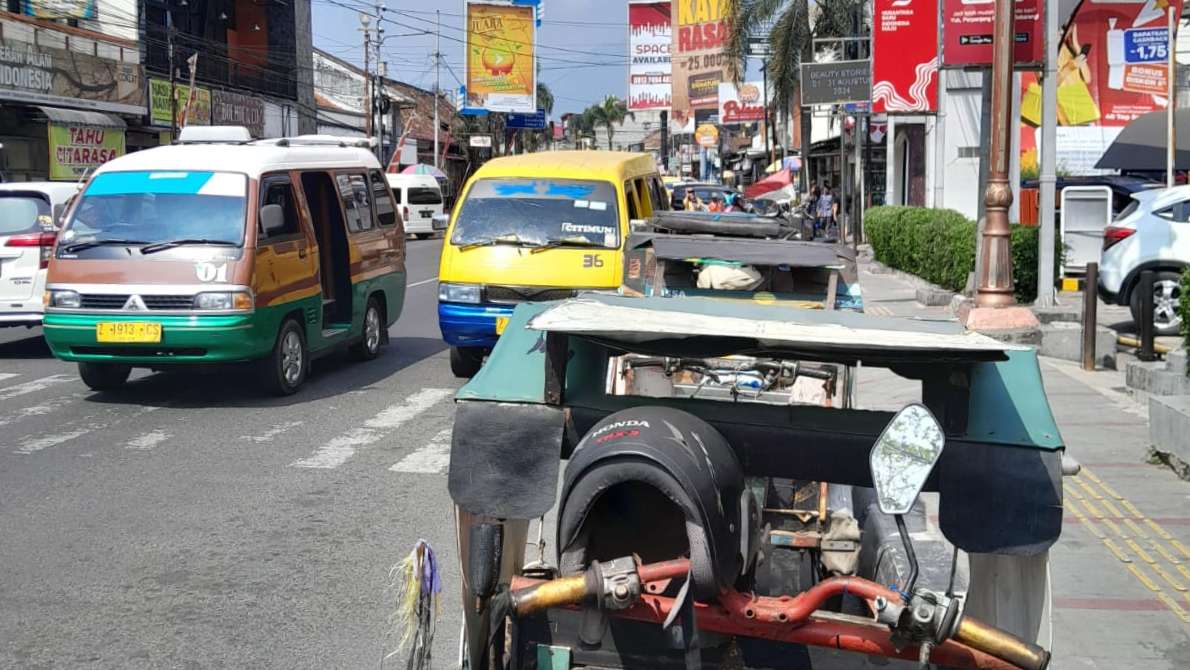
The administrative and cultural landscape of West Java offers a compelling intersection of colonial infrastructure, indigenous resistance, and localized socio-cultural evolution. Travelling from Jatinangor toward the urban center of Sumedang provides a direct physical connection to historical narratives that shaped the region during the 19th century. Spanning a distance traversable within approximately thirty minutes via local public transport, this route forces commuters to navigate the formidable terrain of the Cadas Pangeran mountain pass. This geographic bottleneck not only serves as a vital artery connecting Bandung and Cirebon along Jalan Raya Ciherang, but also functions as an open-air archive of the harsh realities of colonial-era forced labor under Dutch administration.
The Geopolitical Significance and Construction of the Great Post Road
The historical trajectory of the region was fundamentally altered in 1808 with the arrival of Herman Willem Daendels, who served as the Governor-General of the Dutch East Indies from 1808 to 1811. Commissioned by the Dutch crown to fortify Java against potential British incursions, Daendels initiated the construction of the Great Post Road (De Grote Postweg), a monumental infrastructure project stretching approximately 1,000 kilometers from Anyer in Banten to Panarukan in East Java.
The execution of this ambitious project required the large-scale mobilization of forced labor, locally known as rodi. Historical documentation highlights the extreme engineering challenges encountered during this endeavor, particularly in the mountainous regions of Priangan. At Cadas Pangeran, laborers were tasked with carving a roadway through solid rock faces and precipitous cliffs using rudimentary tools such as crowbars and simple iron implements. The human cost of this rapid mobilization was immense, resulting in widespread casualties due to exhaustion, disease, and hazardous working conditions.
Resistance and the Legend of Pangeran Kornel
The human suffering inflicted during the construction of the Cadas Pangeran pass catalyzed significant indigenous resistance, encapsulated in the oral traditions and historical accounts of Sumedang. Central to this narrative is Pangeran Kusumadinata IX, widely known as Pangeran Kornel, who served as the Regent of Sumedang during the early 19th century. According to regional folklore and historical literature, including R. Memed Sastrahadiprawira’s 1930 Sundanese novel Pangeran Kornel, the Regent fiercely opposed the inhumane treatment of his subjects by the colonial administration.
A defining moment of resistance is commemorated in popular memory through the symbolic greeting between Pangeran Kornel and Governor-General Daendels. Legend dictates that the Regent shook hands with Daendels using solely his left hand while keeping his right hand firmly gripping the hilt of his traditional kris dagger, a subtle yet profound gesture of defiance against colonial authority. Today, this episode is immortalized at the site via a bronze monument sculpted by Gustiyan Rachmadi and inaugurated in 2012, replacing an earlier statue erected in the late 1980s by Chaltim Pranajaya.
Architectural Syncretism: The Grand Mosque of Sumedang
Continuing past the mountainous corridors toward the urban core of Sumedang reveals layers of architectural and religious heritage, most notably embodied by the Grand Mosque of Sumedang. Situated near the central town square, or Alun-Alun, the mosque stands as a testament to cross-cultural architectural synthesis during the mid-19th century.

Historical research indicates that the construction of the mosque was initiated in 1850 under the patronage of Regent Pangeran Suria Kusumah Adinata. Architectural analyses, such as those by researcher Annisha Ayudingdiah, note the direct involvement of itinerant laborers from China during the construction phase. This multicultural collaboration manifested primarily in the multi-tiered roof structure of the mosque, which mirrors the traditional aesthetics of a Chinese pagoda, alongside intricate oriental wood carvings.
Subsequent architectural interventions in 1913 introduced elements of European neoclassical design. The integration of robust Greek-style columns, large semi-circular arched windows, and an expanded eastern portico reflected the prevailing colonial architectural trends of the early 20th century, effectively blending indigenous, Chinese, and European design philosophies into a single religious structure.
Urban Planning and the Zero Kilometer Monument
The spatial organization of modern Sumedang remains anchored to colonial urban planning methodologies, symbolized by the establishment of the Zero Kilometer Monument (Tugu Nol Kilometer Sumedang). Erected in 2020 along Jalan Prabu Geusan Ulun during the administration of Bupati Dony Ahmad Munir, the monument serves as a geographical and cultural reference point.
European colonial administrations typically utilized post offices as the primary coordinates for calculating regional distances and organizing logistical networks. During the 19th century, intermediary post stations were established at thirty-to-forty-kilometer intervals along the Great Post Road to facilitate the rotation of mail-carrying horses and carriages. Over time, these logistical hubs catalyzed commercial and residential growth, transforming waystations into administrative townships.

The monument in Sumedang incorporates historical markers, including legacy boundary stones bearing designations such as BD 45 (indicating a distance of 45 kilometers to Bandung), CN 85 (Cianjur), and SMD 0 (Sumedang Zero Kilometer). These markers provide physical evidence of the systematic mapping implemented by the colonial government to consolidate territorial control and streamline economic extraction across the priangan highlands.
Cultural Symbolism of Taman Endog
Beyond its colonial infrastructure, Sumedang’s urban geography incorporates contemporary public spaces that reflect local philosophical traditions. Among these is Taman Endog, or the Sumedang Tandang Park, situated near the commercial district and the Cipeles River. Constructed in the early 1990s under the administration of Bupati Sutardja, the park features a distinctive monument depicting a giant egg cradled by two hands.
While the city is widely recognized across Indonesia for its signature culinary product, tahu sumedang (Sumedang tofu), the selection of an egg motif for the central monument is rooted in cosmological symbolism. Cultural analyses associate the structure with the traditional Sundanese concept of wawacan endog sapatalang, which allegorically represents the creation of the universe by the Divine. Spanning approximately 2,300 square meters, the park functions simultaneously as an ecological green space and a cultural landmark, offering urban residents a public venue for socialization and recreation.
Socio-Economic Implications and Heritage Tourism

The preservation and interpretation of Sumedang’s historical assets carry significant implications for regional development and cultural heritage management. As municipal authorities balance modernization with historical preservation, sites such as the Cadas Pangeran pass, the Grand Mosque, and the Prabu Geusan Ulun Museum serve as critical educational resources.
Analysts suggest that integrating historical narratives with infrastructure development can stimulate sustainable heritage tourism, diversifying the regional economy beyond traditional manufacturing and agriculture. However, balancing tourist accessibility with the preservation of fragile ecosystems, such as the erosion-prone slopes of Cadas Pangeran, remains an ongoing challenge for local governance.
Ultimately, a transit through Sumedang offers a microcosm of West Java’s broader historical trajectory. From the forced labor corridors of the colonial era to the syncretic architecture of its religious institutions and the cosmological motifs of its public spaces, the city preserves the multifaceted layers of its past while navigating the demands of contemporary urban life.