Socio Today
The Iranian military has issued a scathing condemnation of a newly implemented United States naval blockade, characterizing the maritime restrictions as a flagrant violation of international law and an act of state-sponsored piracy. In a high-stakes escalation of tensions in the Middle East, Tehran warned on Monday, April 13, 2026, that if Iranian maritime infrastructure and trade routes are compromised by American intervention, no port within the Persian Gulf or the Sea of Oman will remain secure. This declaration follows an announcement from the United States Central Command (CENTCOM) regarding the commencement of a total maritime blockade aimed at neutralizing Iran’s economic capabilities following the collapse of high-level diplomatic negotiations.
The statement, released by the Khatam Al-Anbiya Central Headquarters—the highest operational command of the Iranian Armed Forces—labeled the American maneuver a "criminal" assault on the freedom of navigation. According to the Iranian military leadership, the restrictions imposed on the transit of goods and the movement of vessels in international waters represent a desperate attempt by Washington to enforce its political will through illegal military coercion. The command warned that the principle of collective security in the region is now void, asserting that if the security of the Islamic Republic’s ports is jeopardized, the entire maritime corridor utilized by neighboring states and international energy markets will face reciprocal risks.
The Breakdown of Diplomacy and the Path to Blockade
The current crisis stems from the definitive failure of a critical diplomatic summit held in Pakistan earlier this month. Representatives from Washington and Tehran had convened in a last-ditch effort to resolve a long-standing impasse regarding Iran’s nuclear program and regional influence. While a temporary two-week ceasefire had been established on Tuesday, April 7, to facilitate a conducive environment for dialogue, the talks reportedly disintegrated over the weekend.
United States officials attributed the failure to Tehran’s refusal to provide verifiable guarantees regarding the cessation of its uranium enrichment activities and its continued development of long-range ballistic missile technology. Washington has maintained that Iran’s nuclear ambitions pose an existential threat to regional stability and global non-proliferation efforts. Conversely, Tehran argued that the United States refused to provide permanent relief from economic sanctions, insisting on maintaining a "maximum pressure" framework even during active negotiations.
Following the collapse of the Pakistan talks, the Biden administration authorized CENTCOM to transition from a policy of sanctions enforcement to a kinetic maritime blockade. This move marks one of the most significant shifts in U.S. naval policy in the region in decades, moving beyond the interdiction of specific "shadow fleet" tankers to a blanket prohibition on all commercial traffic entering or exiting Iranian sovereign waters.
CENTCOM Operational Directives and Maritime Enforcement
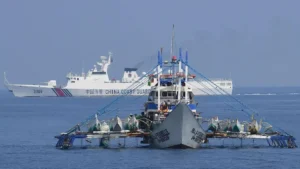
On Monday, April 13, CENTCOM released its operational parameters for the blockade, stating that the measures would be enforced "equitably" against vessels of all nationalities. The directive clarifies that any ship attempting to dock at or depart from Iranian coastal facilities—including major hubs such as Bandar Abbas, Bushehr, and the strategic port of Chabahar—will be subject to interception, boarding, and diversion by U.S. naval assets.
The U.S. military has deployed carrier strike groups and additional surface combatants to the North Arabian Sea and the Gulf of Oman to monitor traffic. However, in a bid to minimize friction with other regional partners, CENTCOM noted that the blockade is strictly targeted at Iranian commerce. The command emphasized that it would not obstruct the passage of vessels transiting the Strait of Hormuz to reach non-Iranian ports, such as those in the United Arab Emirates, Kuwait, or Saudi Arabia. This distinction is intended to maintain the flow of global oil supplies from other Gulf producers, though analysts remain skeptical about whether such a distinction can be maintained if hostilities break out.
The United States has issued specific instructions to the International Maritime Organization (IMO) and commercial shipping companies, advising them to reroute vessels and cancel all scheduled calls to Iranian terminals to avoid "potentially dangerous encounters."
The Strategic Threat to the Strait of Hormuz
The most volatile element of this confrontation remains the Strait of Hormuz, a narrow waterway through which approximately 20% to 30% of the world’s total oil consumption passes daily. The Islamic Revolutionary Guard Corps (IRGC) has historically viewed the strait as its primary strategic lever. In response to the U.S. blockade, the IRGC reaffirmed its "absolute control" over the waterway, warning that any attempt to challenge Iran’s sovereignty would result in the strait becoming a "vortex of death" for intruding forces.
Military analysts suggest that Iran possesses a sophisticated "anti-access/area denial" (A2/AD) capability within the strait, utilizing a combination of midget submarines, fast-attack missile boats, naval mines, and shore-based anti-ship cruise missiles (ASCMs). If Tehran follows through on its threat to ensure that "no port will be safe," it could utilize these assets to target commercial shipping destined for neutral ports, effectively shutting down the world’s most vital energy artery and triggering a global economic shock.
Chronology of Recent Hostilities (April 2026)
To understand the gravity of the current situation, it is essential to trace the rapid escalation over the past week:
- April 7, 2026: A 14-day temporary ceasefire is signed in Islamabad, Pakistan, brokered by regional intermediaries. Both sides agree to pause military maneuvers in the Persian Gulf.
- April 10, 2026: Negotiators report a "fundamental impasse" over the timeline of nuclear inspections and the removal of the IRGC from the U.S. Foreign Terrorist Organization list.
- April 11, 2026: The Pakistan summit officially concludes without a joint statement. The U.S. delegation departs, citing Iran’s "uncompromising stance."
- April 12, 2026: The White House authorizes the Department of Defense to implement "enhanced maritime security measures" to prevent Iran from benefiting from international trade.
- April 13, 2026 (Morning): CENTCOM announces the commencement of a full maritime blockade of all Iranian ports.
- April 13, 2026 (Afternoon): The Khatam Al-Anbiya Central Headquarters issues its warning, declaring the blockade an act of "piracy" and threatening regional port security.
Economic and Geopolitical Implications
The immediate reaction to the blockade has been felt in global energy markets. Crude oil futures spiked by over 12% within hours of the CENTCOM announcement, as traders factored in the risk of a total closure of the Strait of Hormuz. Maritime insurance premiums for vessels operating in the Middle East have surged to record highs, with many underwriters declaring the Persian Gulf a "war risk zone."
From a geopolitical perspective, the blockade places regional actors in an extremely difficult position. Countries like Oman and Qatar, which have traditionally maintained a neutral stance and acted as mediators, now face the prospect of their own territorial waters becoming a combat theater. Meanwhile, China, the largest purchaser of Iranian oil, has officially condemned the blockade, calling it a violation of the "freedom of the high seas" and a threat to global supply chain stability. Beijing has signaled that it may deploy its own naval escorts to protect its commercial interests, a move that would bring the world’s two largest superpowers into direct maritime proximity in a high-tension environment.
Legal and Analytical Context
The legality of a naval blockade in the absence of a formal declaration of war remains a subject of intense debate among international legal scholars. Under the United Nations Convention on the Law of the Sea (UNCLOS), the "freedom of navigation" is a cornerstone of international maritime law. However, the United States, which is not a signatory to UNCLOS but recognizes most of its provisions as customary international law, argues that the blockade is a necessary measure of collective self-defense and a tool to enforce international non-proliferation standards.
Tehran’s characterization of the blockade as "piracy" is intended to delegitimize the U.S. actions in the eyes of the international community. By framing the issue as an illegal disruption of sovereign trade, Iran hopes to garner support from Russia, China, and the Global South.
Fact-based analysis suggests that the U.S. strategy is designed to bring the Iranian economy to a total standstill, forcing Tehran back to the negotiating table under significantly weakened conditions. However, the risk of miscalculation is immense. Iran’s "asymmetric warfare" doctrine emphasizes that it will not suffer alone; if its economy is strangled, it will seek to inflict equivalent or greater economic pain on the global community by disrupting the energy exports of its neighbors.
Potential Escalation Scenarios
As the blockade enters its first 24 hours, military observers are monitoring several potential escalation triggers:
- The Seizure of a Neutral Vessel: If the U.S. Navy boards a Chinese or Russian vessel bound for an Iranian port, it could trigger a diplomatic or military standoff with a third power.
- Mining of the Strait: Iran may opt to deploy naval mines clandestinely, making the passage of any vessel through the Strait of Hormuz a high-risk endeavor without directly claiming responsibility.
- Drone Attacks on Regional Infrastructure: Tehran’s warning that "no port will be safe" may refer to the use of long-range loitering munitions (kamikaze drones) against oil terminals in neighboring countries, such as Saudi Arabia’s Ras Tanura or the UAE’s Fujairah.
- Cyber Warfare: A maritime blockade could be complemented by cyberattacks targeting the automated systems of regional ports and shipping companies, causing logistical chaos without a single shot being fired.
The international community now watches with bated breath as two of the world’s most formidable military apparatuses stand on the brink of a maritime conflict. The coming days will determine whether diplomacy can be resurrected from the ashes of the Pakistan summit or if the Persian Gulf is destined for a period of unprecedented instability that could reshape the global order. For now, the "vortex of death" remains a chilling possibility as the U.S. blockade begins and Iran prepares its response.