Socio Today
The government of the People’s Republic of China has issued a vehement denial regarding recent reports alleging that Beijing has supplied or intends to supply lethal military hardware to the Islamic Republic of Iran. During a press briefing held on Monday, April 13, 2026, the Chinese Ministry of Foreign Affairs characterized these claims as "baseless slander" and "malicious association," responding to a series of high-level intelligence leaks from the United States that have once again brought the two superpowers to the brink of a diplomatic and economic confrontation. The escalation comes at a particularly sensitive time, as the Middle East remains embroiled in a complex conflict involving regional powers and Western interests, and as Washington seeks to tighten the noose around Tehran’s military capabilities.
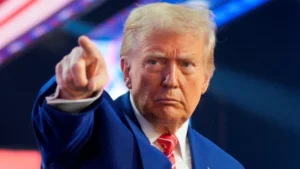
The controversy was ignited over the weekend when several major American news outlets, citing anonymous sources within the United States intelligence community, reported that Beijing was on the verge of deepening its military cooperation with Iran. On Sunday, April 12, President Donald Trump amplified these reports by issuing a direct ultimatum to the Chinese leadership. Speaking from Washington, the President threatened to impose a "staggering" 50 percent tariff on all Chinese imports if Beijing proceeded with any form of military assistance to Tehran. This threat marks a significant escalation in the ongoing trade friction between the world’s two largest economies, signaling that the White House is prepared to use its most potent economic weapons to influence China’s foreign policy in the Middle East.
Intelligence Reports and the Alleged Arms Transfer
The specific allegations that sparked this diplomatic firestorm originated from reports by CNN and the New York Times. According to CNN, which cited three individuals familiar with a recent U.S. intelligence assessment, Beijing is purportedly preparing to deliver advanced air defense systems to Iran within the coming weeks. These systems, if delivered, could significantly alter the tactical landscape of the Middle East, potentially providing Iran with a more robust shield against aerial incursions. The intelligence suggests that the logistics for such a transfer are already being finalized, with specific transport routes and schedules being monitored by Western agencies.
Simultaneously, The New York Times reported that U.S. officials believe China may have already facilitated the shipment of man-portable air-defense systems (MANPADS) to Iranian-backed entities or the Iranian military itself. These shoulder-fired missiles are highly mobile and pose a significant threat to both military and civilian aviation, making them a point of extreme concern for U.S. defense planners. The timing of these alleged shipments coincides with heightened tensions in the Persian Gulf, where Iran has been involved in a series of confrontations following the escalation of the United States-Israel-Iran conflict.
Beijing’s Formal Rebuttal and Export Controls
In a scheduled press conference in Beijing on Monday, Ministry of Foreign Affairs spokesperson Guo Jiakun addressed the allegations with a prepared statement that emphasized China’s adherence to international law and its own domestic regulations. "China has always maintained a cautious and responsible attitude toward the export of military products," Guo stated. He further clarified that China implements "stringent controls" in accordance with its Export Control Law and fulfills all international obligations regarding the non-proliferation of weapons.
Guo Jiakun’s rhetoric was pointed, aimed directly at the U.S. administration’s reliance on intelligence leaks to drive policy. "We firmly oppose baseless slander or malicious associations that seek to smear China’s international reputation," he told reporters. The spokesperson underscored that China’s relationship with Iran is founded on legitimate economic interests and diplomatic engagement, rather than a secret military pact. He urged Washington to provide concrete evidence rather than relying on "unnamed sources" to justify aggressive economic threats.
The Economic Nexus: Oil and the 25-Year Agreement
The backdrop of this dispute is the deep-rooted economic relationship between Beijing and Tehran. China remains Iran’s most significant economic partner and its primary customer for crude oil exports. Despite various rounds of international and unilateral U.S. sanctions, China has continued to purchase vast quantities of Iranian oil, often utilizing alternative payment systems and "dark fleet" tankers to bypass Western financial restrictions. For Beijing, Iran represents a critical pillar of its energy security strategy and a key node in its Belt and Road Initiative (BRI).
In 2021, the two nations signed a landmark 25-year Comprehensive Strategic Partnership agreement. While the details of the pact remain largely confidential, it is known to involve billions of dollars in Chinese investment in Iranian infrastructure, telecommunications, and energy sectors in exchange for a steady supply of oil at discounted prices. However, geopolitical analysts frequently point out that this relationship is primarily transactional. Unlike the North Atlantic Treaty Organization (NATO) or other formal military alliances, the China-Iran partnership does not include a mutual defense clause. Beijing has historically been wary of becoming too deeply entangled in the Middle East’s volatile security environment, preferring to maintain its "non-interference" policy while securing its economic interests.
A Precarious Balance in the Middle East
China’s position in the Middle East is further complicated by its extensive economic ties with the Gulf Cooperation Council (GCC) states, most notably Saudi Arabia and the United Arab Emirates. Beijing has invested heavily in the infrastructure of these Arab nations and views them as essential partners for its global trade ambitions. Consequently, China has often found itself walking a diplomatic tightrope.
During the recent cycles of violence involving Iran and its regional rivals, Beijing has been uncharacteristically critical of actions that threaten the stability of global energy markets. China has previously voiced disapproval of Iranian attacks on maritime shipping and infrastructure in the Gulf, as such disruptions directly impact China’s own energy costs and supply chain reliability. This suggests that while Beijing supports Tehran diplomatically as a counterweight to U.S. hegemony, it is not willing to grant Iran a "blank check" for regional aggression that could harm Chinese economic stability.
Military Analysis: Potential Systems and Implications
If the U.S. intelligence reports are accurate, the systems in question—advanced air defenses and MANPADS—would represent a qualitative shift in Chinese military support. Historically, China has provided Iran with technology transfers, dual-use equipment, and older missile designs. However, the delivery of modern, high-tier air defense systems, such as the HQ-9 (China’s equivalent to the Russian S-300 or U.S. Patriot), would be a bold move.
Such a delivery would provide Iran with the capability to intercept high-altitude targets and sophisticated cruise missiles. From a strategic perspective, this would increase the "cost of entry" for any air campaign against Iranian nuclear or military facilities. The MANPADS mentioned in the New York Times report, such as the QW-series (Qian Wei), are also highly regarded for their effectiveness against low-flying aircraft and drones, which have become a staple of modern regional warfare. The proliferation of these weapons into a conflict zone often results in a significant increase in tactical risk for all operating air forces.
The Trump Administration’s Strategy of Maximum Pressure
The 50 percent tariff threat issued by President Trump is a return to the "Maximum Pressure" campaign that characterized his previous term, albeit with a sharper focus on China as the enabler. By linking trade policy directly to military non-proliferation in the Middle East, the White House is attempting to force Beijing into a choice: continue its strategic partnership with Iran or maintain its access to the lucrative American market.
Economists warn that a 50 percent tariff on Chinese goods would have seismic effects on global trade. Such a move would likely lead to immediate retaliatory measures from Beijing, potentially targeting American agricultural exports or critical minerals. The resulting trade war would exacerbate inflationary pressures globally and could lead to a decoupling of the two economies that far exceeds the "de-risking" strategies previously proposed by international policymakers.
Chronology of Escalation (April 2026)
- April 10: U.S. intelligence agencies reportedly finalize a briefing for the White House suggesting a surge in military logistics activity between Chinese ports and Iranian military hubs.
- April 11: The New York Times publishes its report on the alleged shipment of MANPADS, citing officials who claim the transfer occurred under the guise of commercial industrial equipment.
- April 12 (Morning): CNN releases its report on the imminent delivery of advanced air defense systems, noting that satellite imagery has identified specific hardware being loaded onto Iranian-flagged vessels.
- April 12 (Afternoon): President Trump delivers a televised address, warning China that a 50 percent tariff is "on the table and ready to be signed" if the shipments are not halted.
- April 13: China’s Ministry of Foreign Affairs holds a press conference. Guo Jiakun denies all allegations, labels them "slander," and reiterates China’s commitment to responsible export controls.
- April 13 (Evening): Global markets react with volatility; oil prices see a sharp uptick as traders weigh the possibility of increased conflict and trade disruptions.
Broader Geopolitical Implications
The current standoff is more than a bilateral dispute; it is a reflection of the changing global order. As the United States and Israel coordinate more closely on security measures against Iran, China’s role as a "spoiler" or a "stabilizer" becomes more critical. If China is indeed providing weapons, it signals a departure from its traditional role as a cautious observer and suggests a willingness to actively challenge U.S. interests in the Middle East.
Conversely, if the reports are indeed "baseless," as Beijing claims, the U.S. strategy risks alienating a superpower partner whose cooperation is needed for other global challenges, such as climate change and nuclear non-proliferation in the Korean Peninsula. The international community now watches closely to see if evidence of these transfers will be made public or if this will remain a shadow war of intelligence and economic threats.
In the coming days, the focus will likely shift to the United Nations and other international monitoring bodies. If Washington can provide verifiable evidence of the arms transfers, it may seek to build a broader coalition for sanctions. However, given the current polarized state of the UN Security Council, any formal resolution against China is unlikely to pass, leaving the battle to be fought in the arenas of bilateral trade and regional military posturing. For now, the world remains on edge, waiting to see if the rhetoric will translate into a full-scale economic and geopolitical rupture.