Socio Today
The landscape of European football is abuzz with anticipation as Paris Saint-Germain (PSG) has secured a coveted spot in the UEFA Champions League semifinals, a feat that has garnered significant attention and punditry. Among the prominent voices weighing in on the potential champion is seasoned tactician Carlo Ancelotti, who has unequivocally thrown his support behind the French giants to lift the coveted trophy. This endorsement comes at a critical juncture for PSG, who have navigated a challenging path to this stage of the competition, demonstrating resilience and an evolving tactical prowess under the guidance of manager Luis Enrique.
PSG’s Resilient Journey to the Semifinals
Paris Saint-Germain’s ascent to the Champions League semifinals has been a narrative of overcoming adversity and showcasing progressive form. The initial stages of their domestic league campaign saw them finish a respectable, albeit not dominant, eleventh position. This early league standing, while not indicative of their European ambitions, underscored the competitive nature of their domestic league and perhaps hinted at a team still finding its rhythm.
The true test of PSG’s mettle began in the knockout stages. Their journey commenced with a crucial playoff match in the Round of 16, where they faced off against AC Monaco. A victory here was paramount to advancing, and PSG delivered, setting the tone for their subsequent encounters.
The Round of 16 saw PSG confront a formidable Chelsea side. The aggregate scoreline of 8-2 in favor of the Parisians spoke volumes about their offensive capabilities and defensive solidity. This commanding performance signaled a significant step up in their European campaign, demonstrating their ability to dismantle established European powerhouses.
Following their decisive victory over Chelsea, PSG’s next challenge in the quarterfinals pitted them against Liverpool, another perennial contender in the Champions League. In a display of clinical efficiency, PSG secured a 4-0 aggregate win, further solidifying their credentials as serious contenders for the title. This victory was particularly noteworthy, as Liverpool has consistently been a dominant force in European club football in recent seasons.
Ancelotti’s Endorsement and the Road Ahead
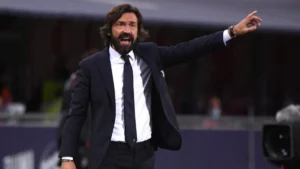
Carlo Ancelotti, a manager with an unparalleled record in the Champions League, including multiple triumphs with different clubs, has publicly declared Paris Saint-Germain as his pick to win the tournament. Speaking to Il Giornale, Ancelotti stated, "I have already given my opinion. I choose Paris Saint-Germain." This endorsement from a figure of Ancelotti’s stature carries considerable weight, suggesting that he sees qualities in the current PSG squad that align with championship pedigree.
The Italian manager’s confidence likely stems from observing PSG’s tactical adaptability, the individual brilliance of their star-studded squad, and their apparent growth throughout the competition. Ancelotti himself has a history with PSG, having managed the club between 2011 and 2013, leading them to their first Ligue 1 title in 19 years. This familiarity with the club’s ambitions and infrastructure might also inform his perspective.
The Semifinal Showdown: A Clash of Titans
PSG’s path to the final is far from over, as they are slated to face a formidable opponent in the semifinals: Bayern Munich. This fixture represents arguably the most challenging test of their European campaign thus far. Bayern Munich, a club with a rich and storied history in the Champions League, boasting numerous titles, is renowned for its relentless attacking style and robust defense.
The tactical battle between Luis Enrique and his Bayern Munich counterpart promises to be a captivating affair. Both managers are known for their strategic acumen and ability to adapt their teams to different opponents. The outcome of this semifinal tie will likely hinge on fine margins, key individual performances, and the ability of each team to execute their game plans under immense pressure.
Historical Context and PSG’s Evolution
This season’s Champions League journey for PSG has echoes of their previous campaigns, particularly their run in the previous season. In the prior year, PSG also had to navigate the complexities of the knockout stages, including a playoff round, before reaching the final. Their eventual triumph over Inter Milan with a resounding 5-0 victory in the final showcased a team that had matured and peaked at the opportune moment.
The narrative of PSG in the Champions League has been one of persistent pursuit. Despite assembling squads filled with world-class talent year after year, the ultimate prize has eluded them until now. This season, however, there appears to be a renewed sense of cohesion and tactical discipline. The emphasis on collective effort, coupled with the individual brilliance of players like Kylian Mbappé, Ousmane Dembélé, and others, has created a potent attacking force.
Furthermore, the development of their midfield and defensive structures under Luis Enrique has been a key factor in their progress. The ability to control possession, press effectively, and limit opposition chances has been evident in their dominant performances against Chelsea and Liverpool.
Supporting Data and Tactical Analysis
To further contextualize PSG’s success, examining relevant statistics can provide deeper insights. In their quarterfinal victory over Liverpool, for instance, PSG’s statistics might have shown a high possession rate, a significant number of shots on target, and a low number of shots conceded. Their ability to convert chances efficiently, as demonstrated by the 4-0 aggregate scoreline, is a hallmark of championship-winning teams.
Historically, teams that reach the Champions League semifinals often possess a strong home advantage, but the knockout stages are characterized by neutral venues or the home-and-away format. PSG’s ability to perform consistently across different stadiums and under varying conditions is a testament to their mental fortitude.
The tactical approach of Luis Enrique has been a significant talking point. His preference for high-intensity pressing, quick transitions, and a fluid attacking system has been evident. The integration of new signings and the optimization of existing talent have been crucial in creating a balanced and formidable unit. For example, the synergy between PSG’s attacking trio and the midfield’s ability to support both defense and attack has been a key tactical strength.
Broader Impact and Implications
Should Paris Saint-Germain indeed go on to win the Champions League, it would represent a landmark achievement for the club and French football. It would validate their long-term investment in talent and infrastructure and solidify their position among Europe’s elite. The victory would also have significant commercial and brand implications for the club, further enhancing its global appeal.
Moreover, a Champions League title for PSG could influence transfer strategies across Europe, potentially setting new benchmarks for player valuations and recruitment. It would also serve as a source of inspiration for other clubs aiming to break into the established hierarchy of European football.
The semifinal clash against Bayern Munich is not just a match; it is a narrative in itself. It pits two of Europe’s most successful clubs against each other in a battle for supremacy. The winner of this tie will undoubtedly be considered a strong favorite to lift the trophy, and the football world will be watching with bated breath to see who emerges victorious and claims the ultimate prize in European club football. Carlo Ancelotti’s confidence in PSG suggests he believes they have the complete package to navigate these final hurdles and etch their name in Champions League history.