Strategic Alignment in Beijing President Xi Jinping and Foreign Minister Sergei Lavrov Solidify China Russia Relations Amid Global Instability

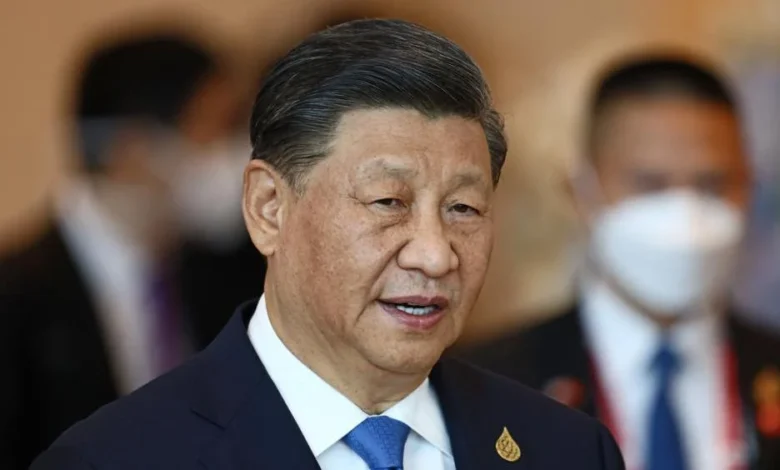
In a high-profile diplomatic engagement at the Great Hall of the People in Beijing, Chinese President Xi Jinping received Russian Foreign Minister Sergei Lavrov on Wednesday, marking a significant intensification of the "no limits" partnership between the two superpowers. The meeting, which took place on April 15, 2026, serves as a cornerstone of Lavrov’s two-day official visit to the Chinese capital, focusing primarily on the coordination of strategic interests regarding the ongoing conflicts in the Middle East and the protracted war in Ukraine. This summit occurs at a critical juncture in global geopolitics, as both Moscow and Beijing seek to solidify a multipolar world order in defiance of what they characterize as Western hegemony and "containment" policies led by the United States.
The discussions between President Xi and Foreign Minister Lavrov were characterized by a mutual commitment to deepening bilateral cooperation across all sectors, ranging from military-technical synergy to comprehensive economic integration. According to reports from Chinese state media, the leaders emphasized the necessity of a unified front in addressing regional instabilities. The timing of the visit is particularly noteworthy, as President Xi has maintained an exceptionally dense diplomatic schedule, meeting with several world leaders throughout the week, including Spanish Prime Minister Pedro Sanchez, Abu Dhabi Crown Prince Mohamed bin Zayed Al Nahyan, and Vietnamese leader To Lam. These meetings underscore Beijing’s burgeoning role as a central mediator in global affairs, particularly for nations whose economies and security architectures have been disrupted by the dual crises in Eastern Europe and the Levant.
Strategic Dialogue and the Critique of Western Blocs
The meeting with President Xi followed an extensive session between Lavrov and his Chinese counterpart, Foreign Minister Wang Yi. During these talks, the rhetoric focused heavily on the perceived threats posed by the United States and its allies. Lavrov was vocal in his criticism of Western efforts to "contain" the influence of Russia and China through the creation of what he termed "small-format block structures." These comments, reported by the Russian state news agency RIA Novosti, specifically targeted Western-led security frameworks such as AUKUS and the Quad, which Moscow and Beijing view as destabilizing mechanisms intended to dismantle existing regional cooperation in the Indo-Pacific.
"They are attempting to dismantle the regional security architecture by creating small, exclusive structures aimed at containing the People’s Republic of China and the Russian Federation," Lavrov stated during his press briefing. This sentiment was echoed by Chinese officials, who reaffirmed their opposition to "Cold War mentalities" and the imposition of unilateral sanctions. The alignment between the two nations on this front is not merely rhetorical; it reflects a deep-seated shared philosophy regarding "indivisible security," a concept where the security of one state should not be achieved at the expense of another.
Chronology of the China-Russia Strategic Evolution
The current state of China-Russia relations is the result of a steady trajectory of convergence that has accelerated over the past four years. To understand the significance of the April 2026 meeting, it is essential to look at the timeline of their diplomatic evolution:
- February 2022: Just days before the commencement of the "special military operation" in Ukraine, President Xi and President Vladimir Putin met in Beijing to announce a "no limits" partnership, declaring that there were no "forbidden" areas of cooperation.
- March 2023: President Xi made a state visit to Moscow, his first international trip after securing a third term as president. The visit resulted in the signing of multiple agreements focused on economic cooperation through 2030.
- October 2023: President Putin attended the Belt and Road Initiative (BRI) Forum in Beijing, emphasizing the synergy between the BRI and the Eurasian Economic Union.
- 2024-2025: Bilateral trade surged to record highs, surpassing $240 billion, with the vast majority of transactions settled in Chinese Yuan and Russian Rubles, effectively bypassing the SWIFT system and Western financial oversight.
- April 2026: Lavrov’s visit serves to finalize the agenda for an upcoming head-of-state summit, focusing on the integration of BRICS+ policies and joint responses to the escalating crisis in the Middle East.
Economic Integration and Energy Security
The backbone of the China-Russia alliance remains their robust economic interdependence. As Western sanctions have largely decoupled Russia from European markets, China has emerged as Russia’s primary economic lifeline. Data from 2025 indicates that China now accounts for over 40% of Russia’s total imports and serves as the largest consumer of Russian energy exports. The Power of Siberia pipeline continues to operate at maximum capacity, and negotiations for the Power of Siberia 2 pipeline are reportedly in their final stages, which would further cement China’s energy security while providing Russia with a stable, long-term revenue stream.
Furthermore, the technological exchange between the two nations has intensified. Russia has increasingly turned to Chinese semiconductors and industrial machinery to sustain its domestic manufacturing, while China has benefited from Russian aerospace technology and advanced military hardware designs. This symbiotic relationship has allowed both nations to mitigate the impact of Western export controls and trade barriers.
Addressing the Ukraine Conflict and Middle East Volatility
Central to the Xi-Lavrov dialogue was a coordinated approach to the "Ukrainian crisis." Beijing has consistently presented itself as a neutral party, offering a 12-point peace plan that calls for a ceasefire and the respect of "legitimate security concerns" of all parties—a phrase widely interpreted as an acknowledgment of Russia’s grievances against NATO expansion. During the meeting, Lavrov expressed Moscow’s appreciation for China’s "objective and balanced" stance, contrasting it with the West’s continued military support for Kyiv.
Regarding the Middle East, both leaders expressed deep concern over the humanitarian situation in Gaza and the potential for a wider regional conflict involving Iran and its proxies. China and Russia have utilized their positions as permanent members of the UN Security Council to call for an immediate ceasefire and the implementation of a two-state solution. Their shared goal in the region is to diminish the influence of U.S. diplomacy, which they argue has failed to provide a sustainable peace. By coordinating their diplomatic efforts, Moscow and Beijing aim to present themselves as the "adults in the room," advocating for stability and international law over what they describe as "rules-based order" dictated by Washington.
Official Responses and International Reaction
The international community has watched the Beijing summit with a mixture of apprehension and scrutiny. In Washington, State Department officials expressed "deep concern" over the continued strengthening of ties between the two nations, suggesting that China’s support facilitates Russia’s military industrial base. A spokesperson for the U.S. National Security Council stated, "The deepening of this relationship at a time when Russia continues its illegal war in Ukraine is a matter of significant concern for the global community."
Conversely, the Global South has largely viewed the meeting as a sign of a shifting global power balance. Leaders from several African and Latin American nations have expressed interest in the "alternative poles of power" represented by the China-Russia axis, particularly through the expansion of the BRICS framework. The Abu Dhabi Crown Prince’s presence in Beijing during the same week as Lavrov highlights how traditional U.S. allies are increasingly "multi-aligning" to protect their own economic and security interests.
Analysis of Global Implications
The meeting between Xi Jinping and Sergei Lavrov is more than a routine diplomatic encounter; it is a manifestation of a fundamental shift in the global order. By hosting Lavrov alongside leaders from Spain, the UAE, and Vietnam, President Xi is positioning China as the indispensable hub of a new global network that operates independently of Western institutional control.
- The End of Unipolarity: The persistent coordination between Moscow and Beijing effectively signals the end of the post-Cold War unipolar era. Together, they command a significant portion of the world’s natural resources, manufacturing capacity, and military might, making it impossible for the West to isolate either nation completely.
- Financial Autonomy: The transition to local currency trade between the two nations serves as a blueprint for other countries looking to "de-dollarize." If this trend continues, the efficacy of U.S. financial sanctions as a tool of foreign policy will be significantly diminished.
- Diplomatic Mediation: China’s willingness to engage with diverse actors—from Russia to the UAE—suggests a new model of diplomacy that prioritizes stability and trade over ideological alignment. This approach is gaining traction in regions that feel neglected or pressured by Western "values-based" diplomacy.
As Lavrov concludes his visit, the joint statement expected to be released will likely emphasize "mutual support on issues concerning each other’s core interests." For Russia, this means China’s continued economic and diplomatic cover for its actions in Ukraine. For China, it means Russia’s support for its claims in the South China Sea and its stance on Taiwan. As the world moves further into 2026, the Beijing-Moscow axis appears not only resilient but increasingly proactive in shaping the future of international relations, ensuring that any resolution to global conflicts must pass through the gates of the Great Hall of the People.