The United States Navy has successfully intercepted eight oil tankers linked to the Islamic Republic of Iran since the commencement of a comprehensive maritime blockade earlier this week, according to reports from high-ranking American officials. This development, first detailed by the Wall Street Journal on Wednesday, April 15, 2026, marks a significant escalation in the ongoing geopolitical confrontation between Washington and Tehran. The blockade, which aims to paralyze the Iranian economy by severing its primary export routes, has effectively halted the movement of commercial goods and energy resources entering and exiting Iranian territorial waters.
The enforcement of this blockade follows an executive order from President Donald Trump, issued shortly after the collapse of high-level diplomatic negotiations held in Pakistan. These talks, intended to provide a final off-ramp to avoid open conflict, reportedly reached a stalemate over issues regarding regional security and Iran’s nuclear program. In the absence of a diplomatic breakthrough, the United States moved to implement a "maximum pressure" strategy in its most literal sense, utilizing the full might of its naval assets to control the flow of traffic in the Gulf of Oman and the Persian Gulf.
Operational Execution of the Maritime Blockade
According to U.S. Central Command (CENTCOM), the blockade is being enforced with surgical precision. Admiral Brad Cooper, Commander of CENTCOM, confirmed on Wednesday that the maritime perimeter around Iranian ports is now fully operational. "In less than 36 hours since the blockade was implemented, U.S. forces have successfully halted economic trade entering and leaving Iran by sea," Admiral Cooper stated via a social media communication. He emphasized the strategic necessity of the move, noting that approximately 90 percent of Iran’s national economy is driven by international trade facilitated through its maritime corridors.
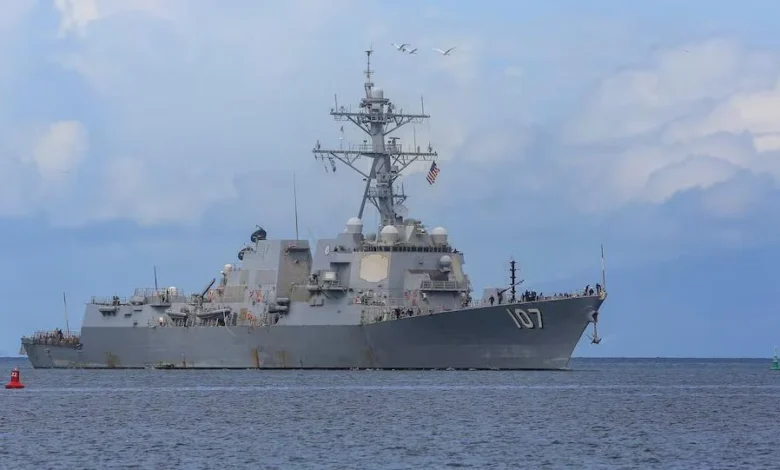
The specific interceptions reported by the Wall Street Journal involved eight tankers that were either attempting to dock at Iranian facilities or were departing with crude oil shipments. Two of the vessels were intercepted shortly after leaving the Port of Chabahar, a vital deep-sea port in southeastern Iran. U.S. officials noted that these vessels were approached by a U.S. Navy destroyer in the Gulf of Oman.
The tactical approach employed by the U.S. Navy has, thus far, avoided physical boarding or kinetic engagement. Officials reported that in every instance, U.S. naval personnel contacted the crews of the tankers via radio. The crews were instructed to change course and return to their ports of origin or exit the exclusion zone. In all eight cases, the tanker captains complied with the orders, negating the need for forced inspections or the seizure of cargo. To maintain surveillance over the vast maritime area, the U.S. has deployed P-8 Poseidon maritime patrol aircraft, which provide real-time intelligence and tracking of all vessels operating within the vicinity of the Iranian coast.
Chronology of Recent Escalations
The current blockade is the culmination of a rapidly deteriorating security situation that began in early 2026. The following timeline outlines the events leading to the current naval standoff:
- March 10-12, 2026: Diplomatic representatives from the U.S., Iran, and several regional mediators meet in Islamabad, Pakistan. The talks are described as "tense" and "final."
- March 25, 2026: Negotiations officially collapse. President Trump issues a statement claiming that Iran has refused to meet core security requirements.
- April 10, 2026: The White House announces the "Iran Maritime Exclusion Zone," warning international shipping companies that any vessel entering or exiting Iranian waters will be subject to interception.
- April 13, 2026 (Monday): The blockade officially begins at 00:00 local time. U.S. Navy Carrier Strike Groups move into positions in the North Arabian Sea and the Persian Gulf.
- April 14, 2026: The first two tankers are intercepted near the Port of Chabahar.
- April 15, 2026: CENTCOM reports a total of eight interceptions and declares the blockade "fully implemented."
The Strategic Importance of the Port of Chabahar
The interception of vessels near Chabahar is particularly significant. Unlike the Port of Bandar Abbas, which is located inside the Persian Gulf and accessible only through the narrow Strait of Hormuz, Chabahar sits on the Gulf of Oman, facing the open Indian Ocean. It has long been seen as Iran’s "sanction-proof" port, intended to bypass the potential closure of the Strait of Hormuz.
By successfully intercepting ships at Chabahar, the U.S. Navy has demonstrated that its blockade extends beyond the traditional chokepoints and covers Iran’s entire coastline. This move targets Iran’s ability to export oil to its remaining major buyers in Asia and its ability to import essential commodities, including refined fuel and industrial equipment.
Economic Implications for Tehran
The economic stakes of this blockade cannot be overstated. Iran’s economy remains heavily reliant on hydrocarbon exports to fund its national budget and maintain social stability. Admiral Cooper’s assessment that 90 percent of the Iranian economy is tied to maritime trade underscores the vulnerability of the Islamic Republic to this form of naval pressure.
Financial analysts suggest that if the blockade remains in place for more than 30 days, Iran will face a catastrophic shortage of foreign currency. This would likely lead to a further devaluation of the Rial, hyperinflation, and a shortage of imported medicines and food. The "maximum pressure" campaign previously relied on secondary sanctions to discourage buyers; the current blockade represents a shift to direct physical prevention of trade.
International Reactions and Geopolitical Fallout
The international community has reacted with a mixture of alarm and calls for restraint. While some U.S. allies in the Middle East have quietly expressed support for the move as a means of curbing Iranian regional influence, other nations have voiced concerns over the legality of the blockade and its impact on global energy prices.
Qatar has been among the most vocal critics, urging for the unconditional opening of maritime routes. Given Qatar’s shared interest in the North Dome/South Pars gas field with Iran, any military or naval escalation in these waters directly threatens Qatari economic interests and the stability of the global LNG (Liquefied Natural Gas) market.
In Moscow and Beijing, the blockade has been met with condemnation. China, the largest purchaser of Iranian oil, has characterized the U.S. actions as a violation of the freedom of navigation and international law. There are concerns that China may attempt to escort its own tankers using its growing blue-water navy, a move that would risk a direct military confrontation between the world’s two largest superpowers.
Tactical Analysis: The Role of the P-8 Poseidon
The use of the P-8 Poseidon aircraft has been central to the success of the blockade. The P-8, a militarized version of the Boeing 737, is equipped with advanced radar, sonar, and electronic signals intelligence suites. Its ability to stay airborne for extended periods and monitor hundreds of vessels simultaneously allows the U.S. Navy to identify "dark" ships—vessels that turn off their Automatic Identification System (AIS) transponders to avoid detection.
By integrating the P-8’s surveillance data with the physical presence of guided-missile destroyers, the U.S. can create a "transparent" battlefield. This prevents Iranian tankers from using the cover of night or complex coastal geography to slip through the blockade.
Potential for Escalation and Long-Term Impact
While the current interceptions have been bloodless, the potential for escalation remains high. Iranian military officials have previously warned that if Iran is prevented from exporting oil, "no one else will be allowed to export oil from the region," a veiled threat to the Strait of Hormuz. The Islamic Revolutionary Guard Corps (IRGC) Navy possesses a large fleet of fast-attack craft and anti-ship missiles that could be used to harass commercial shipping from other nations in retaliation.
Furthermore, the blockade raises complex questions regarding international law. Under the San Remo Manual on International Law Applicable to Armed Conflicts at Sea, a blockade is a recognized method of warfare, but it requires a state of armed conflict to be legally recognized. The U.S. position appears to be that the blockade is a law enforcement and national security measure, though many international legal scholars argue that such a total cessation of trade is indistinguishable from an act of war.
As the situation develops, the focus will remain on whether Tehran chooses to challenge the blockade through force or seeks a return to the negotiating table. For now, the U.S. Navy remains in a dominant position, having effectively sealed off Iran’s maritime borders and placed the Iranian economy in a state of suspended animation. The coming days will be critical in determining whether this naval strategy leads to a diplomatic resolution or a broader regional conflict that could reshape the Middle East for decades to come.