President Donald Trump Announces Escalation of Tariffs on South Korean Imports to 25 Percent Citing Delays in Legislative Ratification

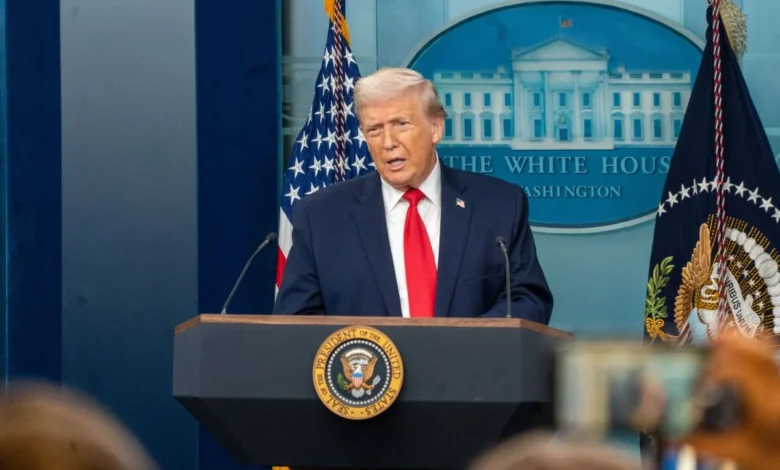
United States President Donald Trump announced on Monday, January 26, 2026, a significant escalation in trade tensions with South Korea, declaring that the United States will increase tariffs on a wide range of South Korean goods from 15 percent to 25 percent. The decision, communicated through a series of statements on social media, marks a sharp departure from the tentative trade stability reached between the two nations in late 2025. President Trump attributed the move directly to the South Korean National Assembly’s failure to ratify a bilateral trade agreement that had been negotiated and finalized by the executive branches of both countries last year.
The tariff hike specifically targets key sectors of the South Korean economy, including the automotive, timber, and pharmaceutical industries. In addition to these specific sectors, the President indicated that "all other Reciprocal Tariffs" would also be adjusted upward to the 25 percent threshold. The move is seen as a high-stakes maneuver to pressure Seoul into immediate legislative action, signaling a return to the aggressive protectionist policies that have characterized the Trump administration’s approach to international trade.
The Legislative Impasse and the "Historic" Agreement
The core of the current dispute lies in the perceived inaction of the South Korean legislature. According to President Trump, the South Korean government has failed to uphold its end of a "Historic Trade Agreement" that was designed to rebalance the economic relationship between Washington and Seoul. The President expressed his frustration openly, stating that while the executive branch in Korea had reached an accord, the legislative body had effectively stalled the process.
"Given that the South Korean legislature has not ratified our Historic Trade Agreement, which is their prerogative, I am hereby increasing TARIFFS on South Korean Automotive, Wood, and Pharmaceutical products, as well as all other Reciprocal TARIFFS, from 15 percent to 25 percent," Trump stated. He further emphasized that the South Korean legislature "did not fulfill its Deal with the U.S.," suggesting that the delay is viewed by the White House as a breach of trust or a failure of diplomatic follow-through.
The agreement in question was the result of high-level negotiations throughout 2025. President Trump and South Korean President Lee Jae Myung reached a "Great Deal" on July 30, 2025. The terms of this deal were later reaffirmed during Trump’s state visit to South Korea on October 29, 2025. Under the framework of that October finalization, the U.S. had agreed to a universal tariff rate of 15 percent on South Korean imports—a rate that was notably 10 percentage points lower than the 25 percent "baseline" tariff Trump had previously threatened. In exchange for this lower rate, the South Korean administration pledged that its domestic firms would invest approximately $350 billion into the United States economy, focusing on manufacturing and infrastructure.
A Chronology of US-South Korea Trade Friction
To understand the gravity of the current escalation, it is necessary to look at the timeline of events leading up to this January 2026 announcement. The relationship between the two nations has been characterized by cycles of negotiation and pressure since the early 2020s.
- July 30, 2025: President Trump and President Lee Jae Myung meet to establish the framework of a new bilateral trade deal. The discussion focuses on reducing the U.S. trade deficit and securing South Korean investment in American soil.
- October 29, 2025: During a presidential visit to Seoul, Trump reaffirms the commitment to a 15 percent tariff ceiling, provided the agreement is ratified and the $350 billion investment plan begins.
- November – December 2025: The South Korean executive branch submits the trade deal to the National Assembly. However, the proposal meets significant resistance from opposition parties and domestic industry lobbyists who argue that the $350 billion investment pledge would drain South Korea of vital capital and jobs.
- January 2026: As the legislative session in Seoul continues without a ratification vote, the Trump administration signals growing impatience.
- January 26, 2026: President Trump officially announces the hike to 25 percent, citing the legislative vacuum in Seoul as the primary justification.
Economic Impact on Key Sectors: Automotive, Wood, and Pharmaceuticals
The decision to target the automotive, wood, and pharmaceutical sectors is a strategic choice, as these industries represent a significant portion of South Korea’s export portfolio to the United States.
The Automotive Industry
South Korea is one of the world’s leading automobile manufacturers, with giants like Hyundai and Kia maintaining a massive presence in the American market. The U.S. is a critical destination for South Korean vehicles, particularly electric vehicles (EVs) and SUVs. A jump from a 15 percent tariff to a 25 percent tariff adds a significant cost burden that will likely be passed on to American consumers. Industry analysts suggest that a 25 percent tariff could lead to a price increase of several thousand dollars per vehicle, potentially cooling demand for Korean brands and giving a competitive edge to domestic U.S. manufacturers or other foreign entities not subject to such high levies.
The Pharmaceutical Sector
In recent years, South Korea has emerged as a global hub for pharmaceutical manufacturing and biotechnology. Companies such as Samsung Biologics and Celltrion have become integral to the global supply chain, providing biosimilars and contract manufacturing services for U.S.-based pharmaceutical firms. The 25 percent tariff could disrupt the supply of essential medications and drive up healthcare costs in the United States, as many U.S. firms rely on Korean facilities for high-quality, cost-effective production.
Timber and Wood Products
While perhaps less visible than cars or medicine, the timber and wood product sector is a vital component of the bilateral trade. South Korean processed wood products are frequently used in the U.S. construction and furniture industries. An increase in tariffs here could contribute to inflationary pressures in the American housing market, which has already been sensitive to fluctuating material costs over the past several years.
Supporting Data: The Scale of US-South Korea Trade
South Korea remains one of the United States’ most significant trading partners. In the last few years, South Korea has consistently exported over $100 billion worth of goods annually to the U.S. market. According to recent trade data, the total bilateral trade in goods and services between the two nations exceeds $180 billion.
The promised $350 billion investment from South Korea was intended to be a cornerstone of the "America First" manufacturing resurgence. This investment was slated to fund the construction of semiconductor fabrication plants, EV battery factories, and renewable energy infrastructure across the American Midwest and South. By increasing tariffs now, the Trump administration is effectively betting that the threat of lost export revenue will outweigh the political difficulties President Lee faces in the National Assembly, forcing the legislature to approve the deal and unlock the promised investment.
Reactions from Seoul and Washington
The reaction from the South Korean government has been one of cautious concern. The Blue House (the South Korean presidential office) stated on Monday that it had not received a formal, official notification through diplomatic channels prior to the social media announcement. This "diplomacy via social media" has created a sense of urgency in Seoul.
The South Korean Ministry of Trade, Industry, and Energy announced that the Trade Minister would lead a high-level delegation to Washington D.C. immediately to engage in emergency talks. "We are seeking to clarify the intentions behind the latest announcement and will work to explain the progress of our internal legislative procedures to our American counterparts," a spokesperson for the ministry said.
In Washington, the reaction has been split along predictable lines. Supporters of the President argue that the move is a necessary application of leverage to ensure that foreign nations do not "backtrack" on promises made to the American people. Critics, however, warn that such abrupt changes in trade policy create market volatility and could damage long-standing alliances in the Indo-Pacific region, especially at a time when regional stability is paramount.
Analysis of Broader Implications
The escalation to a 25 percent tariff carries implications that extend far beyond the immediate balance sheets of shipping companies.
1. Supply Chain Reliability
The global supply chain is still in a state of recalibration. By targeting South Korea—a key democratic ally and a linchpin in the high-tech supply chain—the U.S. risks pushing Korean firms to look for alternative markets or to deepen ties with other regional economic blocs. If the 25 percent tariff remains in place for an extended period, it may force a permanent shift in how Korean companies structure their global operations.
2. The Role of the National Assembly
President Lee Jae Myung faces a difficult domestic political landscape. The National Assembly is currently divided, and the opposition has used the trade deal as a point of contention, labeling it as "one-sided." Trump’s latest move could backfire domestically for President Lee, as it may be perceived as "bullying," potentially hardening the legislature’s resolve against ratification rather than encouraging it.
3. Inflationary Pressures
For the U.S. domestic economy, the timing of these tariffs is sensitive. While the administration seeks to protect domestic industry, the immediate effect of a 25 percent tariff on $100 billion worth of goods is inherently inflationary. Consumers may see higher prices for electronics, vehicles, and home goods in the coming months if the dispute is not resolved.
4. Reciprocal Tariff Logic
President Trump’s mention of "Reciprocal Tariffs" suggests a broader strategy of "mirroring" trade barriers. If South Korea maintains certain protections on its own markets, the U.S. intends to match them exactly. This "eye-for-an-eye" trade philosophy marks a definitive end to the era of traditional free trade agreements, replacing them with a model based on strict bilateral parity and transactional diplomacy.
Conclusion and Outlook
As of late Monday, markets have already begun to react to the news, with the South Korean Won dipping slightly against the U.S. Dollar and shares of major Korean exporters seeing a volatile trading session. The upcoming visit by the South Korean Trade Minister to Washington will be a critical juncture.
The international community will be watching closely to see if this move results in the swift ratification of the 2025 agreement or if it marks the beginning of a prolonged trade war between two of the world’s largest economies. For now, the "Historic Trade Agreement" remains in a state of limbo, caught between the executive will of Donald Trump and the legislative autonomy of the South Korean National Assembly. With the tariff increase set to take effect imminently, the window for a diplomatic resolution is narrowing, placing the future of the U.S.-South Korea economic partnership at a vital crossroads.