Socio Today
The tragic collision involving the Argo Bromo Anggrek long-distance train and a KRL Commuter Line at Bekasi Timur Station has left a profound mark on the community, sparking a massive wave of public sympathy and a comprehensive emergency response from both the government and state-owned rail operator PT Kereta Api Indonesia (KAI). The incident, which occurred on the evening of Tuesday, April 28, 2026, resulted in 16 fatalities and dozens of injuries, turning one of the region’s busiest transit hubs into a site of mourning and reflection. As the nation grapples with the aftermath, the station has been transformed by a sea of flowers and handwritten messages, serving as a testament to the lives lost and the resilience of the survivors.
According to official reports released by PT KAI on Saturday, May 2, 2026, the company has provided assistance to a total of 106 passengers directly impacted by the collision. Of these individuals, 76 have been discharged and have returned to their homes, while 24 passengers remain under intensive medical supervision in various hospitals. Notably, all casualties and injuries were reported among the passengers of the KRL Commuter Line. In contrast, all 240 passengers aboard the KA Argo Bromo Anggrek were reported safe, though many were treated for shock following the high-speed impact.
A Community in Mourning: Tributes at Bekasi Timur
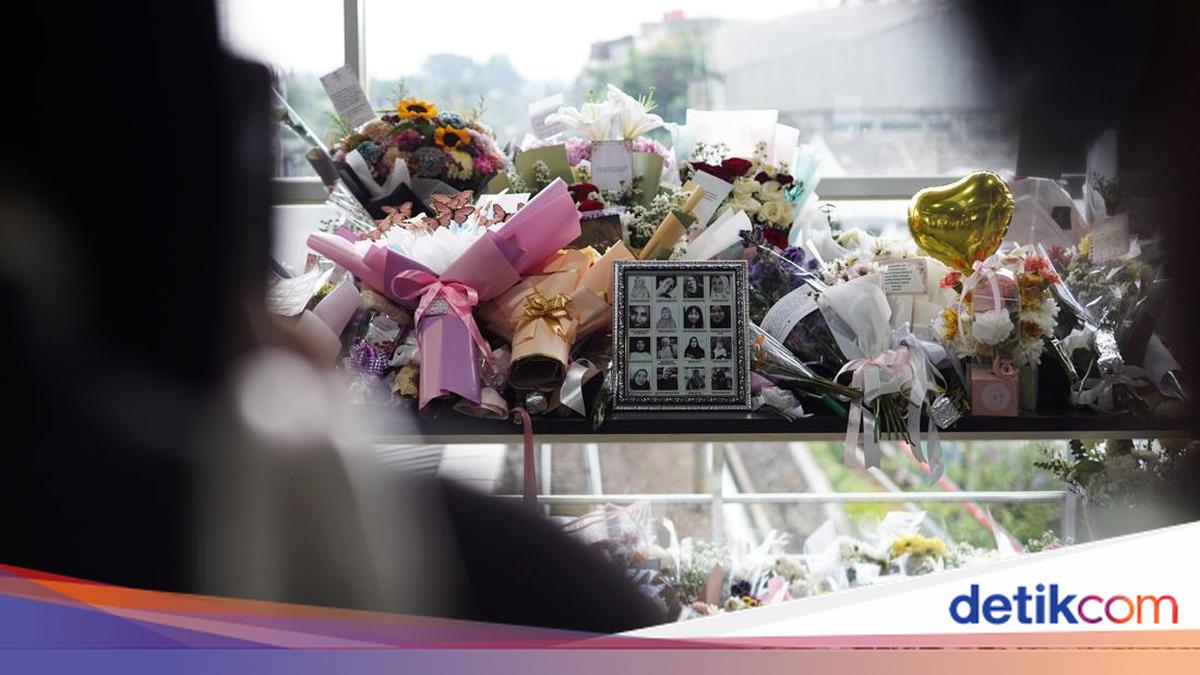
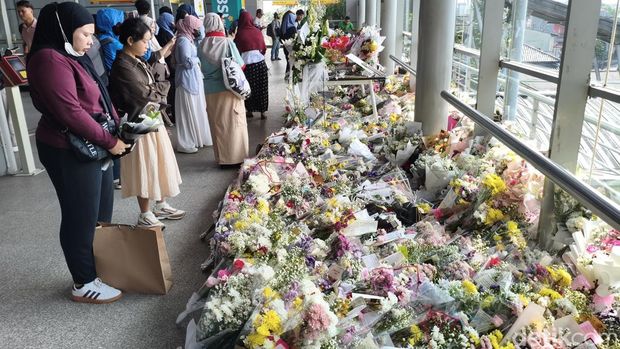
In the days following the accident, Bekasi Timur Station has become a focal point for public grief. Commuters and local residents have gathered to lay bouquets of flowers, ranging from simple roses to elaborate arrangements, near the station’s entrance. These tributes are concentrated primarily near the glass partitions adjacent to the stairs leading to the electronic tapping gates. The floral displays line both the northern and southern access points, creating a somber corridor for those entering the station.
Tied to these flowers are numerous cards and notes offering prayers for the 16 victims, who have been poignantly referred to in several messages as "Srikandi Bangsa" (heroines of the nation). This title reflects the fact that all 16 fatalities were women, many of whom were primary breadwinners or pillars of their respective families, caught in the tragedy during their evening commute. One message, left by an anonymous mourner, read: "Deepest condolences on the passing of the 16 Srikandi Bangsa, the pride of their families, victims of the train accident at Bekasi Timur Station. May they rest in peace, find the best place by God’s side, and may the families left behind be strengthened with fortitude."
The visual tribute is not limited to flowers. Some citizens have placed photo collages of the victims at the site, creating a space for commuters to pause and offer a silent prayer. Observers at the scene have noted that the atmosphere remains heavy, with many passengers visibly moved to tears as they pass the memorial on their way to work.
Detailed Chronology of the Collision
The tragedy was the result of a rare and complex chain of events that began with a vehicle malfunction on the tracks. According to investigative data and witness accounts, the sequence began on the night of April 27, when a taxi operated by Green SM experienced a sudden electrical short circuit while crossing a rail section near Bekasi Timur Station. The vehicle became immobilized directly in the path of oncoming traffic.
Moments later, a KRL Commuter Line traveling from Cikarang toward Jakarta struck the stalled taxi. This initial collision, referred to as a "temperan," caused the Jakarta-bound KRL to come to an emergency halt, blocking a portion of the rail network. Because of this initial accident, another KRL Commuter Line—this one bound for Cikarang—was ordered to stop at the platforms of Bekasi Timur Station to wait for the tracks ahead to be cleared.
Tragedy struck when the KA Argo Bromo Anggrek, an express service traveling at high speed from Jakarta toward Surabaya, entered the sector. Despite emergency signaling and braking efforts, the express train was unable to stop in time and collided with the rear of the stationary Cikarang-bound KRL at the Bekasi Timur platform. The force of the impact led to the high casualty count and significant structural damage to the rear carriages of the commuter train.
Official Responses and Social Support Systems
The scale of the disaster prompted an immediate and coordinated response from various levels of government. On April 29, 2026, the Deputy Governor of Jakarta, Rano Karno, personally visited the families of victims who were civil servants (ASN) and community leaders to provide compensation and express the city’s condolences. Similarly, in West Java, Governor Dedi Mulyadi and the Acting Regent of Bekasi, Asep Surya Atmaja, conducted door-to-door visits to the homes of the deceased to offer direct support and ensure that funeral arrangements were handled with dignity.
The central government has also deployed resources to ensure that survivors and bereaved families are not left to navigate the recovery process alone. The Ministry of Social Affairs has initiated a comprehensive assessment to distribute necessary financial aid and long-term support. Simultaneously, the Ministry of Women’s Empowerment and Child Protection (PPPA) has focused its efforts on providing psychosocial support. Given that the fatalities were exclusively women, the Ministry is particularly concerned with the welfare of the children left behind, many of whom have lost their primary caregivers.
KAI’s Commitment to Recovery and Future Safety
PT KAI has been proactive in managing the logistical and emotional fallout of the accident. Anne Purba, Vice President of Corporate Communication at KAI, emphasized that the company’s current priority is the holistic recovery of the affected passengers. "We understand that the recovery process takes time. Therefore, we continue to accompany customers and their families, ensuring that all needs during medical treatment are met, and providing trauma healing services so that the recovery process can proceed more calmly," she stated.
To facilitate this, KAI has established an Information Post at Bekasi Timur Station, which will remain operational until at least May 11, 2026. This post serves as a one-stop center for health coordination, administrative assistance, and trauma healing sessions. Furthermore, KAI is managing a "Lost and Found" service for items recovered from the wreckage. To date, 115 items have been cataloged; 57 have been returned to their rightful owners, while 58 remain in the verification process.
In a move to provide long-term stability for the families of the deceased, KAI CEO Bobby Rasyidin announced that the company would provide educational grants for the children of the victims. "We offer our deepest condolences and apologies to all customers and families for the incident at Bekasi Timur Station. We will continue to accompany every family and customer in this recovery process. The prayers and concern shown by the public are a source of strength for us to continue improving safety in the future," Rasyidin said.
Infrastructure and Operational Impact
Despite the tragedy, Bekasi Timur Station has resumed full operations to serve the thousands of commuters who rely on the rail network daily. Since the station reopened on April 28, data shows a high volume of traffic, with 15,774 "Gate In" users and 20,575 "Gate Out" users recorded. The disparity in numbers suggests that many residents who live in the Bekasi area but work in Jakarta have returned to their routines, albeit with a renewed sense of caution.
The incident has reignited debates regarding railway safety in Indonesia, particularly concerning the management of level crossings and the integration of emergency stopping systems for high-speed trains like the Argo Bromo Anggrek. The Argo Bromo Anggrek is considered the flagship of the Indonesian rail fleet, and its involvement in such a severe collision has prompted KAI to review its signaling protocols and obstacle detection technologies.
Industry analysts suggest that the "Green SM" taxi stall highlights a persistent vulnerability in the rail corridor: the intersection of road and rail. While the collision occurred at the station, the catalyst was a vehicle on the tracks nearby. Moving forward, there are calls for increased investment in flyovers and underpasses to eliminate at-grade crossings entirely in high-traffic areas like Bekasi.
As the investigation by the National Transportation Safety Committee (KNKT) continues, the focus remains on the human element. The 16 women lost in the accident represented the backbone of the commuting workforce, and their absence is felt deeply across the Greater Jakarta area. The flowers at Bekasi Timur Station may eventually fade, but the calls for enhanced safety and the memory of the "Srikandi Bangsa" are likely to drive significant changes in Indonesia’s transportation landscape for years to come.