United States and Iran Explore Second Round of Peace Talks in Islamabad Amid Escalating Maritime Conflict in the Strait of Hormuz


The White House has confirmed that the United States is currently in active discussions regarding the potential for a second round of high-level peace negotiations with the Islamic Republic of Iran, with the Pakistani capital of Islamabad serving as the proposed venue. This diplomatic overture comes at a critical juncture as the international community watches the escalating tensions in the Persian Gulf with growing apprehension. White House Press Secretary Karoline Leavitt informed reporters on Thursday, April 16, 2026, that the administration remains optimistic about the prospects of reaching a comprehensive agreement that could de-escalate the current military standoff. According to Leavitt, the discussions are fluid and ongoing, and there is a high probability that the next phase of mediation will be hosted by Pakistan, a nation that has historically maintained a complex but functional relationship with both Washington and Tehran.
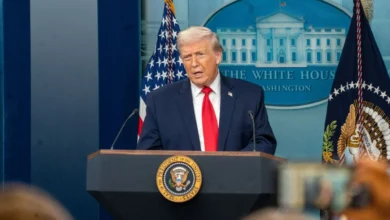
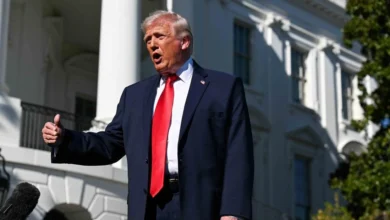
President Donald Trump echoed this sentiment earlier in the week, revealing that Iranian officials reached out to his administration on Monday, April 13, expressing a renewed desire to come to the bargaining table. While the President indicated a willingness to negotiate, he maintained a rigid stance on the primary objective of any future accord: the permanent prevention of Iran’s acquisition of nuclear weapons. "They want to make a deal," the President stated during a press briefing, "but I will not sign off on any agreement that allows Tehran to possess a nuclear weapon. That is a non-negotiable red line for this administration and for the security of the civilized world."
The Genesis of the 2026 Maritime Crisis
The current crisis traces its roots back to February 28, 2026, when a series of kinetic exchanges between the United States, Israel, and Iranian-backed entities ignited a broader regional conflict. In a swift and drastic strategic move, Tehran effectively closed the Strait of Hormuz, a narrow waterway that serves as the world’s most vital energy artery. Iran declared that the strait would be closed to all maritime traffic except for its own vessels and those specifically authorized by the Revolutionary Guard. Furthermore, the Iranian government attempted to impose a "transit fee" on any vessel permitted to pass, asserting sovereign control over international shipping lanes that have traditionally been governed by the United Nations Convention on the Law of the Sea.
The impact of this closure was immediate and global. Historically, nearly 21 million barrels of oil per day—representing roughly 20 to 30 percent of the world’s total liquid petroleum consumption—pass through the Strait of Hormuz. Additionally, a significant portion of the world’s Liquefied Natural Gas (LNG) supply, particularly from Qatar, is transported through this route. The sudden removal of this supply from the global market sent energy prices into a tailspin, with Brent crude spiking toward record highs and causing economic ripples across Europe and Asia.
Chronology of Recent Escalations
The timeline of the past two months illustrates a rapid descent from localized skirmishes to a full-scale naval blockade:
- February 28, 2026: Outbreak of direct hostilities involving US and Israeli forces against Iranian strategic assets.
- March 5, 2026: Iran officially announces the closure of the Strait of Hormuz, citing national security concerns and the need to protect its territorial waters from "foreign aggression."
- March 15, 2026: Global oil prices hit a three-year high as tankers are diverted around the Cape of Good Hope, adding weeks to transit times and millions in fuel costs.
- April 10, 2026: Reports emerge of Iranian "toll stations" being established near the Musandam Peninsula to extort passing commercial vessels.
- April 13, 2026: The United States military announces a counter-blockade policy. The Pentagon confirms it has begun blocking the movement of ships entering or exiting Iranian ports to starve the regime of export revenue. On the same day, Tehran contacts the Trump administration to propose a diplomatic off-ramp.
- April 14, 2026: The US Navy begins enforcing the blockade, though initial reports indicate a cautious approach to avoid direct ship-to-ship combat.
- April 16, 2026: The White House confirms Islamabad as the likely site for the second round of peace talks.
Military Standoff and Navigational Data
As of mid-April, the military situation remains a tense "stare-down" on the high seas. While the US military has officially declared its intent to block Iranian port traffic, the implementation has been surgical. Shipping data analyzed on Tuesday and Wednesday showed that at least three Iranian-linked tankers successfully transited the Strait of Hormuz. However, these vessels were notably not traveling to or from sanctioned Iranian terminals, suggesting that the US is currently targeting specific economic lifelines rather than engaging in a total naval war.
Tehran has responded to the US blockade with severe rhetoric. The Iranian Ministry of Defense issued a statement threatening to strike any US naval assets that attempt to enforce the blockade or cross into what Iran considers its "protected zone" in the strait. Furthermore, Iran has threatened retaliatory strikes against the port infrastructure of neighboring Gulf states—specifically the United Arab Emirates and Saudi Arabia—should those nations provide logistical support to the American naval campaign.
The Economic and Geopolitical Stakes
The stakes for the proposed Islamabad talks could not be higher. Beyond the immediate threat of a wider war, the global economy is reeling from the disruption of the "energy bridge" between the Middle East and the rest of the world. Analysts suggest that if the Strait of Hormuz remains contested for another sixty days, global GDP growth could see a contraction of 1.5 to 2 percent.
For the United States, the primary objective is twofold: ensuring the freedom of navigation and securing a permanent halt to Iran’s nuclear enrichment program. For Iran, the goal is the removal of crippling economic sanctions and the recognition of its regional influence. The choice of Islamabad as a venue is significant. Pakistan, a nuclear-armed nation with a long history of balancing its ties between the West and its neighbor Iran, offers a neutral ground that is geographically accessible to both parties. Islamabad’s involvement also suggests that China, a major investor in Pakistan and a significant consumer of Iranian oil, may be playing a behind-the-scenes role in facilitating the dialogue.
Reactions and Diplomatic Analysis
International reaction to the news of the Islamabad talks has been cautiously optimistic. European allies, who have been caught between their security commitments to the US and their dependence on Middle Eastern energy, have urged both sides to exercise maximum restraint. A spokesperson for the European Union stated, "The path to Islamabad is the only viable alternative to a conflict that no one can afford to win."
In Israel, the government has remained silent on the specific prospects of the talks but has reiterated that it reserves the right to take unilateral action if the diplomatic process fails to address the threat of a nuclear-armed Iran. Meanwhile, energy markets showed a slight cooling on Thursday, with oil prices dipping 3% following Karoline Leavitt’s confirmation of the "optimistic" outlook for the discussions.
However, military analysts warn that the situation on the ground remains volatile. "The rhetoric of peace is encouraging, but the physical blockade of ports and the closure of the strait are acts of war," said Dr. Alistair Graham, a senior fellow at the Institute for Maritime Security. "We are currently in a state where one miscalculation by a destroyer captain or a revolutionary guard speedboat commander could ignite a fire that diplomacy cannot easily extinguish."
Implications for Future Regional Stability
If the second round of talks in Islamabad yields a framework for peace, it could represent a historic shift in Middle Eastern geopolitics. A "Grand Bargain" would likely require Iran to relinquish its nuclear ambitions in exchange for a guaranteed role in the regional security architecture and the reopening of global markets to its energy exports. It would also necessitate a complex withdrawal of US naval blockades and a commitment from Iran to permanently end its interference with international shipping.
As the world awaits the official scheduling of the Islamabad summit, the focus remains on the Strait of Hormuz. The ability of commercial tankers to navigate these waters without fear of seizure or attack remains the most immediate barometer of whether the "optimism" expressed by the White House is grounded in reality or is merely a strategic pause in an ongoing escalation. For now, the global community remains in a state of watchful waiting, hoping that the second round of pembicaraan damai (peace talks) will succeed where previous efforts have faltered.