Iran’s Currency Crisis: Geopolitical Tensions, Sanctions, and the Complexities of Rial vs. Toman

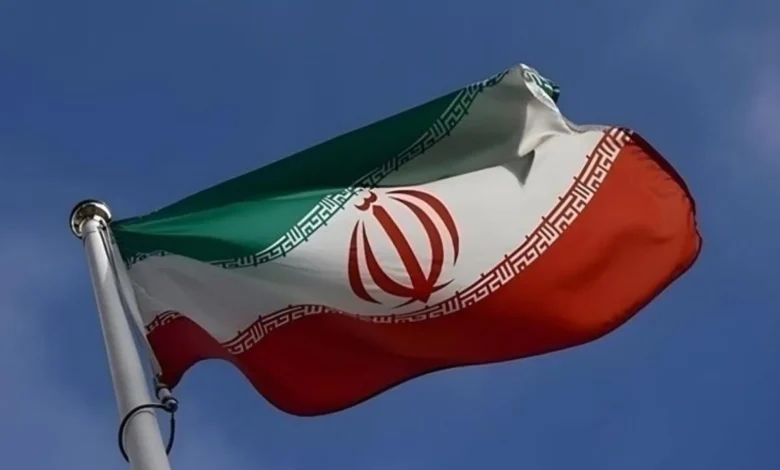
Jakarta (ANTARA) – Iran’s national currency, the rial, has been under intense global scrutiny amidst escalating geopolitical tensions and the far-reaching impact of global economic policies. A defining moment in this ongoing saga occurred when former United States President Donald Trump’s administration initiated a series of stringent measures, notably imposing tariffs of up to 25 percent on countries engaging in business with Iran. This aggressive stance, primarily aimed at crippling Iran’s economy and curtailing its nuclear program and regional influence, triggered a cascade of adverse effects on the Islamic Republic’s financial landscape, most prominently manifesting in the severe weakening of its national currency.
Recent reports have highlighted the dire state of the rial, with its exchange rate against major international currencies, particularly the Euro, plummeting to unprecedented lows. This dramatic depreciation is a stark indicator of the immense pressure exerted on the Iranian economy, a direct consequence of prolonged international sanctions, persistent domestic inflation, and a challenging global economic environment. The combination of these factors has not only eroded the purchasing power of Iranian citizens but has also complicated international trade and investment, further isolating the nation from the global financial system.
Interestingly, for those venturing into Iran’s bustling traditional bazaars or modern shopping centers, the official currency, the rial, is rarely mentioned in daily transactions. Instead, locals predominantly refer to prices using the term "toman." This informal, yet deeply ingrained, practice highlights a unique adaptation by the Iranian populace to cope with the challenges of hyperinflation and the resulting unwieldy numbers associated with rial denominations. The use of toman serves as a practical simplification, enabling easier communication of prices and amounts in a highly inflationary environment. This phenomenon often leaves foreign visitors and international economic observers perplexed, grappling with the discrepancy between the officially recognized currency and the one used in everyday life.
The widespread adoption of toman in daily commerce is a direct response to the nation’s struggle with persistently high inflation. To streamline price discussions and circumvent the necessity of quoting excessively large numbers in rials, Iran has effectively developed and embraced this alternative accounting system. This informal system has been so prevalent and deeply embedded in the public consciousness that it has prompted the government to undertake a significant redenomination effort, aiming to formally align the national currency with the popular usage of toman.
This complex currency landscape raises fundamental questions for anyone trying to understand Iran’s economy: What exactly is the official currency of Iran? What is the fundamental difference between the rial and the toman, which so frequently confuses both tourists and international economic analysts? And what are the broader implications of this currency duality and the government’s redenomination efforts? An in-depth exploration, drawing from various financial and geopolitical sources, reveals a multifaceted story of economic resilience, political maneuvering, and societal adaptation.
The Official Currency of Iran: The Rial
Legally and administratively, the Iranian rial (IRR) stands as the undisputed official currency of the Islamic Republic of Iran. All formal financial activities, government documentation, and official price listings in modern commercial establishments, including banks, government offices, and large retail chains, are denominated in rials. This legal mandate ensures that the rial remains the standard for all official transactions and record-keeping within the country’s financial system. Banknotes and coins issued by the Central Bank of Iran are all denominated in rials, clearly displaying the numerical value in this official unit. For international financial institutions and foreign exchange markets, the rial is the recognized and traded currency of Iran.
The Informal Reality: Rial vs. Toman in Daily Life
Despite the rial’s official status, a striking divergence exists in the everyday economic life of ordinary Iranians. In almost all daily transactions, from purchasing groceries at a local market to paying for transportation or services, the term "rial" is conspicuously absent. Instead, the "toman" reigns supreme in conversational commerce, whether in bustling traditional bazaars or small neighborhood shops. This informal yet universal practice is a testament to the profound impact of inflation on the nation’s economic psychology.
Historically, the toman was itself the official currency of Iran until 1932, when it was replaced by the rial at a rate of one toman to ten rials. Over time, as inflation began to erode the rial’s value, the public intuitively reverted to the toman as a simpler unit of account, essentially dropping a zero from the rial amount. However, the severe inflation of recent decades led to an even greater simplification. In practical terms, one toman today is informally understood to be equivalent to 10,000 rials. This means that for convenience, Iranians effectively truncate four zeros from the official rial value when speaking about prices. For example, an item officially priced at 50,000 rials would be referred to as 5 toman. This system dramatically simplifies communication, allowing people to quote prices without resorting to lengthy strings of zeros, even though the rial remains the nation’s legal tender.
This informal conversion often leads to significant confusion for foreign visitors. If a street vendor quotes a price of "60,000 toman," a tourist might initially interpret this as 60,000 rials. However, the actual amount due would be 600,000 rials (60,000 toman x 10 rials per toman in the old historical context, or more commonly, 60,000 toman representing 60,000 x 10,000 rials in the current informal simplification, meaning 600 million rials if interpreted strictly as old toman, or 600,000 rials if the vendor is speaking in terms of ‘new’ informal toman where 1 toman = 10 rials is the underlying mental conversion). The crucial understanding is that when someone says "toman," they are effectively quoting a value that is 10 times (in the historical sense) or 10,000 times (in the modern informal sense) the stated number in rials, but typically they mean the value after dropping four zeros from the rial. The ambiguity arises from whether the "toman" refers to the old 1:10 ratio or the newer 1:10,000 informal ratio. This is precisely why the government’s redenomination became necessary.
The Redenomination Initiative: A Formal Shift to Toman
Recognizing the long-standing confusion and the practical necessity of simplifying the national financial system, the Iranian government, through the Central Bank of Iran (CBI), embarked on a significant redenomination policy. This initiative officially began in 2020 and is being implemented in phases, with a broader rollout anticipated between 2025 and 2026. The core of this policy is to formally replace the rial as the primary unit of currency with a "new toman," effectively slashing four zeros from the old rial value. Under this scheme, 10,000 old rials will officially be equivalent to 1 new toman. This move is designed to bring the official currency in line with the long-established informal usage and simplify accounting.
Furthermore, the new toman will be divided into smaller denominations known as qiran, with one new toman comprising 100 qiran. This introduction of a sub-unit aims to provide greater flexibility for smaller transactions and maintain a traditional currency structure. During the transitional period, old rial banknotes will remain legal tender and circulate concurrently with the newly issued toman banknotes. To facilitate this transition and gradually accustom the public to the change, new banknotes are being issued with smaller nominal values, often accompanied by faint outlines or ghosted zeros to signify the change in the decimal place and to guide the public in adapting to the new system. This phased approach is crucial for minimizing disruption and ensuring a smooth transition across the entire economy.
Factors Contributing to the Weakness of Iran’s Currency
The persistent weakness of the Iranian rial is not merely a domestic issue but is deeply intertwined with a complex web of international political pressures, economic sanctions, and internal policy challenges.
1. U.S. Sanctions and Geopolitical Tensions:
The primary driver of the rial’s depreciation has been the re-imposition and tightening of U.S. sanctions, particularly after the Trump administration withdrew from the Joint Comprehensive Plan of Action (JCPOA), commonly known as the Iran nuclear deal, in May 2018. These sanctions, initially lifted under the Obama administration as part of the nuclear accord, were reimposed with renewed vigor, targeting key sectors of Iran’s economy, including:
- Oil Exports: Sanctions aimed at reducing Iran’s crude oil exports to zero, drastically cutting off the government’s main source of foreign currency revenue. This has severely limited Iran’s ability to import essential goods and support the rial.
- Banking and Financial Sector: Iranian banks were largely cut off from the SWIFT international payment system, making it exceedingly difficult for Iran to conduct international trade, process payments, and access global financial markets. This isolation has significantly hampered foreign investment and legitimate trade.
- Shipping and Ports: Sanctions extended to Iran’s shipping lines and port operators, further complicating trade logistics and increasing costs for imports and exports.
- Metals and Mining: Restrictions were also placed on Iran’s industrial metals sector, which is another significant source of export revenue.
The stated goal of these "maximum pressure" sanctions was to compel Iran to negotiate a new, more comprehensive agreement addressing its nuclear program, ballistic missile development, and regional activities. However, the immediate effect was a severe contraction of Iran’s economy and a dramatic devaluation of its currency, which lost over 60% of its value against the U.S. dollar in 2018 alone. The geopolitical backdrop, including regional proxy conflicts and tensions in the Strait of Hormuz, further exacerbated investor uncertainty and capital flight.
2. High and Persistent Inflation:
Decades of government mismanagement, coupled with the external pressures of sanctions, have led to chronic and often hyper-inflation in Iran. When the government’s revenues (especially from oil) decline due to sanctions, it often resorts to printing more money to cover its budget deficits. This increase in the money supply, without a corresponding increase in goods and services, directly fuels inflation. The cost of living has skyrocketed, eroding the purchasing power of ordinary Iranians and making imported goods prohibitively expensive. The official inflation rate has frequently been in double digits, often exceeding 40-50% annually in recent years, though independent analysts often suggest higher figures. This relentless inflation is the primary reason why the rial’s numerical value has become so cumbersome, necessitating the informal use of toman and the subsequent redenomination.
3. Economic Mismanagement and Structural Issues:
Beyond sanctions and inflation, Iran’s economy suffers from deep-seated structural issues. These include:
- Lack of Diversification: Despite efforts, the economy remains heavily reliant on oil revenues, making it vulnerable to global oil price fluctuations and sanctions.
- Corruption: Pervasive corruption within various sectors diverts resources, discourages investment, and undermines public trust.
- Inefficiency: State-owned enterprises often operate inefficiently, and a complex bureaucracy can hinder private sector growth.
- Limited Foreign Investment: Sanctions and an unpredictable business environment have largely deterred significant foreign direct investment, which is crucial for technological advancement and job creation.
- Brain Drain: Economic hardship and limited opportunities have led to a significant outflow of educated and skilled professionals, further weakening the country’s human capital.
4. Global Economic Environment:
While domestic and sanctions-related factors are dominant, the broader global economic environment also plays a role. Fluctuations in global commodity prices, particularly oil, and the overall health of international trade impact Iran’s export potential and foreign currency earnings.
Chronology of Key Events Affecting Iran’s Currency
- 1932: The Iranian rial officially replaces the toman as the national currency, with 1 toman equivalent to 10 rials. The toman continues to be used informally.
- 1979: The Islamic Revolution leads to initial economic instability, but the currency remains relatively stable for a period.
- 1980-1988: The Iran-Iraq War places immense strain on the economy, leading to early signs of inflation and currency depreciation.
- 2006-2010: International sanctions begin to tighten over Iran’s nuclear program, impacting oil exports and banking.
- 2012: Significant sanctions from the U.S. and EU target Iran’s oil sector and central bank, leading to a sharp drop in the rial’s value.
- 2015: The Joint Comprehensive Plan of Action (JCPOA) is signed, leading to the lifting of many international sanctions. The rial sees a period of relative stability and improvement in economic outlook.
- May 2018: U.S. President Donald Trump withdraws from the JCPOA and announces the re-imposition of sanctions. This triggers a dramatic and rapid depreciation of the rial, which loses over half its value in a few months.
- November 2018: The U.S. reimposes a full set of sanctions on Iran’s oil, banking, and shipping sectors.
- 2019-2020: The rial continues its volatile decline amidst escalating U.S.-Iran tensions and economic pressures. Inflation soars, making the informal use of "toman" (where 1 toman = 10,000 rials) even more prevalent.
- May 2020: The Iranian parliament approves a bill to officially change the national currency from rial to toman, cutting four zeros. The Central Bank is given two years to implement the change.
- 2021-Present: The redenomination process begins with the issuance of new banknotes. The currency remains under pressure due to ongoing sanctions and domestic economic challenges. The government targets a full transition by 2025-2026.
Broader Impact and Implications
The protracted currency crisis has profound implications for Iran, both domestically and internationally.
1. Socio-Economic Impact on Iranian Citizens:
The most immediate and devastating impact is felt by ordinary Iranians. The soaring cost of living, coupled with stagnant wages, has significantly reduced purchasing power and pushed many into poverty. Access to essential goods, including food and medicine, becomes challenging due to import restrictions and inflated prices. This economic hardship often fuels social unrest and dissatisfaction with the government. The dual currency system and the redenomination attempt highlight the government’s struggle to manage economic perception and provide stability to its citizens.
2. Challenges for International Trade and Investment:
The severe depreciation of the rial and the difficulty in conducting international financial transactions due to sanctions create immense hurdles for foreign companies wishing to do business with Iran. This isolation stifles foreign investment, technology transfer, and access to global markets, hindering Iran’s economic development and modernization. Even humanitarian trade faces significant obstacles, leading to shortages of critical supplies.
3. Government Policy and Stability:
The Iranian government faces immense pressure to stabilize the economy and the currency. The redenomination initiative is a strategic move, not just for convenience, but also to instill a psychological sense of stability and address public frustration with large numerical values. However, for the redenomination to be truly effective, it must be accompanied by robust economic policies to control inflation, diversify the economy, and mitigate the impact of sanctions. Without addressing the underlying causes of currency depreciation, the redenomination might only offer a temporary cosmetic fix.
4. Regional and Global Geopolitics:
Iran’s economic woes are intrinsically linked to its geopolitical standing. The currency crisis is a direct result of international pressure, and its resolution is often tied to diplomatic breakthroughs regarding its nuclear program and regional posture. The stability of Iran’s economy has broader implications for regional security and global energy markets.
In conclusion, Iran’s currency landscape is a complex tapestry woven from historical precedent, economic necessity, and the threads of international diplomacy. The official rial, battling the relentless tide of inflation and international sanctions, struggles to maintain its value, while the informal toman serves as a testament to the resilience and adaptability of the Iranian people. The government’s ambitious redenomination project marks a critical juncture, aiming to harmonize official policy with daily reality. Yet, the long-term success of this endeavor hinges not just on administrative changes but on profound shifts in the underlying economic and geopolitical forces that continue to shape Iran’s destiny. The ongoing saga of the rial and toman remains a powerful indicator of the challenges and resilience within one of the world’s most scrutinized economies.
Pewarta: Sean Anggiatheda Sitorus
Editor: Suryanto
Copyright © ANTARA 2026
Dilarang keras mengambil konten, melakukan crawling atau pengindeksan otomatis untuk AI di situs web ini tanpa izin tertulis dari Kantor Berita ANTARA.