Thailand Songkran 2026 Revenue Surges to 30 Billion Baht as Global Tourism Confidence Strengthens

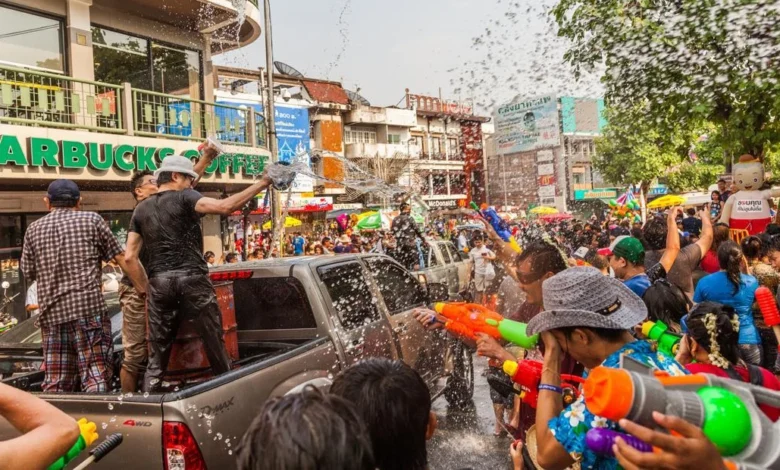
The 2026 Songkran festivities in Thailand have officially concluded with record-breaking financial results, generating an estimated total tourism revenue of over 30.35 billion baht, or approximately Rp 16 trillion. This figure represents a robust 6% increase compared to the previous year, driven largely by a significant influx of international travelers and a resilient domestic travel market. Thapanee Kiatphaibool, the Governor of the Tourism Authority of Thailand (TAT), confirmed that the five-day peak period from April 11 to April 15 saw the country solidify its position as a premier global festival destination.
According to data released by the TAT, the international sector contributed approximately 8.1 billion baht (Rp 4 trillion) to the total revenue, marking a 2% year-on-year increase. During this period, an estimated 500,000 foreign tourists arrived in the kingdom specifically to participate in the water festival. While the international growth was steady, the domestic market showed even more vigorous expansion. Thai citizens accounted for 5.96 million trips during the holiday, a 7% increase from 2025, contributing roughly 22.25 billion baht (Rp 11 trillion) to the economy—an 8% jump in annual revenue from domestic tourism.
Governor Thapanee noted that the atmosphere surrounding this year’s celebrations was notably more vibrant than initially projected. This surge in activity reflects a profound level of confidence among both local and international travelers. The TAT Governor emphasized that the festival’s success is not merely a matter of numbers but a reflection of Thailand’s strategic efforts to elevate Songkran from a local tradition to a "World Class Festival" through the integration of cultural heritage and modern entertainment.
Strategic Economic Distribution and Regional Growth
One of the primary objectives for the 2026 tourism strategy was the decentralization of wealth, ensuring that the economic benefits of the holiday reached beyond the urban centers of Bangkok and Chiang Mai. Preliminary reports suggest this was successful, as the surge in long-distance travel during the extended holiday period helped distribute income to local economies, small-scale vendors, and hospitality providers in secondary provinces.
"The success of this festival demonstrates that Thailand is becoming increasingly powerful as a world festival destination, thanks to its unique cultural appeal," Governor Thapanee stated. She further attributed the achievement to a high level of synergy between the public sector, private enterprises, and local communities, all of whom collaborated to promote the "Maha Songkran" brand on an international stage.
In the capital city of Bangkok, the traditional hotspots of Silom Road, Siam Square, and Khao San Road remained the epicenters of the water-splashing activities. These areas saw record crowds, with security measures and crowd control systems expanded to accommodate the high density of visitors. However, the government’s focus on curated events also bore fruit. The "Maha Songkran World Water Festival 2026," hosted at Benchakitti Park, became a major highlight of the metropolitan celebrations. Between April 11 and April 13, the park attracted 108,640 visitors, consisting of 56,368 domestic tourists and 52,272 foreigners. This single event generated an estimated economic turnover of 283.68 million baht (Rp 151 billion).
Simultaneously, the "Saneh Art by Songkran Festival 2026" at Lumpini Park drew over 94,546 attendees. This event specifically targeted younger demographics and social media influencers, featuring large-scale art installations and photographic zones that blended traditional Thai motifs with contemporary aesthetics.
Cultural Preservation and Provincial Highlights
Beyond the modern spectacles in Bangkok, the historic city of Ayutthaya remained a top-tier destination for those seeking a mix of tradition and entertainment. The city’s famous elephant water fights, where decorated elephants spray water on tourists, continued to be a viral sensation, drawing thousands of international photographers and families. The Northern and Northeastern regions of Thailand also reported high engagement, with Chiang Mai maintaining its reputation as the "Soul of Songkran" through traditional parades and religious ceremonies.
The 2026 celebrations placed a heavy emphasis on the "Soft Power" aspects of the holiday. While the "water wars" attract the headlines, the TAT and the Ministry of Culture promoted the more contemplative side of the festival. Activities such as the "Song Nam Phra" (bathing of Buddha statues), "Rod Nam Dam Hua" (the ritual of pouring scented water on the hands of elders to seek blessings), and cultural parades were integrated into major tourist hubs. These initiatives were designed to provide a holistic experience, ensuring that visitors understood the spiritual significance of the Thai New Year.
Southern Border Boom and Malaysian Influx
The Southern region of Thailand, particularly Songkhla province, experienced a significant economic windfall due to its proximity to the Malaysian border. The Sadao border checkpoint witnessed a massive surge in arrivals as Malaysian tourists took advantage of the long weekend. Between April 10 and April 12, more than 36,000 travelers crossed the border at Sadao alone.
Hotel occupancy rates in the border regions hovered around 80%, with total visits exceeding 70,000 individuals over the festival period. The economic turnover in this region is estimated to have surpassed 700 million baht (Rp 375 billion). Similar trends were observed at other border crossings, including Betong in Yala province and Sungai Kolok in Narathiwat, where localized Songkran events successfully attracted cross-border visitors, providing a much-needed boost to the economy of the Deep South.
Broader Implications for Thailand’s 2026 Tourism Outlook
The success of the Songkran period is a critical indicator for Thailand’s annual tourism performance. The Ministry of Tourism and Sports released comprehensive data showing that from January 1 to April 12, 2026, Thailand welcomed a total of 10.36 million international visitors. This ten-million-mark milestone, achieved in just over 100 days, has generated approximately 506 billion baht (Rp 271 trillion) in revenue.
Natthriya Thaweevong, the Permanent Secretary of the Ministry of Tourism and Sports, highlighted the accelerating momentum of the sector. In the week leading up to the peak of Songkran, international arrivals reached 619,481, an 8.76% increase from the previous week. This equates to an average of 88,498 arrivals per day. The Ministry attributes this growth to improved air connectivity, visa-free policies for several key markets, and aggressive global marketing campaigns.
Analysis: The Future of the "Festival Economy"
The 2026 Songkran results suggest a shift in Thailand’s tourism strategy toward a "festival economy." By positioning Songkran as a month-long celebration (with events staggered throughout April), the government has successfully extended the stay of international visitors and increased the average spend per person.
Industry analysts point out that the 6% growth in revenue, despite global economic fluctuations, indicates that Thailand’s tourism product remains highly "inelastic"—meaning travelers are willing to prioritize a visit to Thailand for Songkran regardless of minor price increases in airfare or accommodation. The heavy investment in infrastructure, such as the redevelopment of Benchakitti Park and the expansion of the rail network to provincial capitals, has also paid off by making it easier for tourists to navigate the country during peak periods.
Furthermore, the collaboration between the government and the private sector has led to better safety standards and environmental management. This year, "Green Songkran" initiatives were introduced in several provinces to encourage water conservation and waste reduction, addressing long-standing criticisms regarding the environmental impact of the festival.
As Thailand moves into the second half of 2026, the momentum generated by Songkran is expected to carry over into the low season, supported by niche markets such as wellness tourism, MICE (Meetings, Incentives, Conferences, and Exhibitions), and digital nomads. The TAT remains optimistic that if current trends continue, Thailand will meet or exceed its year-end targets, further solidifying its status as the tourism powerhouse of Southeast Asia.
The 2026 Songkran festival has proven to be more than just a cultural celebration; it has served as a vital economic engine. By balancing the high-energy water festivities with deep-rooted cultural traditions, Thailand has created a unique value proposition that continues to resonate with a global audience, ensuring that the "Land of Smiles" remains at the forefront of the international travel industry.