Scottish Tourist Sentenced to Jail and Fined Following Public Indecency Incident in Historic Maltese Town of Isla

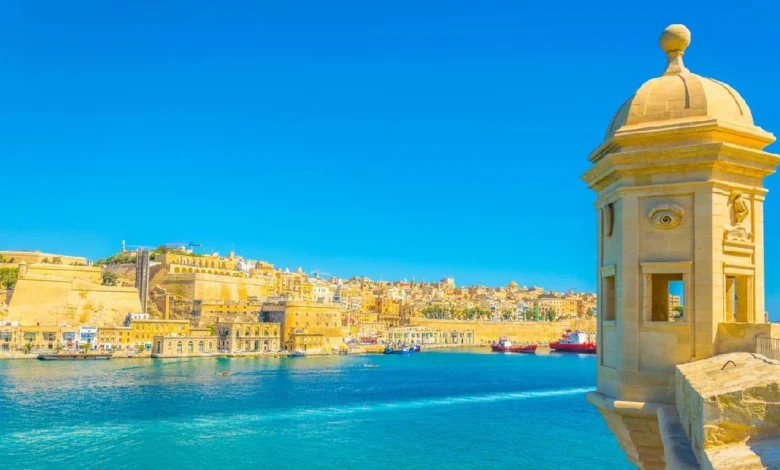
The Maltese judiciary has delivered a firm message regarding public conduct and the preservation of social order following a highly publicized incident involving a foreign national in the historic district of Isla. Sean Graham Purves, an 18-year-old Scottish tourist visiting the Mediterranean archipelago with a group of companions, was sentenced to a term of imprisonment and issued a financial penalty after being apprehended for walking naked through public streets. The incident, which occurred during the final hours of his vacation, has sparked a broader conversation regarding the responsibilities of international visitors and the enforcement of local decency laws in one of Europe’s most prominent tourism hubs.
The sequence of events unfolded on what was intended to be the final day of Purves’s stay in Malta. According to official reports and surveillance data, the young man was captured on closed-circuit television (CCTV) navigating the streets of Isla, also known as Senglea, without any clothing. The footage indicated that the act took place at approximately 10:00 AM on a weekday, a time when the area is typically active with both local residents and sightseeing visitors. Purves was specifically observed on St. Angelo Street, a location characterized by its traditional Maltese architecture and narrow, residential pathways.
Chronology of the Incident and Immediate Law Enforcement Response
The timeline of the event suggests a rapid response from the Malta Police Force. Following the initial sighting and the subsequent reporting of a naked individual in the public thoroughfare, officers were dispatched to the Three Cities area. Purves was located and detained in the vicinity of his last recorded appearance on CCTV. Upon his arrest, he was taken into custody and subsequently charged with several offenses related to public morality and order.
The specific charges brought against the Scotsman included committing an act that offends public decency or morals in a public place and exposing himself in a manner that violates established legal standards of conduct. When presented before the presiding magistrate, Purves did not contest the allegations. He entered a guilty plea for all charges, acknowledging that he had indeed traversed the historic streets of Isla without attire.
Legal representation for the defendant argued that the act was not motivated by malice or a desire to cause harm. Instead, the defense characterized the incident as a momentary lapse in judgment—an attempt at "harmless fun" or a celebratory gesture to mark the end of a holiday before returning to Scotland. However, the prosecution emphasized that the act was a clear violation of the law and a significant disruption to the community’s standards of public decorum.
Judicial Decision and Sentencing Details
The presiding magistrate took a dim view of the "high spirits" defense, focusing instead on the legal obligations of adults within the Maltese jurisdiction. During the sentencing phase, the court noted that while Purves is only 18 years old, he has reached the age of legal majority. In the eyes of the Maltese legal system, individuals aged 18 and older are tried as adults and are expected to be fully aware of the consequences of their actions.
The court ultimately sentenced Purves to one month of effective imprisonment. In addition to the custodial sentence, a fine of €100 (approximately Rp 2 million) was imposed. Perhaps most significantly for a young traveler, the court issued a three-month ban on his entry into Malta, effective upon his release and departure. This "persona non grata" status serves as a secondary deterrent, reinforcing the government’s stance that disrespectful behavior by tourists will result in tangible restrictions on their freedom to return to the islands.
The severity of the sentence—particularly the inclusion of jail time for an act of public nudity—reflects a growing trend in Mediterranean tourist destinations to clamp down on "loutish" behavior. Authorities in regions such as the Balearic Islands in Spain and various Greek islands have implemented similar strict measures to protect the quality of life for local residents and maintain the reputation of their tourism sectors.
The Cultural and Geographic Context of Isla
To understand why the incident was treated with such gravity, one must consider the cultural and historical significance of the location. Isla, or Senglea, is one of the "Three Cities" (alongside Vittoriosa and Cospicua) located across the Grand Harbour from the capital, Valletta. These cities are the cradle of Maltese history, having served as the primary residence and defensive bastion for the Order of Saint John.
Isla is a densely populated, traditional community known for its deep religious roots and architectural heritage. St. Angelo Street, where Purves was spotted, is situated in a neighborhood where public behavior is expected to align with conservative social norms. For the local population, the sight of a tourist engaging in public nudity is not viewed as a harmless prank, but rather as a profound sign of disrespect toward the community and its values. The rapid intervention by the police and the subsequent judicial ruling serve to reassure residents that the state will protect the sanctity of public spaces.
Malta’s Tourism Boom and the Challenge of Public Order
The incident involving Sean Graham Purves comes at a time when Malta is experiencing unprecedented growth in its tourism industry. According to data cited by Malta Today, the archipelago reached a historic milestone in 2025, welcoming a total of 4.02 million tourists over the course of the year. This represents a significant increase from previous years and highlights Malta’s status as a premier global destination.
The island’s appeal is multifaceted. As a "gem of the Mediterranean," Malta offers a unique blend of prehistoric temples, Baroque cathedrals, and UNESCO World Heritage sites, most notably the capital city of Valletta. Beyond its historical assets, the country attracts visitors with its natural beauty, including the crystal-clear waters of the Blue Lagoon on the island of Comino and the rugged coastline of Gozo.
However, this influx of millions of visitors brings with it the challenge of managing diverse behaviors and ensuring that the tourism "product" remains sustainable. The Maltese government has been vocal about its desire to attract "high-quality" tourists—those who appreciate the culture and history of the islands—rather than those seeking a permissive environment for disruptive behavior. The sentencing of Purves is consistent with this broader policy objective: it signals that while Malta is open to the world, it is not a place where local laws can be ignored under the guise of holiday revelry.
Comparative Analysis: Tourism Management in the Mediterranean
Malta is not alone in its struggle to balance economic reliance on tourism with the need for social order. Across the Mediterranean, popular destinations are grappling with similar issues:
- Spain: Cities like Magaluf and Ibiza have introduced "Decrees on Tourism for Excellence," which include heavy fines for public drinking, jumping from balconies (balconing), and public indecency.
- Italy: Venice and Florence have implemented "Code of Conduct" ordinances that penalize tourists for sitting on historic monuments, wandering shirtless in city centers, or swimming in fountains.
- Greece: Authorities in Mykonos and Santorini have increased police presence to manage the behavior of large crowds and ensure that nightlife activities do not spill over into residential harassment.
In the case of Malta, the use of CCTV was instrumental in the swift resolution of the Purves case. The extensive network of surveillance in urban areas like the Three Cities allows law enforcement to monitor public spaces effectively, acting as both a deterrent and a tool for evidence collection. The fact that Purves was caught on camera at 10:00 AM suggests that there is little "blind spot" for those wishing to engage in illicit activities in public.
Official Reactions and Public Sentiment
While official statements from the police department remained focused on the facts of the arrest, the broader reaction in Malta has been one of support for the judicial outcome. Local community leaders in the Three Cities have long advocated for stricter enforcement of public order laws to prevent the "Disneyfication" or degradation of their historic neighborhoods.
Sociologists studying tourism trends in the region suggest that incidents like these are often fueled by a "liminal" mindset—the idea that because a person is away from home and in a transitory environment, the normal rules of society do not apply. For an 18-year-old on his last day of vacation, the urge to perform a "stunt" might have seemed low-risk. The Maltese court’s decision effectively shatters that illusion, proving that international borders do not provide a buffer against legal accountability.
Implications for Future Travelers
The case of Sean Graham Purves serves as a cautionary tale for the millions of tourists who plan to visit Malta in the coming years. It highlights several critical points for international travelers:
- Legal Accountability: Ignorance of local laws or the belief that an act is "just a joke" is not a valid legal defense.
- Respect for Heritage: Historic and residential areas like Isla are not merely tourist backdrops; they are living communities with established norms.
- The Power of Surveillance: Modern tourism hubs are heavily monitored, and evidence of misconduct is easily obtained.
- Long-term Consequences: A criminal record in a foreign country can lead to deportation, fines, and long-term bans, potentially complicating future international travel and employment opportunities.
As Malta continues to break records in tourism arrivals, the government is likely to maintain its firm stance on public conduct. The message remains clear: the beauty and history of the Mediterranean gem are open to all, provided that those who visit do so with the respect and decorum that the nation and its citizens deserve. The one-month prison sentence handed to Purves stands as a definitive marker of where Malta draws the line between personal freedom and public offense.