Japan’s Industrial Backbone Crippled by Escalating Naphtha Crisis, Manufacturing and Construction Sectors Face Paralysis

TOKYO – Japan’s formidable industrial landscape, a global benchmark for precision and efficiency, is currently grappling with an unprecedented and rapidly escalating crisis: severe disruptions in the supply of naphtha-based raw materials. As of April 15, 2026, this critical shortage has begun to exert immense pressure across a broad spectrum of sectors, notably construction and manufacturing, forcing numerous companies to drastically curtail production, delay project timelines, and in some instances, halt new orders altogether. The unfolding situation is further complicated by a striking disparity between official government assurances regarding available stock and the stark reality of distribution bottlenecks and scarcity faced by industries on the ground.
The past week has seen a dramatic acceleration in reports from over a dozen Japanese companies detailing significant interruptions in deliveries or sharp price hikes for essential naphtha-derived components. This points to a systemic breakdown in the supply chain, challenging the resilience that has long defined Japan’s industrial might. Naphtha, a key petroleum distillate, serves as the fundamental building block for a vast array of petrochemicals, which are indispensable for manufacturing everything from plastics and synthetic fibers to paints, adhesives, and solvents. Its scarcity, therefore, reverberates throughout the entire industrial ecosystem, threatening to undermine economic stability.
The Unfolding Crisis: A Deep Dive into Supply Chain Disruptions
The initial tremors of the naphtha crisis, first observed in early March 2026, have now intensified into a full-blown industrial emergency. What began as isolated reports of minor delays and marginal price increases has quickly spiraled into widespread delivery failures and exorbitant cost surges for naphtha-based inputs. Industry players, who typically operate with lean inventories and just-in-time supply chains, are finding themselves in an untenable position. The inability to secure timely and affordable raw materials is forcing difficult decisions, ranging from adjusting production schedules to implementing outright stoppages. This ripple effect is already palpable, with businesses across the country reporting a significant slowdown in operational capacity.
The severity of the situation is underscored by the direct impact on leading industrial conglomerates. Giants such as Toto, a world-renowned manufacturer of sanitaryware and plumbing fixtures, and Asahi Kasei, a diversified chemical company with extensive interests in materials, homes, and health, have publicly acknowledged the severe impediments to their production processes. Both companies rely heavily on specialized naphtha-based adhesives and resins, which are crucial for the assembly and finishing of their products. Delays in receiving these essential components directly translate into reduced output and missed delivery targets, creating a domino effect that extends to their customers and downstream industries.
Similarly, Kansai Paint, a prominent player in the global coatings market, has been compelled to revise its delivery schedules and implement price adjustments due to the acute shortage of thinners. Thinners, often derived from naphtha, are vital solvents used in paint formulations and are subject to stringent regulations due to their hazardous nature. The scarcity of these regulated substances not only complicates manufacturing but also raises concerns about compliance and the search for compliant alternatives. The Japan Painting Contractors Association’s recent survey paints a grim picture, revealing that a mere 2.7% of its member companies are able to procure thinners as usual. This alarming statistic highlights the profound disruption impacting a critical segment of the construction and maintenance industry, which depends on these materials for finishing and protective coatings.
Sector-Specific Impacts: Construction and Manufacturing Under Siege
The direct consequences of the naphtha crisis are particularly acute in two of Japan’s most vital economic pillars: construction and manufacturing.
-
Construction Sector Paralysis: The construction industry, a significant contributor to Japan’s GDP, relies heavily on naphtha-based products for a myriad of applications. Adhesives are critical for everything from structural components and insulation panels to flooring, roofing membranes, and interior finishes. Sealants, waterproofing agents, and various chemical additives also frequently derive from petrochemical feedstocks. With a shortage of these materials, construction projects face inevitable delays, cost overruns, and potential quality compromises if substandard alternatives are used. The inability to complete key stages of construction due to a lack of specialized adhesives or coatings can bring entire projects to a standstill, impacting housing development, infrastructure upgrades, and commercial building initiatives. For a nation frequently investing in resilient infrastructure and urban renewal, such delays are not merely an inconvenience but a significant economic impediment.
-
Manufacturing Output Slump: The manufacturing sector, renowned for its diverse output ranging from automobiles and electronics to precision machinery and consumer goods, is similarly vulnerable. Naphtha derivatives are fundamental to the production of plastics (polyethylene, polypropylene, PVC), synthetic rubbers, resins, and a host of specialty chemicals. These materials are integral to countless manufactured goods. The reported struggles of companies like Toto and Asahi Kasei are just the tip of the iceberg. Automotive manufacturers might face challenges in sourcing interior components, sealants, or paint finishes. Electronics producers could struggle with specific plastic casings or adhesive compounds. The ripple effect is profound, potentially leading to reduced export volumes, diminished competitiveness, and a general slowdown in Japan’s industrial output. The survey from the Japan Painting Contractors Association, while focused on one specific product (thinners), serves as a potent indicator of the broader malaise affecting all industries reliant on petrochemicals.
The Naphtha Paradox: Government Assurances vs. Market Reality
One of the most perplexing aspects of the current crisis is the evident disconnect between official government statements and the dire situation reported by industries. While government bodies, likely including the Ministry of Economy, Trade and Industry (METI), have reportedly maintained that sufficient naphtha stocks are available within the country, the market reality paints a drastically different picture. This "naphtha paradox" suggests several potential underlying issues:
- Distribution Bottlenecks: It is plausible that the issue is not a lack of overall national supply but rather severe logistical and distribution challenges. Infrastructure limitations, transportation disruptions, or inefficiencies in the allocation system could be preventing available naphtha from reaching the refiners and petrochemical plants that process it, or the subsequent distribution networks that deliver derivatives to end-users.
- Refinery Operational Issues: Unforeseen maintenance, technical glitches, or reduced operational capacity at key refineries could be hindering the conversion of crude oil into naphtha, irrespective of crude oil availability.
- Hoarding and Speculation: In times of perceived scarcity, some players in the supply chain might engage in hoarding, exacerbating the problem by artificially tightening immediate supply and driving up prices.
- Underestimation of Demand: Government assessments of stock levels might not adequately account for the precise and fluctuating demands of Japan’s highly specialized industrial sectors, leading to a miscalculation of effective availability.
This discrepancy fuels uncertainty and frustration within the industry, as companies struggle to reconcile official reassurances with their daily operational struggles. Bridging this gap in perception and reality will be crucial for effective crisis management.
Background Context: Japan’s Reliance on Petrochemicals and Global Supply Chains
Japan, a resource-poor nation, has historically built its economic prowess on its manufacturing capabilities, heavily reliant on imported raw materials. This includes a significant dependence on crude oil and its derivatives, such as naphtha. The petrochemical industry forms the bedrock of numerous downstream sectors, transforming basic feedstocks into a myriad of intermediate and finished products. Japan is one of the world’s largest importers of crude oil and a major producer of petrochemicals, which are then used domestically or exported as high-value products.
The petrochemical value chain begins with crude oil, which is refined to produce naphtha. Naphtha is then "cracked" in ethylene plants to produce key olefins like ethylene, propylene, and butadiene, as well as aromatics such as benzene, toluene, and xylenes (BTX). These basic chemicals are then polymerized or reacted to create a vast array of plastics, synthetic rubbers, resins, fibers, and specialty chemicals that are ubiquitous in modern life. Any disruption at the naphtha input stage therefore has profound and far-reaching consequences throughout this complex and interconnected industrial web.
Japan has previously experienced vulnerabilities in its supply chains, particularly during global events like the COVID-19 pandemic, which exposed weaknesses in logistics and international trade. Natural disasters, a frequent occurrence in the archipelago, have also periodically tested the resilience of its infrastructure and supply networks. However, a systemic shortage of such a fundamental industrial feedstock as naphtha represents a challenge of a different magnitude, threatening the very foundations of its manufacturing-driven economy.
A Chronology of Escalation
The current naphtha crisis did not emerge overnight but appears to have escalated over several weeks:
- Early March 2026: Initial, sporadic reports surface within industrial circles regarding minor delays in naphtha-based chemical deliveries and slight upward adjustments in prices. These were initially dismissed as localized issues or temporary logistical hiccups.
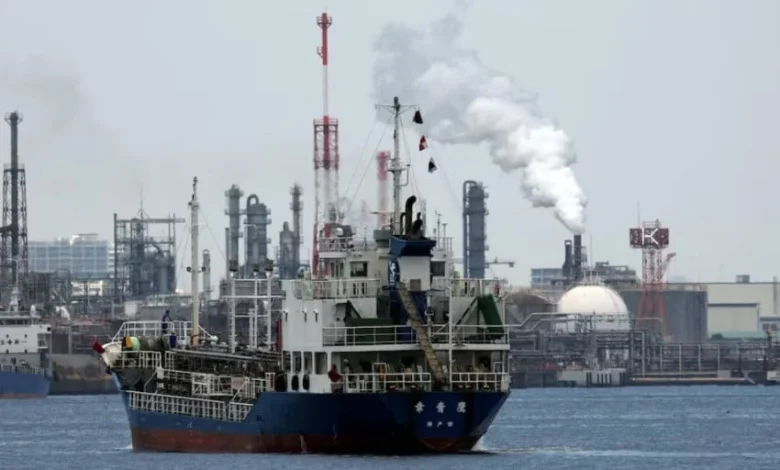
- Mid-March 2026: The frequency of these reports increases, leading to growing concern among industry associations. Companies begin to subtly adjust their purchasing strategies, seeking alternative suppliers or slightly increasing inventory if possible. The image depicting a small tanker near an oil refinery in the Keihin Industrial Area on March 17, 2026, could symbolically represent this period of heightened vigilance and the early signs of strain on the refining and distribution infrastructure.
- Late March 2026: The issue becomes more widespread, with a growing number of companies across various sectors reporting significant procurement difficulties. Industry associations like the Japan Chemical Industry Association begin to conduct internal surveys to gauge the extent of the problem.
- Early April 2026: Major corporations, including Toto, Asahi Kasei, and Kansai Paint, formally acknowledge the impact on their operations, leading to public announcements of production adjustments, revised delivery schedules, and price increases. The critical nature of naphtha-derived thinners becomes particularly evident, with the Japan Painting Contractors Association’s grim survey results emerging.
- April 15, 2026: The crisis reaches a critical juncture, with widespread reports of industrial paralysis. The government faces increasing pressure to provide clear explanations and immediate solutions, as the discrepancy between official assurances and market reality becomes undeniable.
Official Responses and Industry Reactions
The escalating crisis has naturally elicited responses from both government bodies and industry stakeholders.
- Government Stance: The Ministry of Economy, Trade and Industry (METI), as the primary body overseeing Japan’s industrial policy, has likely been in a difficult position. Initially, their statements may have downplayed the severity, perhaps emphasizing "sufficient strategic reserves" or "minor logistical challenges." However, as the crisis deepens, METI is expected to shift towards acknowledging "distribution challenges" and promising to investigate the root causes, facilitate smoother distribution, and potentially coordinate with refining companies. There will likely be calls for a comprehensive review of naphtha supply chains and national reserves.
- Industry Associations’ Alarms: Major industry bodies, such as the Japan Chemical Industry Association (JCIA), the Japan Federation of Construction Contractors (JFCC), and the Japan Painting Contractors Association, have become vocal advocates for their members. They are expressing grave concerns about the long-term viability of businesses, urging immediate government intervention, and highlighting the urgent need for transparent information and concrete measures to restore supply stability. Their collective voice is crucial in conveying the gravity of the situation to policymakers.
- Corporate Strategies: Companies directly affected, like Toto, Asahi Kasei, and Kansai Paint, are likely implementing multi-pronged strategies. These include urgently seeking alternative suppliers (both domestic and international, though options might be limited), reviewing their inventory management systems, exploring potential shifts to alternative (possibly more expensive or less efficient) raw materials, and passing on increased costs to consumers where feasible. Many will be engaged in intensive dialogues with their supply chain partners and government officials to navigate the crisis.
Economic Implications: Beyond Immediate Production Cuts
The implications of a prolonged naphtha crisis extend far beyond immediate production cuts and delivery delays, threatening to have significant macroeconomic consequences for Japan.
- Macroeconomic Drag: A substantial and sustained reduction in industrial output, particularly in key sectors like manufacturing and construction, will inevitably act as a drag on Japan’s Gross Domestic Product (GDP) growth. This could dampen economic recovery efforts and potentially trigger inflationary pressures as input costs rise.
- Inflationary Pressures: Higher costs for naphtha-based raw materials will feed directly into the production costs of countless goods. This "cost-push inflation" will likely be passed on to consumers, leading to higher prices for everything from household appliances and construction materials to automotive parts and packaging.
- Employment Concerns: If the crisis persists, companies facing sustained production halts or significant slowdowns may be forced to implement temporary layoffs or reduce working hours, leading to job insecurity and impacting household incomes.
- International Competitiveness: Japan’s reputation as a reliable and efficient manufacturing hub could be tarnished. International buyers might seek alternative suppliers if Japanese manufacturers consistently face delays or cannot fulfill orders, potentially leading to a loss of market share in crucial export sectors.
- Investment Climate: Uncertainty surrounding raw material availability and costs could deter both domestic and foreign investment in Japan’s industrial sectors, hindering future growth and innovation.
- Future Resilience Calls: The crisis will undoubtedly spark renewed calls for greater supply chain resilience. This could involve diversifying sourcing regions, increasing domestic refining and petrochemical capacities, investing in strategic raw material reserves, and accelerating research and development into bio-based or recycled alternatives to petrochemicals.
Looking Ahead: The Path to Recovery and Long-Term Solutions
The immediate priority for Japan will be to stabilize the naphtha supply chain and alleviate the pressure on its industries. This will likely involve a combination of short-term fixes and long-term strategic adjustments.
- Immediate Measures: Government intervention may include expediting the distribution of existing naphtha stocks, potentially releasing material from strategic petroleum reserves (if naphtha is included or can be prioritized), and facilitating urgent imports. Enhanced communication between refiners, petrochemical producers, and industrial end-users will be critical to streamline allocation.
- Mid-Term Strategies: In the medium term, intense dialogue between government and industry will be necessary to identify and address the systemic weaknesses that led to the crisis. This could involve reviewing current import policies, assessing the efficiency of domestic refining operations, and establishing clearer protocols for crisis management in raw material supply. Efforts to optimize logistics and transportation networks for petrochemicals will also be paramount.
- Long-Term Resilience: For sustainable solutions, Japan will likely need to make strategic investments in its domestic petrochemical infrastructure to reduce over-reliance on external factors. Research and development into alternative, more sustainable, and less volatile raw materials, such as bio-based plastics or advanced recycling technologies, will gain renewed urgency. Furthermore, strengthening global supply chain resilience through international cooperation and diversification of sourcing countries will be a key objective.
The naphtha crisis of 2026 serves as a stark reminder of the intricate and often fragile nature of modern industrial supply chains. For Japan, a nation that has historically navigated resource scarcity with ingenuity and technological prowess, overcoming this challenge will be crucial not only for its immediate economic stability but also for shaping its industrial future in an increasingly complex global landscape. The timeline for full recovery remains uncertain, but the lessons learned from this disruption will undoubtedly influence Japan’s industrial policy for years to come.