Atletico Madrid Goalkeeper Juan Musso Rebuffs Raphinha’s ‘Robbery’ Accusations Following Barcelona’s Champions League Elimination

Madrid – Following Barcelona’s dramatic exit from the UEFA Champions League quarter-finals, Atletico Madrid goalkeeper Juan Musso has publicly refuted accusations of "robbery" leveled against the match officials by Barcelona winger Raphinha. The Brazilian international expressed significant discontent with the officiating of French referee Clement Turpin during the second leg tie at the Estadi Olímpic Lluís Companys on Tuesday, April 16th, which saw Barcelona emerge victorious with a 2-1 scoreline but ultimately fall short of advancing to the semi-finals due to a 2-3 aggregate deficit.
Raphinha’s post-match outburst, particularly his claim that the referee had "robbed" Barcelona, has ignited a debate about officiating standards in high-stakes European encounters. Musso, speaking to the Spanish sports publication AS, acknowledged Raphinha’s frustration but strongly disagreed with the characterization of the match as a "robbery," emphasizing Atletico Madrid’s victory on the pitch and their superior aggregate performance.
The Heated Quarter-Final Clash: Key Incidents and Raphinha’s Outrage
The decisive second leg match between Barcelona and Atletico Madrid was a tense affair, marked by several contentious moments that fueled Raphinha’s anger. Barcelona, trailing 1-0 from the first leg at the Metropolitano Stadium, sought to overturn the deficit on home turf. However, their aspirations were significantly hampered by the early dismissal of defender Eric García in the 37th minute for a tactical foul on Atletico striker Álvaro Morata. This red card, while perhaps debatable in its severity by some, undeniably altered the complexion of the game, forcing Barcelona to play a significant portion of the match with ten men.
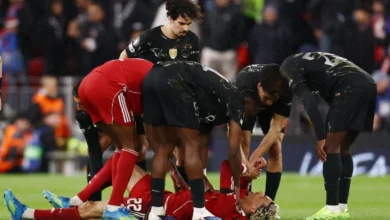
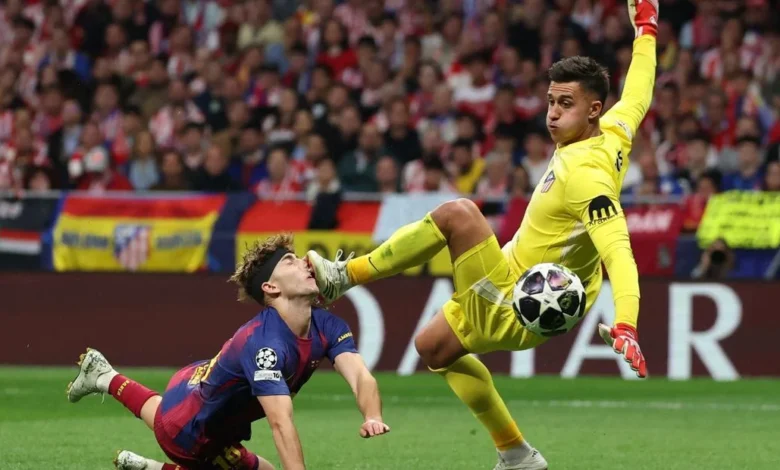
Compounding Barcelona’s challenges, midfielder Fermín López sustained an injury during a challenge with Musso. While the exact nature of the incident and the referee’s decision-making process regarding potential penalties or disciplinary actions for this specific play remain points of contention for Barcelona, Raphinha’s frustration appeared to stem from a perceived pattern of unfavorable decisions. The winger’s public pronouncements suggested a belief that crucial calls went against his team, tipping the balance in favor of their opponents.
"It’s as if there were three penalties not given to them or four red cards. You can’t talk about robbery," Musso stated, directly addressing Raphinha’s inflammatory remarks. He continued, "I understand what Raphinha said, I understand what others might say, I respect other people’s opinions, but let’s not start talking about robbery because it doesn’t make the situation any easier."
Musso’s Defense: Meritocracy and Respect for Opponents
Musso’s response was measured yet firm, highlighting Atletico Madrid’s own achievements in securing their passage to the semi-finals. He pointed to the aggregate scoreline as the ultimate arbiter of success in a two-legged tie. "We won on the pitch, we beat them 2-0 away from home. The last person, in football, is a red card, it’s a shame," he remarked, alluding to the circumstances that led to García’s dismissal.
The Atletico goalkeeper stressed that his team’s victory was earned through their performance and strategic execution, not through any undue advantage gained from officiating. He also conveyed a sense of respect for Barcelona as a formidable opponent, suggesting that their quality was such that any accusations of external assistance were unfounded and even disrespectful to the competitive nature of the sport.
"Barca is a team we deeply respect and that highly motivates us when playing against them. They are a great team, but talking about robbery is crazy. It’s truly crazy to try and consider this a robbery," Musso emphasized. He specifically addressed the incident involving Fermín López, seeking to clarify his perspective and dispel any notion of malicious intent. "If they are asking for a penalty for what happened to Fermín, it was a movement from me that caused him to get injured, and I never wanted that."
Musso provided a detailed account of the challenge that led to López’s injury: "I immediately went to him to check on his condition. It was a movement that can happen, he headed the ball and I extended my leg to block the ball. How can anyone consider that a penalty?" This explanation aims to frame the incident as an unfortunate but incidental outcome of a competitive play, rather than a deliberate act warranting a penalty.
Contextualizing the Champions League Quarter-Finals and Refereeing Scrutiny
The UEFA Champions League quarter-finals represent the pinnacle of European club football, where matches are intensely scrutinized, and every decision carries immense weight. The pressure on both players and referees is extraordinary, and controversies are almost an inevitability. This particular tie between Barcelona and Atletico Madrid, two Spanish giants with a fierce rivalry, was always destined to be a closely fought contest.
Historically, Barcelona has enjoyed significant success in the Champions League, boasting multiple titles. Atletico Madrid, under the astute management of Diego Simeone, has established itself as a perennial contender, known for its defensive resilience and tactical discipline. The juxtaposition of these two clubs in a knockout tie naturally amplifies the stakes and the emotional investment from fans and players alike.
Refereeing decisions in such high-profile matches are often dissected with microscopic precision. Statistics on fouls, cards, and penalty incidents are frequently cited in post-match analyses. In this specific game, Eric García’s red card was a significant turning point. While football is a contact sport, the tactical nature of his foul, aimed at preventing a clear goal-scoring opportunity, is a common justification for such dismissals in modern football. The International Football Association Board (IFAB) Laws of the Game clearly outline offenses that warrant a red card, including denying an obvious goal-scoring opportunity by an offense punishable by a free kick or penalty kick.
The incident involving Fermín López and Juan Musso, as described by Musso, falls into a gray area. While intentionality is a factor in many football offenses, challenges for the ball can sometimes result in accidental contact that causes injury. The referee’s interpretation of whether the challenge was reckless, dangerous, or simply a consequence of attempting to play the ball would have dictated any potential disciplinary action or penalty award.
Broader Implications: The Impact of Accusations and the Role of VAR
Raphinha’s strong accusations of "robbery" have wider implications beyond just this single match. Such statements can erode trust in the integrity of the officiating process and can influence public perception of the sport. In an era where video assistant referees (VAR) are employed to review crucial decisions, the debate often shifts to the application and interpretation of VAR protocols. While VAR aims to reduce clear and obvious errors, its implementation has also introduced new layers of discussion and controversy, with differing opinions on its effectiveness and impact on the flow of the game.
The use of VAR in this particular match would have been subject to intense scrutiny. Decisions related to the red card and any potential penalty claims would likely have been reviewed. The fact that Barcelona still lost on aggregate, despite winning the second leg, suggests that while officiating may have played a role, the overall outcome was also a reflection of their performance across both matches.
Atletico Madrid’s victory, secured through a combination of defensive solidity and effective attacking play, including their crucial away goal advantage from the first leg, should not be overshadowed by accusations of external influence. Musso’s insistence on the merit of his team’s performance underscores the importance of acknowledging the strategic and tactical elements that contribute to success in football.
Looking Ahead: Barcelona’s Season and Atletico’s Champions League Aspirations
For Barcelona, this Champions League exit marks another significant disappointment in a season that has been characterized by ups and downs. While they remain in contention for the La Liga title, their inability to progress further in Europe’s premier club competition will undoubtedly lead to introspection and questions about the team’s overall direction and squad composition.
Atletico Madrid, on the other hand, will be buoyed by their progression to the semi-finals. Their resilience and ability to navigate challenging fixtures have once again been on display. Their journey in the Champions League will now continue, with the ultimate prize of European glory within their sights. The team’s performance in the latter stages of the tournament will be closely watched, as they aim to cap off their season with a significant European achievement.
In conclusion, the exchange between Juan Musso and Raphinha highlights the intense emotions and differing perspectives that permeate elite football. While Raphinha’s frustration is understandable given the circumstances, Musso’s measured defense emphasizes the importance of focusing on the performance on the pitch and respecting the outcome of a fiercely contested match. The debate surrounding officiating will undoubtedly continue, but the focus for both clubs will now shift to their respective objectives for the remainder of the season.