Singapore Changi Airport Secures Second Place Globally in Skytrax World’s Best Family-Friendly Airport Awards 2026

Singapore Changi Airport has officially been recognized as the second-best airport in the world for families, according to the latest results from the 2026 Skytrax World Airport Awards. This prestigious ranking cements Changi’s status as a global leader in aviation hospitality and highlights its unique position as the only representative from Southeast Asia to break into the top tier of this specific category. While South Korea’s Incheon International Airport secured the top spot this year, Changi’s continued dominance in the family-friendly sector reflects a long-term strategic commitment to transforming the transit experience into a seamless, multi-generational destination.
The World Airport Awards, often referred to as the "Oscars of the aviation industry," are based on comprehensive global customer satisfaction surveys. For the 2026 edition, Skytrax evaluated hundreds of airports across various metrics, with the family-friendly category focusing specifically on the ease of travel for parents and the quality of entertainment for children. Changi’s silver-medal finish is a testament to its "lifestyle hub" philosophy, which seeks to mitigate the inherent stresses of international travel through world-class infrastructure and thoughtful amenities.
The Benchmark for Family-Centric Aviation
The 2026 Skytrax report highlighted that Changi Airport’s success is rooted in its ability to cater to diverse age groups simultaneously. From the moment a family enters the terminal, the environment is designed to be intuitive. The ranking considers several critical factors, including the availability of family-sized restrooms, the accessibility of nursing rooms, and the safety standards of dedicated play areas.
One of the standout features that propelled Changi to its second-place ranking is the sheer variety of its recreational offerings. Unlike traditional airports that offer basic seating and retail, Changi has integrated high-octane entertainment directly into its terminals. The world-famous "The Slide@T3"—a four-story spiral slide located in Terminal 3—remains a major draw for older children and teenagers. Meanwhile, the airport’s commitment to nature-inspired relaxation continues to set it apart. The Butterfly Garden, the world’s first of its kind in an airport, and the rooftop swimming pool at Terminal 1 provide families with unconventional ways to spend a long layover.
Innovative Facilities and Themed Experiences
The 2026 award specifically recognized Changi’s move toward branded and immersive entertainment. In recent years, Changi Airport Group (CAG) has collaborated with global entertainment franchises to create themed zones that resonate with young travelers. The inclusion of play areas inspired by popular characters such as Pororo the Little Penguin and Pinkfong has transformed transit areas into mini-theme parks. These zones are not merely aesthetic; they are designed with soft-play materials and interactive digital elements that allow children to expend energy in a safe, monitored environment.
Beyond active play, Changi offers passive entertainment options that are equally important for family comfort. The airport features 24-hour free cinemas in Terminals 2 and 3, screening the latest family-friendly blockbusters. For parents traveling with infants, the airport provides over 50 "Baby Care Rooms" equipped with hot water dispensers, private nursing cubicles, and diaper-changing stations. These facilities are strategically placed near gate holdrooms to ensure that parents are never more than a few minutes away from the supplies they need.
Comparative Analysis: Incheon vs. Changi
The rivalry between Incheon International Airport and Changi Airport for the top spot in the family-friendly category has been a recurring theme in the Skytrax awards. In 2026, Incheon edged out Changi primarily through its expansion of cultural experiences and high-tech childcare services. Incheon’s "Kids Zones" utilize augmented reality (AR) to educate children about Korean culture, a move that Skytrax voters found particularly innovative.
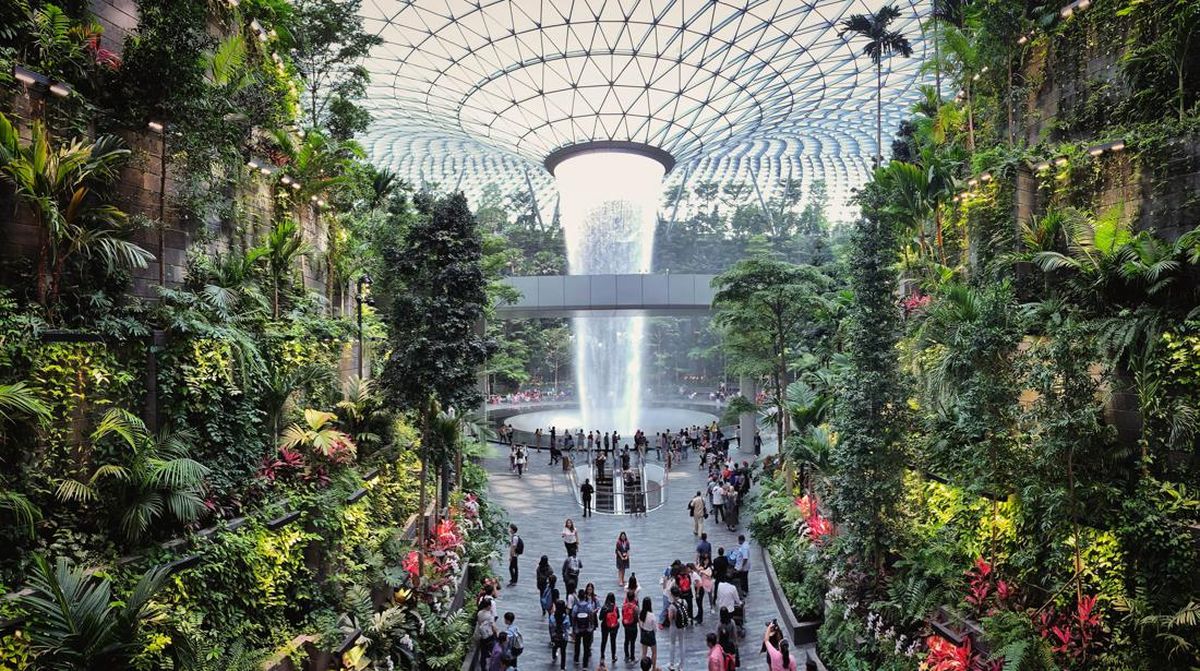
However, Changi remains the preferred choice for families seeking a "resort" feel. The integration of Jewel Changi Airport—a multi-dimensional lifestyle destination connected to the terminals—provides an unparalleled safety net for families facing long delays. With the Manulife Sky Nets, Hedge Maze, and the iconic 40-meter-tall HSBS Rain Vortex, Jewel offers a level of scale and variety that few other airports can match. The 2026 Skytrax data suggests that while Incheon excels in technological integration, Changi leads in the "total experience" category, blending retail, nature, and play into a cohesive journey.
Regional Context and Southeast Asian Leadership
Changi’s achievement is particularly noteworthy given the competitive landscape of Southeast Asian aviation. As the sole representative from the region in the family-friendly top ten, Changi serves as a benchmark for its neighbors. While major hubs like Kuala Lumpur International Airport (KLIA) and Bangkok’s Suvarnabhumi Airport have made strides in infrastructure, they have yet to match Changi’s holistic approach to family demographics.
Industry analysts suggest that Changi’s success is a result of Singapore’s broader tourism strategy. By positioning the airport as a destination in its own right, Singapore captures "transit tourism" revenue. Families who might otherwise choose a direct flight or a shorter layover elsewhere are often incentivized to route through Changi specifically because of the facilities available. This strategy has proven resilient even as global travel patterns shift, ensuring that Changi remains a preferred gateway for the lucrative family travel segment.
Skytrax Methodology and Evaluation Criteria
To understand the weight of this second-place ranking, it is essential to examine how Skytrax conducts its evaluations. The "World’s Best Family-Friendly Airport" category is not determined by a single committee but by the aggregated feedback of millions of travelers. Key performance indicators (KPIs) include:
- Immigration and Security Efficiency: How well the airport handles families during high-stress checkpoints, including the availability of dedicated family lanes.
- Seating and Rest Areas: The presence of quiet zones and "snooze lounges" where children can sleep comfortably during layovers.
- Dining Options: The variety of child-friendly menus and the affordability of family meals.
- Stroller Availability: The ease of accessing free-to-use strollers within the transit area.
- Safety and Hygiene: The cleanliness of play areas and the visibility of security personnel.
Changi scored exceptionally high in the "ease of navigation" sub-category. The airport’s Skytrain system and well-marked signage make it easy for parents managing multiple bags and children to move between terminals without significant physical strain.
Strategic Implications for the Aviation Industry
The recognition of Changi as a family-friendly leader signals a broader shift in the aviation industry. Modern airports are no longer viewed simply as transit points but as critical components of the travel experience. For Changi Airport Group, the 2026 ranking is a validation of their investment in non-aeronautical assets.
"Family travel is one of the fastest-growing segments in global tourism," says aviation analyst Marcus Lee. "By catering to the ‘weakest link’ in the travel chain—stressed parents and restless children—Changi creates brand loyalty. A child who has a positive experience at Changi today is a loyal customer of the future. Moreover, happy families spend more in retail and F&B outlets, which directly impacts the airport’s bottom line."
Looking Ahead: Terminal 5 and Future Innovations
As Changi celebrates its second-place finish, the focus is already shifting toward the future. The development of Terminal 5 (T5), expected to be operational in the mid-2030s, is being designed with an even greater emphasis on flexibility and family needs. Early blueprints suggest that T5 will feature "contactless" family processing zones and even more expansive green spaces.
Furthermore, Changi is exploring the use of robotics to assist families. Trials are currently underway for autonomous robots that can deliver food directly to gate areas, a service that would be invaluable for parents who cannot leave their children to visit a food court. The airport is also looking into "virtual queuing" for its popular attractions like the Canopy Park, allowing families to explore other areas of the airport while waiting for their turn to play.
Conclusion
Singapore Changi Airport’s ranking as the second most family-friendly airport in the world for 2026 is more than just a trophy for the city-state; it is a reflection of a meticulously crafted environment that prioritizes human comfort. While Incheon may hold the top spot for now, the gap between the two is narrow. Changi’s ability to consistently innovate—from butterfly gardens to themed play zones—ensures that it remains a global gold standard. For families traversing the globe, Changi represents a rare sanctuary where the journey is just as enjoyable as the destination. As the aviation industry continues to evolve, Changi’s family-first approach will undoubtedly remain a cornerstone of its enduring success and a model for airports worldwide.