Senior Indonesian Diplomat Sidharto Reza Suryodipuro Elected as President of the United Nations Human Rights Council for 2026 Term

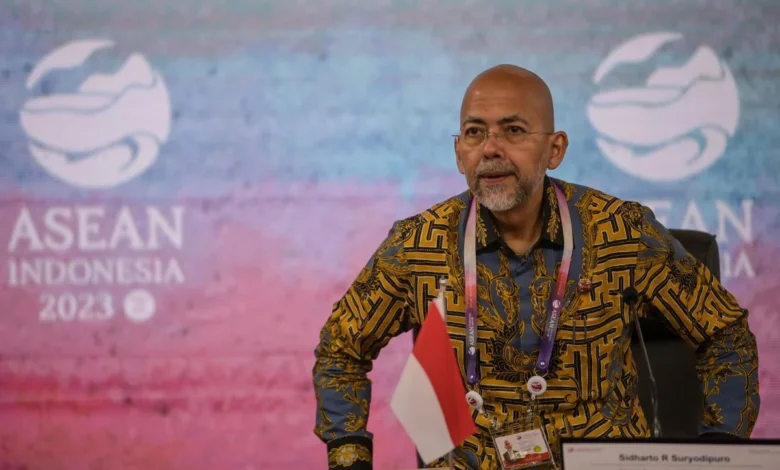
Indonesia has secured a significant milestone in its diplomatic history as senior diplomat Sidharto Reza Suryodipuro was officially elected to serve as the President of the United Nations Human Rights Council (UNHRC) for the year 2026. This appointment, confirmed on January 8, 2026, represents a pinnacle of Indonesia’s long-standing commitment to multilateralism and its growing influence in the global governance of human rights. The election of Suryodipuro is not merely a personal achievement for a seasoned career diplomat but a strategic victory for Indonesia, reflecting the international community’s trust in the nation’s ability to navigate the increasingly polarized landscape of global human rights advocacy.
The UNHRC, headquartered in Geneva, is the premier intergovernmental body within the United Nations system responsible for strengthening the promotion and protection of human rights around the globe. The presidency of the Council rotates annually among the five regional groups: African States, Asia-Pacific States, Eastern European States, Latin American and Caribbean States, and Western European and Other States. For the 2026 term, the presidency was slated for the Asia-Pacific Group, and Indonesia’s nomination of Suryodipuro received overwhelming support from member states, underscoring Jakarta’s reputation as a bridge-builder between the Global North and the Global South.
A Legacy of Public Service and Diplomatic Lineage
Sidharto Reza Suryodipuro was born on September 29, 1966, in Cologne, Germany, a birthplace that perhaps foreshadowed his future as a global citizen and envoy. His roots, however, are deeply embedded in the cultural and political history of Indonesia. He hails from a distinguished lineage associated with the Mangkunegaran Royal House of Surakarta, a background that carries a tradition of leadership and service. His grandfather, Suyoto Suryodipuro, was a foundational figure in the early days of the Indonesian Republic, serving as one of the pioneers of the Ministry of Foreign Affairs and a co-founder of the national broadcaster, Radio Republik Indonesia (RRI).
This heritage of public service guided Suryodipuro’s academic and professional pursuits. He enrolled in the International Relations program at Parahyangan Catholic University (UNPAR) in 1986, a period when Indonesia’s foreign policy was beginning to expand its horizons under the "Free and Active" doctrine. After completing his undergraduate studies, he entered the Ministry of Foreign Affairs, beginning a career that would span over three decades and multiple continents.
Suryodipuro’s intellectual foundation was further bolstered by advanced studies in the United States. As a Fulbright scholar, he attended the Naval Postgraduate School in Monterey, California. In 2003, he earned a Master of Arts in National Security Affairs, graduating with distinction. This specific academic focus provided him with a unique lens through which to view international relations, blending traditional security concerns with the evolving demands of human security and diplomatic negotiation.
A Chronology of Diplomatic Excellence
The career of Sidharto Reza Suryodipuro is a testament to the diverse demands of modern Indonesian diplomacy. His journey began in 1992 within the Ministry of Foreign Affairs, where he was quickly assigned to the Permanent Mission of the Republic of Indonesia to the United Nations in New York. During this formative period, he served as a delegate to the Special Committee on Peacekeeping Operations under the UN General Assembly. This early exposure to the UN’s operational side gave him firsthand insight into how global mandates are translated into field actions.
Between 2004 and 2006, Suryodipuro served at the Indonesian Embassy in Canberra, Australia. This period was critical for bilateral relations, and he focused heavily on the economic pillars of the partnership. His work involved navigating the complexities of trade, investment, tourism, and educational exchanges, helping to stabilize a relationship that is often subject to regional political fluctuations.
His return to New York from 2006 to 2009 saw him taking on a high-stakes role as Indonesia’s delegate to the UN Security Council. During this tenure, Indonesia held a non-permanent seat, and Suryodipuro was tasked with handling sensitive portfolios related to African affairs and humanitarian crises. This role required a delicate balance of national interests and the collective responsibility of maintaining international peace and security, further honing his skills as a negotiator in high-pressure environments.
From 2009 to 2014, Suryodipuro shifted his focus back to regional dynamics, handling Asia-Pacific and African cooperation. He was a key figure in the preparations for Indonesia’s chairmanship of APEC in 2013, an event that cemented Indonesia’s role as an economic leader in the Pacific Rim. His subsequent appointment as the Deputy Chief of Mission (Deputy Ambassador) to the United States from 2014 to 2017 allowed him to strengthen ties with Washington D.C. He was particularly instrumental in promoting interfaith dialogue and counter-extremism initiatives, positioning Indonesia as a model for democratic governance in a Muslim-majority nation.
In 2017, he reached the rank of Ambassador, being appointed to represent Indonesia in India and Bhutan. Notably, he was Indonesia’s first-ever ambassador to the Kingdom of Bhutan, marking a new chapter in Indonesia’s Himalayan diplomacy. His efforts in New Delhi were characterized by a push for stronger strategic and defense ties, as well as cultural diplomacy. His commitment to the welfare of Indonesian citizens abroad did not go unnoticed; in 2020, he was awarded the Hassan Wirajuda Award, the highest honor bestowed by the Ministry of Foreign Affairs for the protection of Indonesian citizens.
Prior to his move to Geneva, Suryodipuro served as the Director General for ASEAN Cooperation starting in 2020. In this capacity, he managed the intricate web of Southeast Asian diplomacy during a period of significant regional upheaval, including the COVID-19 pandemic and the crisis in Myanmar. His leadership as the ASEAN Senior Officials’ Meeting (SOM) Leader for Indonesia was pivotal during Indonesia’s ASEAN Chairmanship in 2023.
The Path to the UNHRC Presidency
The transition to the United Nations in Geneva in 2025 as the Permanent Representative of Indonesia set the stage for his candidacy for the UNHRC Presidency. Indonesia’s bid for the presidency was not an isolated event but the result of years of consistent engagement with the Council. Indonesia had previously been elected as a member of the UNHRC for the 2024–2026 term, receiving a record 186 votes out of 192 during the UN General Assembly elections in October 2023. This high level of support provided the democratic mandate necessary to seek the presidency.
The election on January 8, 2026, saw Suryodipuro winning the support of the majority of the 47 member states that constitute the Council. His platform focused on the "Inclusivity and Dialogue" approach, a hallmark of Indonesian foreign policy. By emphasizing cooperation over confrontation, Indonesia aims to bridge the gap between states that prioritize civil and political rights and those that emphasize economic, social, and cultural rights.
Strategic Implications and Global Impact
Sidharto Reza Suryodipuro’s presidency comes at a time of profound challenge for the international human rights regime. The UNHRC is currently grappling with systemic issues, including the humanitarian consequences of protracted conflicts in the Middle East and Eastern Europe, the human rights implications of climate change, and the digital divide’s impact on freedom of expression.
For Indonesia, this presidency offers several strategic advantages:
- Elevating the Global South: Indonesia is uniquely positioned to represent the interests of developing nations. Suryodipuro is expected to champion the Right to Development, ensuring that human rights discussions include poverty alleviation, healthcare access, and climate justice.
- Institutional Integrity: There has been growing criticism regarding the politicization of the UNHRC. Indonesia has committed to maintaining the Council’s integrity by ensuring that human rights mechanisms, such as the Universal Periodic Review (UPR), remain objective and transparent.
- Regional Stability: As a leader within ASEAN, Indonesia can use its presidency to bring regional perspectives to the global stage, particularly regarding the protection of migrant workers and the promotion of human rights within the context of regional integration.
- Moral Leadership: Indonesia’s ability to maintain a functional democracy while managing vast diversity provides it with a "moral authority" to lead discussions on pluralism and tolerance, issues that are increasingly under threat globally.
Reactions and Expectations
International reactions to Suryodipuro’s election have been largely positive. Diplomatic sources in Geneva suggest that his reputation as a "pragmatic intellectual" makes him an ideal figure to lead the Council through contentious debates. Human rights organizations, while maintaining their role as watchdogs, have expressed cautious optimism, noting that Indonesia’s "middle-power diplomacy" could be the key to breaking deadlocks on long-standing resolutions.
Domestically, the appointment is seen as a validation of the "Bapak/Ibu" diplomacy style—characterized by politeness, persistence, and a focus on consensus—that has defined the Indonesian Ministry of Foreign Affairs under recent administrations. It also serves as a point of national pride, signaling that Indonesian human resources are capable of leading the world’s most sensitive and complex international bodies.
As Suryodipuro takes the gavel for the 2026 term, his agenda is expected to be rigorous. He will oversee three regular sessions of the Council, numerous special sessions, and the activities of various working groups and rapporteurs. His stated commitment to work with all stakeholders—including civil society and national human rights institutions—will be put to the test as the Council faces the task of holding states accountable while fostering an environment conducive to genuine improvement in human rights standards.
In conclusion, the election of Sidharto Reza Suryodipuro as President of the UN Human Rights Council marks a transformative moment. It reflects the evolution of Indonesia from a nation once scrutinized for its own human rights record to a global leader entrusted with safeguarding the rights of all. With a career defined by excellence and a lineage rooted in the service of the state, Suryodipuro is poised to leave a lasting legacy on the international stage, reinforcing the belief that through inclusive diplomacy, the universal promise of human rights can be brought closer to reality.