Hungarian Prime Minister Peter Magyar Demands Resignation of President Tamas Sulyok Amid Sweeping Political Reforms

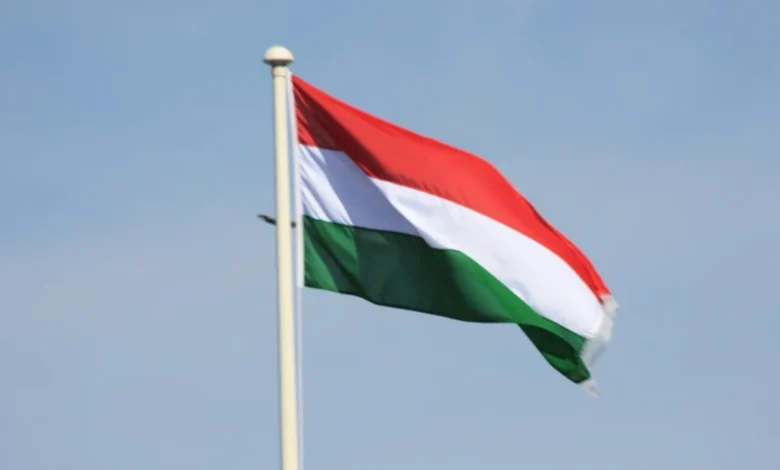
The newly elected Prime Minister of Hungary, Peter Magyar, has formally called for the resignation of President Tamas Sulyok, signaling a high-stakes constitutional confrontation as the nation transitions away from the 16-year administration of Viktor Orban. Following a landslide electoral victory that granted his Tisza party a two-thirds legislative majority, Magyar has signaled that his government is prepared to introduce extraordinary legislation to forcibly remove the president and other high-ranking officials if they do not vacate their positions voluntarily. The demand comes as Hungary prepares for the seating of its new parliament, scheduled for early May, which Magyar intends to use as a platform for a wholesale restructuring of the state apparatus.
Speaking to the press on Thursday, April 16, 2026, Magyar characterized the current presidency as a vestige of a "captured" political system that no longer reflects the will of the Hungarian electorate. He asserted that President Sulyok, who was appointed by the previous Orban-controlled parliament, lacks the moral and legal authority to serve as a symbol of national unity. According to Magyar, the presidency under Sulyok’s tenure has become an extension of partisan interests rather than an independent check on executive power. The Prime Minister’s ultimatum extends beyond the presidency, targeting a broader cadre of officials, including the Prosecutor General and the President of the Constitutional Court, all of whom Magyar describes as "puppets" of the previous regime.
The Mandate for Change and the Tisza Victory
The political landscape in Budapest has been fundamentally altered by the recent general elections, which saw Peter Magyar’s Tisza party dismantle the long-standing dominance of Viktor Orban’s Fidesz party. Orban, who had served as Prime Minister since 2010, oversaw a period of significant constitutional change and centralized control that drew frequent criticism from the European Union regarding the rule of law and democratic backsliding. However, voter fatigue, coupled with economic pressures and a burgeoning desire for institutional transparency, culminated in a historic shift.
Magyar’s victory is not merely a change in leadership but a constitutional mandate. By securing two-thirds of the seats in the National Assembly, the Tisza party possesses the legal authority to amend the Fundamental Law of Hungary—the nation’s constitution. This "supermajority" is the same tool that Viktor Orban used to consolidate power over the past decade and a half, and Magyar now intends to use it to reverse those very changes. The Prime Minister has emphasized that his priority is "de-Orbanization," a process he defines as the systematic removal of partisan appointees from supposedly neutral state institutions to restore democratic balance.
The Confrontation at the Sándor Palace
The tension between the executive and the presidency reached a boiling point during a recent meeting between Magyar and Sulyok. Magyar reported that he told the President directly that he is no longer fit for the office. "I reaffirmed to him that in my eyes, and in the eyes of the Hungarian people, he is not worthy of being the symbol of the unity of the Hungarian nation and is unable to guarantee respect for the law," Magyar stated. The Prime Minister’s rhetoric suggests a belief that the 2026 election served as a de facto referendum on all state institutions, not just the legislature.
When questioned about the President’s reaction to this demand, Magyar described Sulyok’s response as "enigmatic." While the President has not yet officially refused to step down, he has not signaled a willingness to comply either. This ambiguity has set the stage for a potential constitutional crisis. If Sulyok remains in office by the time the new parliament convenes on May 6 or 7, 2026, Magyar has pledged to introduce "lex-specialis" or constitutional amendments specifically designed to terminate the mandates of the President and other high-level Orban-era appointees.
Targets of the Administrative Overhaul
Magyar’s "cleanup" list is extensive and targets the core pillars of the Hungarian state. The Prime Minister has been vocal about the need to replace officials who were given long-term mandates by the previous government to ensure their influence would persist even after an electoral defeat.
- The Prosecutor General: Magyar has identified the office of the Prosecutor General as a critical bottleneck in the fight against corruption. He argues that the current leadership has failed to investigate high-level political graft, thereby protecting the interests of the former ruling elite.
- The Constitutional Court: The Prime Minister intends to reorganize the nation’s highest court, claiming that its current composition is the result of a partisan packing strategy that has rendered the court a rubber stamp for Fidesz policies.
- The Judiciary and Media Authorities: Other "loyalist" appointments in the judicial system and the media regulatory bodies are also under scrutiny. Magyar argues that for Hungary to return to a functioning democracy, these institutions must be headed by individuals who enjoy broad cross-party support rather than those with direct ties to the Orban system.
Geopolitical Shifts and International Reactions
The political upheaval in Hungary has sent ripples across the international community, particularly given Viktor Orban’s roles as a prominent nationalist figure and an ally to leaders like Vladimir Putin and Donald Trump. For years, Orban’s Hungary acted as a bridge—and sometimes a barrier—between the European Union and more autocratic regimes.
In a surprising turn of events, former U.S. President Donald Trump, who had previously been a vocal supporter of Orban, has shifted his stance toward the new Prime Minister. In an interview with ABC News, Trump expressed optimism about Magyar’s leadership, stating, "I think this new guy is going to do a good job—he’s a good man." This pivot suggests that even Orban’s traditional international allies are recognizing the permanence of the shift in Budapest and are seeking to build bridges with the new administration.
Within the European Union, the reaction has been one of cautious optimism. Brussels has long been at odds with Hungary over issues such as judicial independence and the misuse of EU funds. A Magyar-led government that actively seeks to restore institutional checks and balances could lead to the unfreezing of billions of euros in EU recovery funds that were withheld during the Orban era. However, EU officials remain observant of whether Magyar’s methods—such as using a supermajority to remove a sitting president—adhere to the very democratic norms he claims to be protecting.
Chronology of the 2026 Political Transition
The current crisis is the result of a rapid sequence of events that began in early 2026:
- January – February 2026: The Tisza party, led by Peter Magyar, sees a surge in polling as it campaigns on a platform of anti-corruption and institutional reform.
- March 2026: General elections are held. The Tisza party wins a historic two-thirds majority, ending 16 years of Fidesz rule. Viktor Orban concedes defeat but remains a member of parliament.
- Early April 2026: Peter Magyar is officially sworn in as Prime Minister. He immediately begins a series of consultations with heads of state institutions.
- April 15, 2026: Magyar meets with President Tamas Sulyok. He delivers a formal request for the President’s resignation.
- April 16, 2026: Magyar publicly announces his intention to use legislative power to remove Sulyok and other Orban-era appointees if they do not resign.
- May 6-7, 2026 (Scheduled): The new National Assembly is set to convene for its inaugural session, where the first "de-Orbanization" bills are expected to be tabled.
Analysis of the Implications
The demand for the President’s resignation and the threat of legislative removal present several significant implications for Hungary’s future. Firstly, it tests the resilience of the Hungarian constitution. If Magyar uses a two-thirds majority to terminate the legal mandate of a sitting president, it could set a precedent for future governments to do the same, potentially undermining the stability of the office. However, supporters of the move argue that because the office was filled through a process they view as illegitimate or purely partisan, a "reset" is the only way to restore the dignity of the institution.
Secondly, the move signals a shift in Hungary’s foreign policy. By distancing himself from the "Orban system," Magyar is signaling to NATO and the EU that Hungary is returning to the Western fold. The removal of officials perceived as pro-Russian or anti-EU is a tangible step in this realignment.
Finally, there is the risk of internal social polarization. While Magyar has a massive mandate, the "system of national cooperation" built by Orban over 16 years has deep roots in the Hungarian bureaucracy and rural heartlands. A rapid and aggressive purge of state institutions could lead to significant administrative friction and social unrest if not handled with a degree of legal transparency and fairness.
The Economic Context
The push for political reform is also driven by economic necessity. Under the latter years of the Orban administration, Hungary faced high inflation and a stagnating economy, exacerbated by the withholding of EU funds. Magyar has linked the restoration of the rule of law directly to economic recovery. By removing the "Orban puppets" from the Prosecutor General’s office and the judiciary, Magyar aims to satisfy the European Commission’s "milestones" for the release of funds. Economists suggest that the successful transition of these offices could lead to a rapid influx of capital, stabilizing the Hungarian forint and providing the new government with the resources needed to implement its domestic agenda.
Future Outlook
As the May 6-7 parliamentary session approaches, all eyes in Budapest are on the Sándor Palace. President Tamas Sulyok faces a difficult choice: resign and allow for a peaceful transition of the presidency, or remain in office and face a legislative battle that could end in his forced removal and a further deepening of the country’s political divide.
Prime Minister Peter Magyar remains undeterred. His rhetoric suggests that he views the upcoming weeks as a foundational moment for a "New Hungary." Whether this period will be remembered as a restoration of democracy or merely a different form of majoritarian rule will depend on the legal mechanisms the Tisza party employs and the degree of independence the new appointees are allowed to exercise. For now, the "Orban era" appears to be reaching its final, turbulent conclusion, as the new government moves to dismantle the structures that sustained it for nearly two decades.