KPK Spokesperson Budi Prasetyo Reported to Supervisory Board by Activist Faizal Assegaf, Dismisses Allegations as Unwarranted

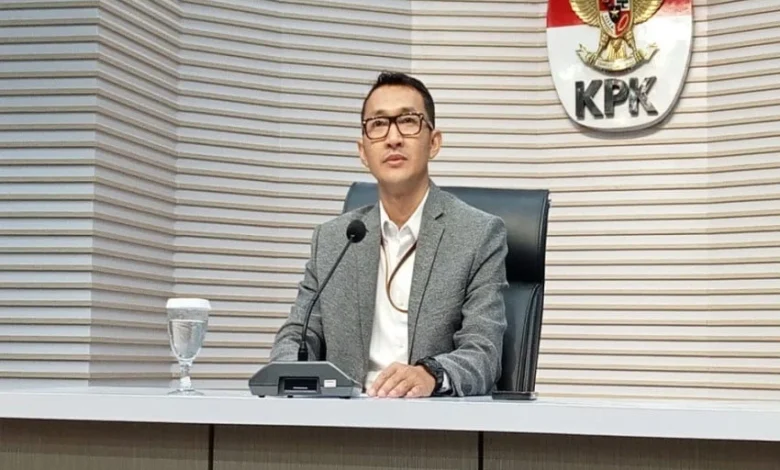
JAKARTA – The Komisi Pemberantasan Korupsi (KPK) spokesperson, Budi Prasetyo, has been formally reported to the agency’s internal supervisory body, the Dewan Pengawas (Dewas), by prominent activist and businessman Faizal Assegaf. The complaint, lodged on Wednesday, April 15, 2026, marks a significant development in the ongoing scrutiny faced by Indonesia’s anti-corruption commission and its officials. Responding to the filing, Prasetyo expressed his disinclination to further comment on the matter, asserting his confidence in Dewas’s objective assessment of the allegations.
"Regarding that report, I believe there is no longer a need for us to respond," Prasetyo stated at the KPK’s Red and White Building in Jakarta, indicating a strategy to defer to the internal oversight mechanism. He reiterated his belief that Dewas would meticulously and impartially examine the complaint, fully entrusting the process to the independent supervisory body. This report to Dewas follows an earlier complaint filed by Assegaf against Prasetyo with the Jakarta Metropolitan Police (Polda Metro Jaya), signaling a persistent effort by the activist to challenge the KPK spokesperson’s conduct.
Background: The Role of the KPK and Its Supervisory Board
The Komisi Pemberantasan Korupsi (KPK) was established in 2002 under Law No. 30 of 2002 as an independent state institution tasked with eradicating corruption in Indonesia. Over the years, the KPK has gained a formidable reputation for its robust investigations and high-profile arrests, contributing significantly to public trust in its mission. However, the institution has also faced numerous challenges, including political pressures, attempts to weaken its authority, and internal controversies.
A pivotal change in the KPK’s structure came with the revision of its founding law in 2019, specifically through Law No. 19 of 2019. This amendment introduced the Dewan Pengawas (Dewas), or Supervisory Board, a five-member independent body whose primary mandate is to oversee the ethical conduct of KPK employees, including investigators, prosecutors, and management. Dewas is responsible for receiving public complaints against KPK officials, conducting ethical investigations, and imposing disciplinary sanctions ranging from written warnings to dismissal. Its establishment was partly a response to public demands for greater internal checks and balances within the KPK, aimed at preventing potential abuses of power and ensuring the integrity of the institution itself. The presence of Dewas is intended to bolster public confidence by demonstrating that even the anti-corruption agency is subject to rigorous ethical oversight.
The Complainant: Faizal Assegaf’s History of Activism
Faizal Assegaf is a known figure in Indonesian public discourse, recognized for his background as a 1998 activist – a period marked by significant student-led movements that ultimately led to political reform. Currently, he serves as the Director of PT Sinkos Multimedia Mandiri, a professional role that complements his continued engagement in public affairs. Assegaf has a history of vocal criticism and has not shied away from filing formal complaints against public officials or institutions when he perceives misconduct or impropriety. His decision to report KPK Spokesperson Budi Prasetyo is consistent with his broader pattern of holding public figures accountable.
The specific nature of the allegations brought by Assegaf against Prasetyo, both at Polda Metro Jaya and now with Dewas, has not been explicitly detailed in public statements. However, such complaints against a high-profile public official like a KPK spokesperson typically revolve around issues of alleged defamation, misuse of authority, ethical breaches in communication, or actions perceived to undermine public trust in the institution. The move to escalate the complaint from a police report (which typically addresses criminal matters) to Dewas (which focuses on ethical and administrative conduct) suggests that Assegaf is pursuing multiple avenues to challenge Prasetyo’s actions, emphasizing the perceived ethical dimension of the spokesperson’s conduct. This dual approach underscores the seriousness with which the complainant views the alleged transgressions.
The Accused: Budi Prasetyo and the Role of a KPK Spokesperson
Budi Prasetyo, as the spokesperson for the KPK, holds a critical position within the institution. The spokesperson’s role is multifaceted: to communicate the KPK’s investigations, policies, and achievements to the public, manage media relations, and shape public perception of the anti-corruption body. This role demands a high degree of transparency, accuracy, and adherence to ethical guidelines, as public trust in the KPK is heavily influenced by its official communications.
Prasetyo’s response to the report – that he deems it unnecessary to respond further and trusts Dewas’s objectivity – is a common strategy employed by public officials facing allegations. By deferring to the internal oversight body, he aims to depoliticize the issue and allow the established process to unfold. This approach also prevents a protracted public debate that could distract from the KPK’s core mission or inadvertently lend credibility to potentially unfounded allegations. His statement implies confidence in his own conduct and the fairness of the Dewas process, positioning the complaint as something that will ultimately be dismissed after a thorough review.
Chronology of Events and Dewas Procedures
The sequence of events leading to the Dewas report began with Faizal Assegaf’s initial complaint against Budi Prasetyo to the Polda Metro Jaya. While the precise date of this initial report was not disclosed, it occurred prior to April 15, 2026. This initial report likely involved allegations that Assegaf believed constituted a criminal offense or serious public misconduct.
The escalation to the KPK Supervisory Board on April 15, 2026, indicates Assegaf’s determination to pursue accountability through an internal ethical channel, in addition to or perhaps as an alternative to the criminal justice system. Upon receiving a formal complaint, Dewas typically follows a structured process:
- Receipt and Verification: Dewas first verifies the complaint’s completeness and adherence to administrative requirements.
- Preliminary Review: A preliminary assessment is conducted to determine if the complaint falls within Dewas’s jurisdiction and if there is sufficient prima facie evidence to warrant a formal investigation.
- Summoning Parties: If the preliminary review suggests merit, Dewas will summon the complainant (Faizal Assegaf) to provide further details and evidence, and the reported official (Budi Prasetyo) to provide his statement and clarification. Witnesses may also be called.
- Investigation and Fact-Finding: Dewas conducts an in-depth investigation, which may involve gathering documents, examining evidence, and conducting interviews.
- Deliberation and Decision: After compiling all relevant information, Dewas deliberates on the findings and determines whether an ethical violation has occurred.
- Sanctions: If a violation is confirmed, Dewas can impose various sanctions, including written warnings, temporary suspension, demotion, or, in severe cases, termination of employment.
The process is designed to be thorough and objective, aiming to uphold the ethical standards expected of KPK officials.
Broader Context: Challenges to KPK’s Integrity and Public Trust
This incident occurs within a broader landscape of challenges facing the KPK. Once lauded as one of the most trusted institutions in Indonesia, the KPK’s independence and public perception have been subject to intense scrutiny, particularly since the 2019 legal revisions. Critics argued that the amendments, including the establishment of Dewas and the change in employment status for KPK employees from independent staff to civil servants, could undermine the agency’s autonomy and effectiveness.
Reports against KPK officials, whether internal or external, are not uncommon. They reflect the high-stakes nature of anti-corruption work, where powerful interests may seek to discredit or undermine investigators and officials. However, they also highlight the constant need for internal integrity and accountability within the institution itself. Public trust in the KPK hinges not only on its ability to prosecute corruption effectively but also on its adherence to the highest ethical standards. Any allegation of misconduct, especially against a spokesperson who represents the institution’s public face, can potentially erode this trust if not handled transparently and decisively. This case, therefore, serves as a test for Dewas to demonstrate its effectiveness and impartiality in upholding the ethical framework of the KPK.
Legal and Ethical Framework for KPK Officials
The ethical conduct of KPK officials is governed by a strict code of ethics established by Dewas. This code outlines principles such as integrity, professionalism, independence, transparency, and accountability. Any action by a KPK employee that deviates from these principles can be subject to investigation by Dewas. The legal basis for Dewas’s authority is enshrined in Law No. 19 of 2019, which grants it the power to:
- Formulate and enforce the code of ethics for KPK employees.
- Receive and investigate public complaints regarding alleged ethical violations.
- Conduct internal audits and evaluations of the KPK’s performance.
- Impose disciplinary sanctions on employees found guilty of ethical misconduct.
The establishment of Dewas was intended to create an internal mechanism for checks and balances, ensuring that the KPK, while prosecuting corruption externally, also maintains impeccable standards internally. The potential outcomes of a Dewas investigation vary depending on the severity of the proven violation. Minor infractions might lead to a written warning or a public apology, while more serious breaches could result in temporary suspension, demotion, or even dismissal from the KPK. The transparency of this process and the fairness of its decisions are crucial for Dewas to effectively fulfill its mandate and maintain its own credibility.
Implications and Analysis
The report filed against Budi Prasetyo carries several implications for both the individual and the institution. For Prasetyo, even if the allegations are ultimately dismissed, the process itself can be a distraction and may temporarily impact his public image as the KPK’s official voice. As a spokesperson, his credibility is paramount, and any cloud of ethical doubt, however temporary, can affect how the public and media perceive KPK’s statements.
For the KPK as an institution, this incident underscores the constant pressure and scrutiny it faces. It highlights the delicate balance between vigorously pursuing corruption cases and ensuring that its own officials operate within strict ethical boundaries. The manner in which Dewas handles this case will be closely watched. A transparent, thorough, and fair investigation will reinforce Dewas’s role as a credible oversight body and, by extension, strengthen public trust in the KPK’s commitment to integrity. Conversely, any perception of undue influence or a perfunctory investigation could further fuel skepticism about internal accountability within the anti-corruption agency.
Moreover, this case exemplifies the vital role of public complaints in democratic oversight. Activists like Faizal Assegaf act as watchdogs, providing an external check on state power and ensuring that public officials remain accountable to the citizenry. Regardless of the outcome of this specific complaint, the act of filing it serves as a reminder that officials in anti-corruption bodies, perhaps more than any others, must operate with the highest degree of probity and transparency. It also highlights the ongoing dynamic between state institutions and civil society, where activists play a crucial role in advocating for good governance and ethical conduct.
Statements from Related Parties and Conclusion
While specific detailed statements from Dewas or other parties are not available in the original report, it is standard practice for the Supervisory Board to issue a brief statement confirming receipt of such complaints. A typical statement from Dewas might reiterate its commitment to conducting an objective and thorough investigation in accordance with its procedures, ensuring due process for all parties involved. Anti-corruption observers or legal experts would likely emphasize the importance of allowing Dewas to complete its work without external pressure, highlighting that the integrity of the anti-corruption fight depends on both the effectiveness of investigations and the ethical conduct of the investigators themselves.
In conclusion, the reporting of KPK Spokesperson Budi Prasetyo to the Dewan Pengawas by activist Faizal Assegaf on April 15, 2026, is a significant event that places renewed focus on the internal accountability mechanisms of Indonesia’s anti-corruption body. While Budi Prasetyo has expressed confidence in Dewas’s impartiality and opted not to engage in further public commentary, the Supervisory Board is now tasked with a crucial responsibility: to meticulously investigate the allegations and deliver a decision that upholds the ethical standards expected of the KPK. The outcome of this case will not only determine the professional standing of Budi Prasetyo but will also serve as a barometer for the effectiveness and independence of Dewas, ultimately impacting public confidence in the broader integrity of Indonesia’s fight against corruption. The process underscores the continuous need for vigilance, both from within and outside the institution, to ensure that the guardians of integrity remain above reproach.