Indonesia Achieves Record Rice Reserves Amidst Global Food Security Concerns, Signals Major Policy Shift

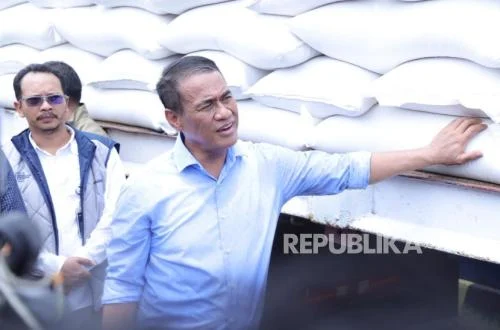
JAKARTA – Amidst pervasive global anxieties over a looming food crisis and increasing import dependencies, Indonesia has registered an extraordinary achievement, shattering historical records with its government rice reserves now reaching an unprecedented 4.8 million tons. This monumental surge is far more than a mere statistical anomaly; it serves as a powerful indicator of a profound reorientation in the nation’s food security policy, charting a course towards robust self-reliance. The declaration comes at a critical juncture, as the world grapples with supply chain disruptions, geopolitical conflicts, and the escalating impacts of climate change on agricultural productivity, making Indonesia’s success a beacon of national resilience.
Minister of Agriculture, Andi Amran Sulaiman, attributed this historic milestone to a comprehensive array of strategic measures meticulously implemented across the entire agricultural value chain, spanning from upstream production to downstream distribution. In a remarkable testament to the efficacy of these initiatives, Minister Sulaiman boldly asserted that the national target for food self-sufficiency, initially projected to be achieved within a four-year timeframe, has now been dramatically accelerated to just one year. This expedited timeline underscores a concerted and successful effort to de-risk Indonesia’s food supply in an increasingly volatile global environment.
Global Pressures and Indonesia’s Historical Context
The backdrop against which Indonesia’s achievement shines is one of heightened global food insecurity. The ongoing conflict in Ukraine, a major global breadbasket, has severely disrupted grain exports, sending commodity prices soaring and exacerbating supply chain vulnerabilities. Climate change, manifesting as erratic weather patterns, prolonged droughts, and devastating floods, continues to threaten agricultural yields across continents. Organizations like the Food and Agriculture Organization (FAO) have consistently warned about the potential for widespread hunger and malnutrition, particularly in developing nations heavily reliant on food imports. For a nation like Indonesia, with its vast population of over 270 million, rice is not merely a staple food but a cornerstone of social stability and economic well-being. Historically, Indonesia has often been a net importer of rice, making it vulnerable to international price fluctuations and supply shocks. Previous administrations have grappled with the challenge of achieving self-sufficiency, facing hurdles such as land conversion for industrial and residential use, an aging farming population, and the perennial struggle to provide adequate support and infrastructure to farmers. This historical context amplifies the significance of the current record reserves, representing a tangible departure from past vulnerabilities.
Architecting the Shift: Policy and Regulatory Reforms
The foundation of this rapid acceleration, as articulated by Minister Amran, lies in a sweeping reform of agricultural policies and regulations. The government embarked on an ambitious initiative to dismantle hundreds of outdated and cumbersome rules that had long been identified as bottlenecks stifling food production and efficient distribution. This bureaucratic streamlining was complemented by the proactive issuance of at least 16 strategic regulations, including Presidential Regulations (Peraturan Presiden) and Presidential Instructions (Instruksi Presiden). These high-level directives were specifically designed to foster unprecedented cross-sectoral coordination, ensuring that various ministries and agencies worked in concert towards the common goal of food security, rather than in siloed efforts. This centralized approach to policy implementation has been pivotal in achieving rapid results, cutting through red tape that previously hampered progress.
Revitalizing the Supply Chain: The Fertilizer Revolution
One of the most significant and impactful reforms targeted the critical area of fertilizer distribution. Historically, the procurement and distribution of subsidized fertilizers in Indonesia were mired in complex bureaucratic procedures, involving numerous intermediaries that often led to delays, inefficiencies, and even diversion, ultimately failing to reach farmers when and where they needed it most. The government’s decisive action saw the radical pruning of 145 regulations pertaining to fertilizer. The new, streamlined mechanism ensures that fertilizer is now distributed directly from the Ministry of Agriculture to PT Pupuk Indonesia, the state-owned fertilizer company, and subsequently, with greater speed and precision, to the farmers themselves.
Concurrently with this regulatory overhaul, the government initiated a comprehensive reform of fertilizer governance. This included a substantial increase in the national fertilizer allocation, soaring to 9.55 million tons, a critical move to meet the actual demand from the agricultural sector. Furthermore, in a direct measure to alleviate the financial burden on farmers and stimulate productivity, the price of subsidized fertilizers was reduced by a significant 20 percent. This dual strategy of increased availability and reduced cost has been met with widespread relief and enthusiasm from farmer associations across the archipelago. Representatives from the Indonesian Farmers’ Association (HKTI) have lauded the reforms, noting that timely access to affordable fertilizer is often the single most critical factor in ensuring optimal crop yields and improving farmer livelihoods. The previous system, plagued by scarcity and inflated prices, frequently forced farmers to either delay planting or compromise on fertilization, directly impacting national production.
Strategic Investment: Budget Reallocation and Infrastructure Boost
Beyond regulatory and supply chain reforms, the government demonstrated its commitment through a strategic reallocation of financial resources. A substantial sum of Rp3.8 trillion (approximately USD 240 million) was diverted from non-priority spending areas within the state budget directly into productive sectors of agriculture. This reallocated fund was meticulously targeted to bolster key agricultural inputs and infrastructure. A significant portion was earmarked for the development and rehabilitation of irrigation systems, vital for consistent water supply to rice paddies, particularly in regions prone to dry spells. Investment in superior quality seeds was prioritized to enhance crop resilience and productivity.
The program also saw considerable funds directed towards "pompanisasi," or the deployment of water pumps, to expand the cultivation area and improve water management. Lastly, the provision of modern agricultural tools and machinery (Alsintan) received a boost, aiming to mechanize farming processes, reduce manual labor, and increase efficiency, especially during planting and harvesting seasons. This holistic investment strategy ensures that farmers are equipped with the necessary resources and technology to maximize their output. For instance, the investment in irrigation and pompanisasi directly addresses the impact of climate variability, allowing for more predictable harvests even in challenging conditions.
Boosting Production: Intensification and Land Optimization
The impact of these reforms and investments is most vividly observed in the production sector. Intensification efforts have been rigorously implemented, focusing on the widespread adoption of superior quality seeds tailored to local conditions and climate, coupled with the precise and timely application of fertilizers. These practices ensure that each hectare of land yields its maximum potential.
A cornerstone of the production boost is the extensive pompanisasi program, which has successfully brought approximately 500,000 hectares of previously rain-fed lands under irrigation. This transformation is crucial as it allows farmers to increase their cropping index from typically one harvest per year to two or even three harvests annually, dramatically increasing the total national output. By providing controlled water access, these lands, once dependent on unpredictable rainfall, can now contribute consistently to rice production.
In parallel, significant efforts have been directed towards the optimization of around 800,000 hectares of swamp land. Historically underutilized due to challenging hydrological conditions, these lands are being rehabilitated and made productive through specialized drainage and cultivation techniques suitable for wetland agriculture. When combined with other intensification programs, the total increase in cultivated land area, either newly brought into production or made significantly more productive, totals approximately 1.3 million hectares. This substantial expansion and enhancement of arable land have made an undeniable and significant contribution to the surge in national rice production, directly underpinning the record-breaking reserve levels.
Broader Implications and Expert Perspectives
The implications of Indonesia’s record rice reserves extend far beyond mere statistics, touching upon economic stability, social welfare, and national sovereignty. Economically, a substantial domestic rice reserve significantly reduces Indonesia’s reliance on imports, leading to a healthier trade balance and conserving foreign exchange reserves. This also insulates the domestic market from volatile international rice prices, which can often be subject to speculative trading and geopolitical events. Analysts from the Institute for Development of Economics and Finance (INDEF) have noted that sustained self-sufficiency in rice could lead to a stable food inflation rate, benefiting millions of households and contributing to overall macroeconomic stability.
Socially, stable and affordable rice prices are paramount for a nation where it is the primary calorie source. Price stability directly impacts household budgets, particularly for low-income families, helping to mitigate poverty and improve food access. Farmer incomes are also expected to see a boost due to improved input access and productivity, fostering rural development and potentially stemming the tide of urbanization.
Politically, achieving and maintaining food self-sufficiency is a powerful statement of national resilience and strategic autonomy. It enhances government credibility and public trust, especially in a region frequently impacted by natural disasters and economic shocks. There is also the potential for Indonesia to emerge as a regional leader in food security strategies, sharing its successful model with neighboring countries.
However, experts also caution that maintaining this momentum requires continuous effort and strategic foresight. Dr. Sri Rahayu, an agricultural economist from the University of Indonesia, emphasizes the need for sustainable practices. "While the immediate gains are impressive, we must ensure that the intensification efforts, especially regarding fertilizer use and water management, are environmentally sustainable in the long run," she stated. "Monitoring soil health, promoting organic farming where feasible, and investing in climate-resilient crop varieties will be crucial for sustained success." Questions also arise regarding the long-term impact on water resources, particularly with the expansion of irrigated areas, necessitating efficient water management techniques and the exploration of drought-resistant rice strains.
The Road Ahead: Sustaining Momentum
Indonesia’s journey towards comprehensive food security is far from over, but the current record-breaking rice reserves mark a pivotal and encouraging chapter. The accelerated timeline for self-sufficiency, driven by astute policy reforms, strategic investments, and robust production enhancements, demonstrates a clear national commitment. The challenge now lies in sustaining this momentum, adapting to new environmental and economic realities, and ensuring that the gains are equitable and durable. Continued investment in research and development for new seed varieties, further mechanization, farmer education, and robust supply chain logistics will be essential. The integration of digital technologies, such as precision agriculture and real-time market information, could further optimize resource use and empower farmers. As Indonesia navigates its path forward, the success achieved in bolstering its rice reserves stands as a powerful testament to strategic governance and the collective effort of its agricultural sector, promising a more secure and prosperous future for its citizens.