Wednesday, April 15, 2026 – 19:02 WIB
Jakarta, VIVA – A significant number of individuals possess the financial means to undertake the pilgrimage to Mecca (Hajj) but choose to postpone their journey for a variety of reasons. Prominent among these justifications is the desire to assist others in need or to await the greater independence of their children. This common scenario prompts a crucial question: which should take precedence – fulfilling the Hajj obligation or extending aid to fellow human beings?
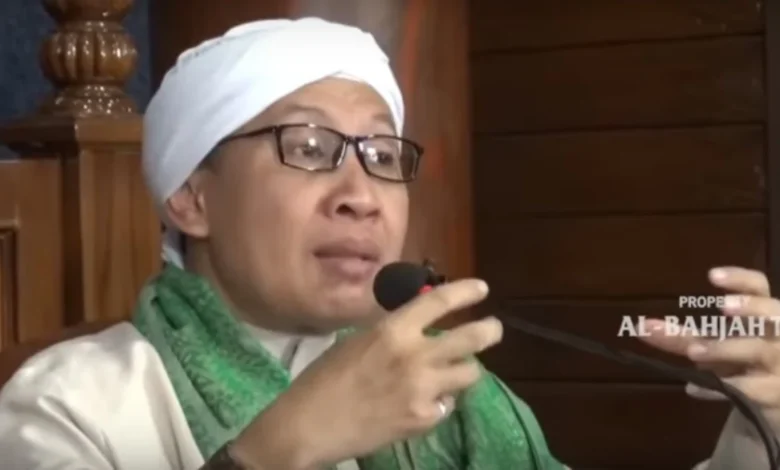
This pertinent query was recently addressed by the esteemed scholar, Buya Yahya, during one of his religious discourses. He expounded on the Islamic tenet that individuals who have attained the financial capacity are indeed obligated to perform the Hajj. However, Buya Yahya emphasized that the practical implementation of this obligation involves several considerations before a definitive departure date can be set.
Buya Yahya outlined that the most evident indicator of one’s Hajj obligation being due is the possession of sufficient funds to cover the pilgrimage expenses. “For those who are obligated to perform Hajj, perhaps the most apparent sign today is the sufficiency of provisions to pay for the Hajj costs. If a person has the financial means for Hajj, then it is obligatory for them to perform Hajj,” Buya Yahya stated, as quoted from the Al Bahjah TV YouTube channel on Wednesday, April 15, 2026.
Understanding "Tarakhi" in Islamic Jurisprudence
Despite the clear financial requirement, the obligation to perform Hajj does not necessitate an immediate departure upon acquiring the necessary funds. Within the framework of the Shafi’i school of Islamic jurisprudence, a concept known as "tarakhi" exists. This refers to an obligation that may be deferred under specific circumstances, provided there remains a firm intention to fulfill it.
Buya Yahya clarified that individuals are permitted to plan their Hajj pilgrimage for a future date. This could be contingent upon their children reaching a certain age of maturity or when the family’s financial situation becomes more stable. “They can plan for the following years with the condition that there is a strong intention, a resolute determination, that they will perform Hajj, perhaps after their children have grown up,” he explained.
The Limits of Postponement
However, the deferral of Hajj is not an open-ended permission. There are reasonable limits to such postponements. This is particularly relevant for individuals who are still in good health and have a reasonable life expectancy. Buya Yahya cautioned against delaying the pilgrimage until an advanced age, as declining physical health could pose significant challenges in performing the demanding rituals of Hajj.
He further underscored the importance of registering for Hajj promptly, even if the actual pilgrimage is scheduled to take place several years in the future. “The important thing is that you have the resolve to register for Hajj first. The important thing is that I register for Hajj later, perhaps 10-15 years from now, that’s fine,” Buya Yahya elucidated. This proactive step demonstrates a genuine commitment to fulfilling the obligation.
The Moral Imperative of Charity
The discourse also touched upon the often-asked question of whether it is more virtuous to use one’s financial resources for charitable acts rather than performing Hajj, especially when both options are financially feasible. Buya Yahya acknowledged that assisting those in need is an exceptionally noble deed in Islam. However, he reiterated that for individuals who have met the criteria for Hajj obligation, this religious duty must be prioritized and cannot be entirely disregarded.
The Hajj is one of the five pillars of Islam, a mandatory religious duty for all adult Muslims who are physically and financially capable of undertaking the journey. It is considered a once-in-a-lifetime obligation for those who meet the criteria. The pilgrimage involves a series of intricate rituals performed in and around Mecca, culminating in the Eid al-Adha festival.
Supporting Data and Socio-Economic Context
Globally, the number of Muslims performing Hajj has seen a significant increase over the past few decades, reflecting both population growth and improved economic conditions in many Muslim-majority countries. For instance, in the years preceding the COVID-19 pandemic, the annual number of Hajj pilgrims consistently exceeded two million. This surge in participation highlights the growing capacity of Muslims worldwide to fulfill this religious obligation.
However, the waiting lists for Hajj in many countries are notoriously long, often spanning over a decade. This is due to a combination of factors, including limited infrastructure in Mecca, quotas imposed by the Saudi Arabian government on each country, and the sheer volume of intending pilgrims. This extended waiting period naturally leads many to question the timing of their pilgrimage and consider other avenues for spiritual or charitable fulfillment.
Religious Scholarly Perspectives on Prioritization
Scholarly opinions on the prioritization between Hajj and extensive charitable work when both are feasible often lean towards fulfilling the obligatory Hajj first. This is rooted in the concept of fulfilling one’s personal religious duties before dedicating oneself entirely to voluntary acts of charity, however commendable. The rationale is that the Hajj is a direct commandment from Allah for those who can afford it, and its fulfillment is a personal purification and a testament of faith.
Nonetheless, Islamic teachings strongly advocate for continuous acts of charity (Sadaqah) and aiding the less fortunate. These acts are believed to bring immense blessings and rewards in this life and the hereafter. The dilemma arises when an individual has the means for both, creating a need for careful consideration of intent and priority.
Analysis of Implications
The deferral of Hajj, while permissible under certain conditions like "tarakhi," carries its own set of implications. One significant concern is the uncertainty of life itself. Postponing the pilgrimage indefinitely could lead to missed opportunities if one’s health deteriorates or if unforeseen circumstances prevent the journey altogether. This underscores Buya Yahya’s advice to register early, even if the departure is years away, as a concrete step towards fulfilling the obligation.
Furthermore, the decision to prioritize charitable acts over an obligatory Hajj, when both are financially possible, could be viewed as a deviation from a clear religious mandate. While the intention to help others is noble, it should not serve as a perpetual excuse to bypass a fundamental pillar of Islam. The Islamic principle is often to fulfill obligations first and then to excel in voluntary good deeds.
Broader Impact on the Muslim Community
The discussion surrounding Hajj and charity has broader implications for the Muslim community. It encourages a deeper understanding of Islamic jurisprudence and the nuances of religious obligations. It also prompts introspection on personal priorities and the true meaning of devotion.
The emphasis on making concrete plans, such as registering for Hajj, even with a long waiting period, can foster a sense of community responsibility. It acknowledges the collective management of Hajj logistics and ensures that individuals are recognized in the queue for this sacred journey.
In conclusion, while the impulse to help others is deeply ingrained in Islamic values and highly rewarded, the obligation of Hajj, when financially feasible, remains a primary religious duty. Buya Yahya’s guidance provides a balanced perspective, allowing for thoughtful planning and consideration of personal circumstances while firmly advocating for the eventual fulfillment of this significant pillar of Islam. The key lies in a sincere intention, a firm resolve, and proactive steps towards meeting this divine commandment.