Trump Secures Pledge from Xi Jinping on Iranian Arms Shipments Amid Escalating Middle East Tensions and Upcoming Beijing Summit

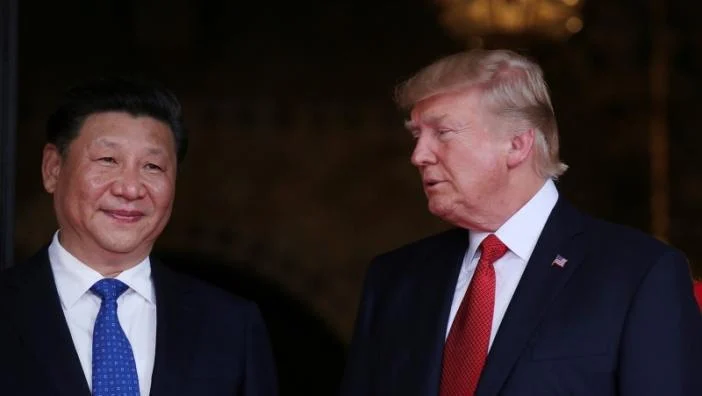
United States President Donald Trump has announced that he has received a formal assurance from Chinese President Xi Jinping regarding the cessation of military hardware transfers to Iran, a move that could signal a significant shift in the geopolitical landscape of the Middle East and the ongoing diplomatic friction between Washington and Beijing. The announcement, made through a series of statements on the Truth Social platform and during a televised interview with Fox Business on April 15, 2026, comes at a precarious moment when global energy markets and maritime security remain under intense pressure due to the ongoing American blockade of the Strait of Hormuz. President Trump asserted that the guarantee was delivered via a personal correspondence from President Xi, setting a hopeful tone for the long-awaited bilateral summit scheduled to take place in Beijing on May 14-15, 2026.
According to President Trump, the diplomatic breakthrough followed a direct inquiry he sent to the Chinese leader. In his Truth Social post, Trump expressed confidence in the upcoming high-level meeting, stating that President Xi had agreed to halt the supply of weaponry to Tehran. The President characterized the current state of relations as warming, despite the recent months of intense military and economic posturing, suggesting that he expects a "warm hug" from Xi upon his arrival in the Chinese capital next month. This rhetoric marks a shift from the more adversarial language that characterized the early months of 2026, during which the Trump administration intensified its "Maximum Pressure 2.0" campaign against the Iranian government.
The Chronology of Diplomatic and Military Escalation
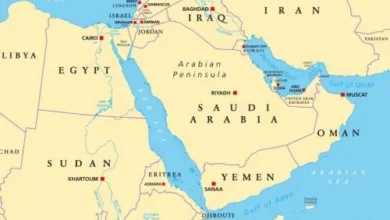
The relationship between the United States and China has been strained by a series of events leading up to this recent development. Originally, a summit between Trump and Xi had been scheduled for March 2026. However, the meeting was abruptly postponed following the Trump administration’s decision to launch what the President described as a necessary military intervention to curb Iranian influence in the region. This "preventative action" led to the implementation of a total naval blockade of the Strait of Hormuz, a critical maritime artery through which approximately 20 percent of the world’s petroleum passes.
China, which relies heavily on Middle Eastern oil to fuel its industrial economy, initially reacted with fierce condemnation. Beijing accused the United States of "dangerous and irresponsible behavior" that threatened global supply chains. In response to the blockade, China had reportedly increased its diplomatic and logistical support for Tehran, leading to widespread rumors in intelligence circles—and eventually confirmed by Trump’s recent statements—that Chinese-made munitions and drone technology were finding their way into the hands of the Iranian Revolutionary Guard Corps (IRGC).
The timeline of the past six throughout 2025 and early 2026 shows a steady descent into what many analysts feared would be a "New Cold War." Following the January 2026 expiration of several key nuclear monitoring protocols, the U.S. moved carrier strike groups into the Persian Gulf. By February, the blockade was in full effect. The postponement of the March summit was seen as the nadir of U.S.-China relations in the current term. However, the private exchange of letters between Trump and Xi in early April appears to have paved the way for the current de-escalation.
Analyzing the Strategic Assurance on Iranian Arms
In his interview with Fox Business, President Trump provided more nuance to the nature of the "pledge" from Beijing. He admitted that reports of Chinese arms flowing into Iran were widespread and visible "everywhere." The President’s strategy involved a direct appeal to Xi Jinping, framing the arms shipments as a barrier to the "Grand Bargain" Trump seeks to strike with both China and the Middle Eastern powers.
"I wrote him a letter asking that he not do that," Trump told Fox Business, referring to the arms transfers. "And he wrote back to me basically saying that he was not doing that, or would stop doing that." While critics point out that "basically saying" leaves room for diplomatic ambiguity, the Trump administration is treating this as a binding commitment.
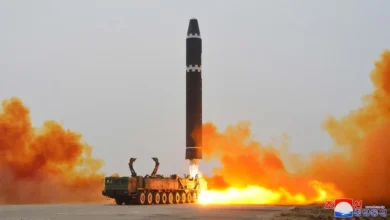
The strategic significance of this pledge cannot be overstated. China has historically been Iran’s largest trading partner and a key supplier of dual-use technology. If China indeed ceases the shipment of advanced anti-ship missiles and unmanned aerial vehicles (UAVs), the Iranian military’s ability to challenge the U.S. naval presence in the Selat Hormuz would be severely diminished. For Trump, this represents a victory for his "tough on China" stance, which he continues to champion as the hallmark of his foreign policy.
The Strait of Hormuz and Global Energy Security
A central pillar of the current U.S. strategy is the "permanent opening" of the Strait of Hormuz under American supervision. In his Truth Social updates, Trump claimed that China is secretly "very happy" with the U.S. blockade because it ensures a level of stability that Tehran could not provide. "I did it for them too—and for the world," Trump asserted, suggesting that the U.S. military presence serves as a global public good by preventing Iranian "blackmail" of the energy markets.
Data from the International Energy Agency (IEA) indicates that since the blockade began in February 2026, global oil prices have fluctuated wildly, peaking at $140 per barrel before settling near $110 following rumors of the Trump-Xi rapprochement. China, which imports nearly 1.5 million barrels of oil per day from Iran (often through "dark fleet" tankers), has been forced to recalibrate its energy strategy. By agreeing to Trump’s terms on arms, Xi may be seeking a trade-off: a guarantee that Chinese-bound tankers will be granted safe passage through the U.S.-controlled Strait.
Cybersecurity and the FBI Intrusion
The Fox Business interview also touched upon a more shadowy aspect of the U.S.-China rivalry: the digital battlefield. Reports emerged earlier this week regarding a massive, state-sponsored cyberattack originating from China targeting the Federal Bureau of Investigation (FBI). The breach allegedly compromised sensitive internal communications and personnel files.
When questioned about these reports, President Trump did not issue a formal denial or a specific condemnation. Instead, he offered a candid assessment of modern espionage. "We do it to them. They do it to us," Trump remarked, suggesting a "tit-for-tat" reality in the cyber realm. He characterized China as a formidable but manageable adversary, stating, "China is China. It’s never easy, but we’re doing very well in dealing with them."
This pragmatic, if somewhat unconventional, approach to state-sponsored hacking reflects the administration’s focus on "Great Power Competition" where traditional norms of espionage are viewed as a constant background noise to larger trade and military deals. Trump reiterated his self-image as the "toughest" president on Beijing, using the cyber issue to reinforce his narrative that only his administration can hold China accountable.
Official Responses and Regional Implications
While the White House has been vocal about the "pledge," the Chinese Ministry of Foreign Affairs has maintained a more cautious tone. In a press briefing in Beijing, a spokesperson stated that China always maintains "normal state-to-state relations" with Iran and remains committed to the non-proliferation of weapons of mass destruction. However, the spokesperson notably did not explicitly deny the existence of the letter exchange with President Trump, instead emphasizing China’s desire to play a "constructive role" in Middle East peace.
In Tehran, the reaction has been one of defiant skepticism. Iranian officials have dismissed Trump’s claims as "psychological warfare" intended to drive a wedge between Iran and its strategic partners in the East. However, internal reports from the Iranian capital suggest anxiety over a potential reduction in Chinese support, which has been a lifeline for the Iranian economy under the weight of U.S. sanctions.
Allies of the United States, particularly Israel and Saudi Arabia, have reportedly welcomed the news of a potential halt in Chinese arms to Iran. A senior Israeli defense official noted that any reduction in the flow of Chinese technology to the IRGC would directly impact the capabilities of proxy groups like Hezbollah and the Houthis, who have frequently used Chinese-designed components in their drone and missile programs.
Analysis of Broader Impacts
The upcoming May summit in Beijing is now positioned as one of the most consequential diplomatic events of the decade. If Trump can secure a verifiable agreement on Iranian arms, it would provide him with a significant domestic political win, validating his "deal-making" approach to foreign policy. For President Xi, the summit offers an opportunity to stabilize the Chinese economy, which has been rattled by the volatility in the Persian Gulf and the threat of secondary U.S. sanctions on Chinese banks.
However, the implications of this "pledge" extend beyond the two nations. A U.S.-China consensus on Iran would effectively isolate Tehran, forcing the Islamic Republic to either return to the negotiating table on U.S. terms or face an unprecedented level of economic and military enclosure.
Furthermore, the "permanent opening" of the Strait of Hormuz under U.S. auspices represents a fundamental shift in maritime law and the regional balance of power. By claiming to act on behalf of the world—including China—Trump is attempting to rewrite the rules of international shipping lanes, placing the U.S. as the ultimate guarantor of the "Freedom of Navigation" in a way that directly challenges the traditional sovereignty of littoral states.
As the world looks toward the May 14-15 summit, the stakes could not be higher. The "warm hug" Trump expects from Xi Jinping will be scrutinized by every major intelligence agency and market analyst on the planet. Whether this represents a true pivot toward peace or merely a temporary truce in an ongoing global struggle remains to be seen. For now, the Trump administration remains steadfast in its claim that the "toughest" stance has yielded the first major crack in the Sino-Iranian alliance.