King Abdullah II’s State Visit to Indonesia Deepens Bilateral Ties, Underscores Enduring Personal Friendship with President Prabowo Subianto

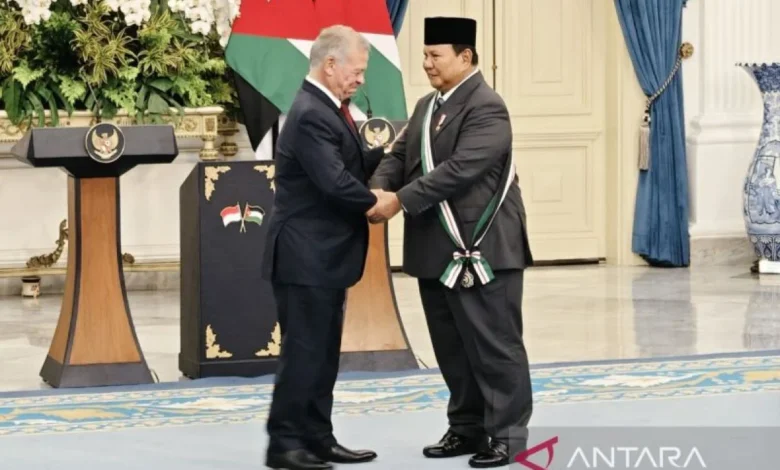
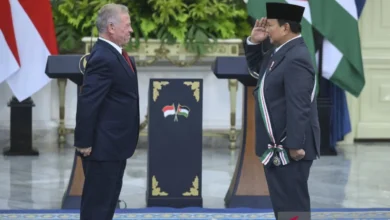
His Majesty King Abdullah II bin Al-Hussein of the Hashemite Kingdom of Jordan arrived in Jakarta on Friday afternoon for a pivotal state visit, marking a significant moment in Indonesia-Jordan bilateral relations. The visit, part of a broader Asian tour, is poised to strengthen diplomatic, economic, and strategic cooperation between the two nations, underpinned by a remarkable and long-standing personal friendship between King Abdullah II and Indonesian President Prabowo Subianto. This high-level engagement is anticipated to yield concrete outcomes across multiple sectors, ranging from trade and investment to defense cooperation and coordinated efforts on pressing global issues, most notably the humanitarian crisis in Gaza.
A High-Stakes Diplomatic Agenda in Jakarta
Upon his arrival in the Indonesian capital, King Abdullah II embarked on a series of high-level engagements designed to advance mutual interests and cement bilateral ties. The primary agenda included a critical meeting with President Prabowo Subianto at the Presidential Palace. During their discussions, which are expected to be marked by a deep sense of camaraderie and understanding, topics will likely span regional security, economic partnerships, cultural exchange, and shared geopolitical concerns. A central focus will undoubtedly be the ongoing conflict in Gaza, where both nations share a profound commitment to a peaceful resolution and humanitarian assistance for the Palestinian people.
Following the head-of-state meeting, the Jordanian monarch is scheduled to meet with representatives from Danantara Indonesia, an engagement that signals a keen interest in fostering specific economic collaborations. This particular meeting underscores the strategic importance of the visit, moving beyond mere ceremonial greetings to concrete, sector-specific partnerships. The culmination of these high-level talks will be the witnessing of the signing of several bilateral Memoranda of Understanding (MoUs), formalizing commitments in various sectors and charting a definitive course for enhanced future cooperation. These agreements are expected to cover areas such as trade, investment, defense, agriculture, and potentially cultural and educational exchanges, reflecting the comprehensive nature of the burgeoning relationship.
Jordan’s Strategic Pivot to Asia: A Broader Geopolitical Context
King Abdullah II’s visit to Indonesia is not an isolated diplomatic endeavor but forms a crucial leg of an extensive tour across several key Asian nations, including Japan, Vietnam, Singapore, and Pakistan. This multi-country diplomatic foray underscores Jordan’s strategic reorientation and its concerted efforts to diversify partnerships beyond traditional Western allies, seeking new economic opportunities, investment flows, and political support in the dynamic and rapidly growing Asian landscape.
For Jordan, a nation strategically located at the heart of the tumultuous Middle East, strengthening ties with stable and economically robust Asian powers like Indonesia offers a crucial avenue for economic resilience and diplomatic leverage. The tour aims to bolster trade relations, attract foreign direct investment, and foster cooperation on global challenges, including climate change, food security, and regional stability. Jordan, a vital U.S. ally and a key player in the Arab world, seeks to amplify its voice on international platforms and garner support for its positions on critical issues, most notably the Israeli-Palestinian conflict, where it holds a unique custodial role over Muslim and Christian holy sites in Jerusalem. By engaging with major Asian economies, Jordan seeks to expand its export markets, secure essential imports, and attract investment into its nascent technology and renewable energy sectors, thereby contributing to its economic diversification goals.
Reciprocal Diplomacy and the Deepening Personal Bond
This state visit by King Abdullah II serves as a direct reciprocal gesture to President Prabowo Subianto’s earlier visit to Jordan. President Prabowo traveled to the Hashemite Kingdom on April 14, 2024, where he held an intimate one-on-one meeting with King Abdullah II at the Al Husseiniya Palace in Amman. That visit, occurring shortly after Prabowo’s decisive electoral victory and prior to his official inauguration as President, was a clear testament to the profound personal connection that transcends conventional diplomatic protocols between the two leaders.
The symbolism of King Abdullah II personally driving President Prabowo to his hotel in downtown Amman during that visit resonated widely across diplomatic circles and global media. This informal yet powerful gesture signified a level of warmth, trust, and personal esteem rarely observed between heads of state. It transformed a high-stakes diplomatic exchange into a reunion of old friends, underscoring the exceptional nature of their relationship. Such deep personal rapport at the highest echelons of state leadership often provides a strong and resilient foundation for robust and effective bilateral relations, enabling more candid discussions, expedited decision-making processes, and a shared vision for addressing complex challenges. The mutual respect evident in their interactions suggests a future of close cooperation that can navigate geopolitical complexities with greater ease.
A Shared Past: From Elite Military Training to National Leadership
The roots of the extraordinary friendship between King Abdullah II and President Prabowo Subianto trace back decades, forged in the crucible of elite military training and shared experiences that instilled discipline, leadership, and a unique camaraderie. Both leaders are distinguished alumni of the prestigious United States Army Ranger School at Fort Benning, Georgia. This highly demanding combat leadership course is renowned for its rigorous physical and mental challenges, pushing participants to their limits and fostering an unbreakable bond among its graduates. The shared experience of enduring such an intense training program undoubtedly contributed to the deep and enduring bond they now share, providing a foundation of mutual understanding and respect for their capabilities.
Their paths first formally intersected on December 4, 1995, during the inauguration ceremony of Prabowo Subianto as the Commander General (Danjen) of the Indonesian Army Special Forces (Kopassus). At that time, both men were rising stars in their respective militaries, destined for higher callings and poised to play significant roles in their nations’ futures. Their common professional background extends further, as both have commanded elite special forces units: Prabowo as the Danjen Kopassus and King Abdullah II as the Commander of the Jordanian Special Forces in 1994. This shared professional experience provides a unique understanding of the complexities of military leadership, national security, and strategic thinking, forming a solid basis for their collaborative vision for their nations’ defense and security interests. Their military backgrounds also imbue them with a pragmatic and disciplined approach to governance.
The Jordanian Sanctuary: A Pivotal Chapter in Prabowo’s Life
The depth and resilience of their friendship were profoundly demonstrated during a challenging and formative period in Prabowo’s life. Following the tumultuous political events in Indonesia in 1998, which led to the fall of the New Order regime, Prabowo left the country and sought refuge in Jordan. His arrival in the Hashemite Kingdom was met with exceptional deference and hospitality, a clear reflection of King Abdullah II’s personal regard and unwavering loyalty towards his friend.
It is widely reported that during this period of self-exile, Prabowo was even extended the extraordinary offer of Jordanian citizenship, a testament to the King’s profound respect and the strength of their personal bond. However, Prabowo steadfastly chose to retain his Indonesian citizenship, demonstrating his unwavering commitment and loyalty to his homeland, even during his time of political uncertainty. This period in Jordan was not merely a hiatus but a significant chapter that further solidified the personal ties between the two men, transforming a professional acquaintance into an enduring brotherhood. This historical context provides crucial insight into the profound trust and loyalty that characterize their current relationship as heads of state, underscoring that their alliance is built on more than just diplomatic necessity.
From Commanders to Kings and Presidents: A Parallel Trajectory of Leadership
Their journeys to the pinnacles of national leadership have been remarkably parallel and intertwined with the destinies of their respective nations. Abdullah II ascended to the throne as King of Jordan in 1999, succeeding his revered father, King Hussein. His reign has been characterized by concerted efforts to modernize Jordan, navigate the complexities of regional conflicts, and champion the Palestinian cause on the international stage, all while steering his country through periods of significant geopolitical turbulence.
Similarly, Prabowo Subianto, after a distinguished military career and several ventures into politics, achieved the highest office in Indonesia, being inaugurated as the President of the Republic of Indonesia on October 20, 2024. His path to the presidency was marked by a tenacious political career and a deep commitment to national service. The fact that both men now simultaneously hold the supreme leadership positions in their respective nations adds an extraordinary dimension to their long-standing friendship, enabling them to shape the destinies of their countries with a shared history, mutual understanding, and a common vision for progress. Their parallel ascensions represent a unique convergence of personal destiny and national leadership, promising a fertile ground for enhanced state-to-state collaboration on a global scale.
Economic Dimensions: Phosphate and Beyond Strategic Resources
The meeting with representatives from Danantara Indonesia highlights a particularly significant economic facet of this visit: cooperation in the phosphate sector. Jordan is recognized globally as one of the world’s leading producers and exporters of phosphate rock, a critical raw material for the production of fertilizers essential for modern agriculture. Indonesia, with its vast agricultural sector, growing population of over 280 million, and ambitious food security programs, has a substantial and ever-increasing demand for fertilizers to maximize crop yields and ensure national food self-sufficiency. This makes Jordan a crucial strategic partner for Indonesia in securing its agricultural inputs.
According to data from the World Bank and various international trade organizations, global phosphate rock production is dominated by a few key players, with Jordan consistently ranking among the top five. In 2023, Jordan’s phosphate exports contributed significantly to its national economy, demonstrating its capacity as a reliable supplier. For Indonesia, maintaining a stable and affordable supply chain for phosphate is paramount for its food security strategy. The potential for direct agreements or joint ventures with Jordanian phosphate companies, facilitated by state entities like Danantara, could bypass intermediaries, ensure competitive pricing, and secure long-term supply, thereby enhancing Indonesia’s agricultural resilience and reducing dependency on volatile international markets. This strategic partnership extends beyond mere trade, encompassing potential knowledge transfer in mining and processing technologies, and investment opportunities in related industries such as fertilizer production and agricultural innovation.
Beyond phosphate, bilateral trade between Indonesia and Jordan has shown steady growth, albeit with significant untapped potential. In 2023, total trade volume between the two nations reached approximately $350 million. Indonesia primarily exports palm oil, paper products, textiles, rubber, and various manufactured goods to Jordan, while importing phosphates, potash, and dates from the Hashemite Kingdom. The MoUs to be signed during this visit are expected to explore new avenues for trade and investment, including renewable energy, the digital economy, tourism, and defense equipment, leveraging Indonesia’s robust economic growth and Jordan’s strategic location as a gateway to the broader Middle East and North Africa region. Enhancing air connectivity and easing visa regulations could further boost tourism and people-to-people exchanges, fostering greater understanding and cultural appreciation.
Geopolitical Alignment: A United Front for Palestine
Both Indonesia and Jordan share a profound and unwavering commitment to the Palestinian cause, a cornerstone of their respective foreign policies. Jordan, as the Hashemite Custodian of Muslim and Christian Holy Sites in Jerusalem, plays a direct and pivotal role in the region’s religious and political landscape. King Abdullah II has been a tireless and vocal proponent of a two-state solution and a staunch advocate for Palestinian rights, consistently calling for an end to the occupation, the cessation of violence, and the establishment of an independent Palestinian state with East Jerusalem as its capital.
Indonesia, as the world’s largest Muslim-majority nation, has historically been a strong and consistent supporter of Palestine, providing extensive humanitarian aid and unwavering diplomatic backing on international platforms. President Prabowo has reiterated Indonesia’s steadfast support for Palestine, recently affirming Indonesia’s readiness to send peacekeeping troops to Gaza if mandated by the United Nations, and actively coordinating with regional and international partners to facilitate humanitarian assistance and long-term reconstruction efforts.
The discussions between King Abdullah II and President Prabowo are therefore expected to feature prominently the latest developments in Gaza, the urgent need for a permanent ceasefire, and increased, unhindered humanitarian access. Their shared perspective and considerable diplomatic weight, particularly within the Organization of Islamic Cooperation (OIC) and the broader international community, can contribute to a stronger, unified voice advocating for peace, justice, and the protection of civilian lives in the Middle East. This visit provides a critical platform for strategic coordination on this deeply sensitive and globally significant issue, aiming to mobilize international support for a just and lasting resolution.
Implications and Future Outlook
King Abdullah II’s state visit to Indonesia carries significant implications for both nations and the broader geopolitical landscape. For Indonesia, it underscores its growing diplomatic stature and its role as an important and reliable partner for countries seeking to engage with Southeast Asia. The visit reinforces Indonesia’s commitment to diversified foreign relations and its active participation in global affairs, solidifying its position as a major non-aligned player. For Jordan, it represents a successful outreach to a key Asian economy, securing potential economic benefits and strengthening its diplomatic network at a crucial time for the Middle East, allowing it to project stability and seek new partnerships amidst regional challenges.
The enduring personal friendship between King Abdullah II and President Prabowo Subianto is a unique and invaluable asset, providing a bedrock of trust and understanding that can transcend traditional diplomatic hurdles and facilitate more robust cooperation. As King Abdullah II himself previously remarked, he believes President Prabowo is steering Indonesia "in a very good direction," a sentiment that speaks volumes about their mutual respect and shared vision for progressive and effective leadership. This personal rapport is expected to translate into enhanced state-to-state cooperation, fostering a more robust and resilient partnership across various sectors, from defense and security to trade, investment, and cultural exchange.
In conclusion, King Abdullah II’s visit to Indonesia is far more than a routine diplomatic engagement; it is a convergence of strategic interests, economic imperatives, and a remarkable personal history that binds the leaders of two significant nations. It promises to usher in a new era of heightened collaboration between Indonesia and Jordan, solidifying their roles as influential players in both regional and global affairs, and reaffirming the profound power of personal connections in shaping international relations. The agreements forged and understandings reached during this visit are set to lay a strong foundation for a future of shared prosperity, security, and diplomatic alignment, contributing to peace and stability in an increasingly interconnected world.