King Abdullah II of Jordan Commences Pivotal State Visit to Indonesia, Deepening Strategic Partnership and Bilateral Cooperation

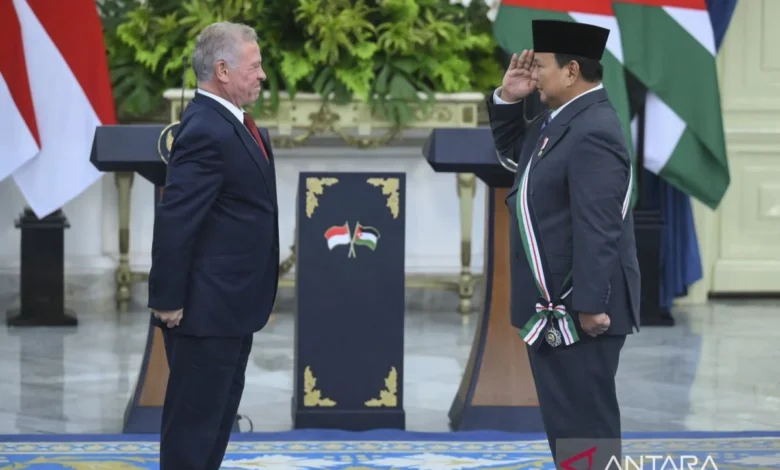
His Majesty King Abdullah II bin Al-Hussein of Jordan is scheduled to undertake a significant state visit to Indonesia this Friday afternoon, marking a crucial moment for reinforcing diplomatic and economic ties between the two nations. The visit, which underscores a longstanding bond between the leaders and their countries, is poised to unlock new avenues for collaboration across various sectors, from defense and security to economy and culture. The Jordanian monarch’s itinerary includes a high-level meeting with Indonesian President Prabowo Subianto and engagements with representatives from Danantara Indonesia, culminating in the signing of key bilateral memoranda of understanding (MoUs). This visit is not merely a ceremonial exchange but a strategic engagement aimed at solidifying partnerships in an increasingly complex global landscape, reflecting both countries’ commitment to fostering regional stability and shared prosperity.
A Strategic Diplomatic Tour Across Asia
King Abdullah II’s arrival in Jakarta forms part of a broader, strategically vital tour of several Asian nations. According to official reports from the Royal Hashemite Court, the comprehensive itinerary includes stops in Japan, Vietnam, Singapore, and Pakistan, preceding his visit to Indonesia. This extensive diplomatic outreach highlights Jordan’s proactive foreign policy in strengthening alliances beyond its traditional Western partners and engaging with dynamic economies and influential political actors in Asia. The tour’s focus is multi-faceted, encompassing discussions on economic cooperation, investment opportunities, regional security challenges, and fostering interfaith dialogue. For Indonesia, hosting King Abdullah II provides an opportunity to bolster its position as a key player in Southeast Asia and deepen its engagement with the Middle East, particularly with a nation that holds significant geopolitical and religious importance.
The timing of this visit is particularly notable, following President Prabowo Subianto’s own official trip to Jordan on April 14, 2025. During his earlier visit, President Prabowo engaged in a crucial one-on-one meeting with King Abdullah II at the Al Husseiniya Palace in Amman on the second day of his stay. This reciprocal exchange of high-level visits within a relatively short period underscores the mutual importance both leaders place on their bilateral relationship and their shared vision for enhanced cooperation. Such high-frequency diplomatic exchanges are often indicative of a concerted effort to accelerate discussions and implement agreements, signaling a new chapter of intensified engagement between Jakarta and Amman.
The Enduring Bond: A Friendship Forged in Fort Benning
Beyond formal diplomatic protocols, the relationship between King Abdullah II and President Prabowo Subianto is uniquely characterized by a deep and enduring personal friendship. This camaraderie, forged in their younger years, stems from a shared background in military training and a common alma mater: the prestigious United States Army training institution at Fort Benning. Both leaders, having undergone rigorous military education, developed a mutual respect and understanding that has transcended their ascent to national leadership. Fort Benning, known for its challenging curriculum and emphasis on leadership, has historically produced many world leaders and military strategists, fostering a unique bond among its alumni. This shared experience in military leadership and strategic thinking provides a robust foundation for their diplomatic interactions, allowing for a level of trust and candid dialogue that might not be present in other bilateral relationships.
Their common military lineage is not merely a biographical detail; it is a significant factor influencing their approach to governance and international relations. Both leaders bring a disciplined, strategic, and results-oriented mindset to their respective roles, characteristics often cultivated in military environments. This personal connection serves as a powerful catalyst for expediting discussions and agreements, potentially leading to more substantive outcomes during the state visit. It transforms what could be a purely formal interaction into a meeting of trusted counterparts, eager to collaborate on issues of mutual concern and benefit.
Key Agenda: Economic Cooperation and Strategic Dialogue
The central focus of King Abdullah II’s visit to Indonesia revolves around strengthening economic cooperation and engaging in strategic dialogue. The meeting with President Prabowo is expected to cover a wide array of topics, including regional security, counter-terrorism efforts, economic diversification, and investment opportunities. A significant highlight of the visit will be the engagement with Danantara Indonesia, which, as implied by the Indonesian Foreign Minister’s prior statement, will involve discussions on cooperation in the phosphate sector.
Jordan is one of the world’s leading producers of phosphate rock, a critical raw material for fertilizers and various industrial applications. Indonesia, a major agricultural nation with a vast population, has a significant demand for fertilizers to boost its food security and agricultural output. A partnership in this sector could be mutually beneficial, ensuring a stable supply of essential raw materials for Indonesia and a reliable market for Jordanian exports. Such a collaboration would not only address Indonesia’s agricultural needs but also contribute to regional food security, a growing concern globally. The signing of a bilateral memorandum of understanding is anticipated to formalize these discussions, laying the groundwork for concrete projects and investments. This economic dimension highlights a pragmatic approach to diplomacy, seeking tangible benefits for both nations through strategic resource partnerships.
Beyond phosphates, other areas ripe for economic collaboration include renewable energy, tourism, and digital technology. Jordan has been actively pursuing diversification of its economy and has invested heavily in renewable energy projects. Indonesia, with its vast renewable energy potential, could find common ground for knowledge transfer, joint ventures, and investment in sustainable development initiatives. Furthermore, cultural exchange and tourism promotion could see a boost, leveraging Indonesia’s vibrant cultural heritage and natural beauty, and Jordan’s rich historical and religious sites, including Petra and the Dead Sea.
Profile of King Abdullah II: A Visionary Leader with a Military Edge
His Majesty King Abdullah II bin Al-Hussein, born in Amman, Jordan, on January 30, 1962, is the eldest son of the late King Hussein bin Talal and Princess Muna Al Hussein. He holds the unique distinction of being the 41st-generation direct descendant of Prophet Muhammad (PBUH), a lineage that confers immense spiritual and historical legitimacy within the Islamic world. His upbringing was meticulously designed to prepare him for the responsibilities of leadership, blending traditional Hashemite values with a modern, international education.
His early education began at the Islamic Educational College in Amman, providing him with a strong foundation in Islamic studies and Arab culture. He then continued his academic journey in the United Kingdom, attending St. Edmund’s School in Surrey, which exposed him to a Western educational system. His secondary education was completed at Deerfield Academy in the United States, further broadening his global perspective and honing his English language proficiency. These diverse educational experiences equipped him with a profound understanding of different cultures and geopolitical dynamics, crucial for a leader navigating complex international relations.
King Abdullah II’s military education commenced at the prestigious Royal Military Academy Sandhurst in the United Kingdom in 1980, a venerable institution renowned for training future military leaders worldwide. He graduated as an officer in 1981, marking the beginning of a distinguished military career. Following Sandhurst, he pursued further studies at Pembroke College, University of Oxford, in 1982, where he undertook a Special Studies course in Middle Eastern affairs, deepening his understanding of the region’s intricate history and politics. His academic pursuits continued in the United States at Georgetown University from 1987 to 1989, where he focused on international relations, further refining his analytical and strategic capabilities.
His military career was marked by steady progression and significant command responsibilities. From 1981 to 1993, he served actively in the Royal Jordanian Army, gaining practical experience in various capacities. His leadership potential was recognized early, leading to his appointment as Deputy Commander of the Jordanian Special Forces from 1993 to 1994. He then rose to command the elite Jordanian Special Forces from 1994 until 1999, a period during which he played a crucial role in modernizing and enhancing the capabilities of Jordan’s special operations units. His hands-on experience in the military instilled in him a deep understanding of defense and security matters, which has been a cornerstone of his reign.
On February 7, 1999, following the passing of his revered father, King Hussein, King Abdullah II ascended to the Hashemite throne, inheriting a nation facing both internal challenges and regional complexities. His reign has been characterized by a commitment to political and economic reform, modernization, and maintaining Jordan’s pivotal role in regional stability and the pursuit of peace. He has consistently advocated for a just and comprehensive resolution to the Israeli-Palestinian conflict, emphasizing the two-state solution and Jordan’s custodianship over Islamic and Christian holy sites in Jerusalem.
King Abdullah II married Queen Rania Al Abdullah on June 10, 1993, and they are blessed with four children: two sons, Crown Prince Hussein and Prince Hashem, and two daughters, Princess Iman and Princess Salma. His family plays an integral role in supporting his public duties and representing Jordan on the international stage.
Beyond his official duties, King Abdullah II is known for his diverse and engaging hobbies, reflecting a multifaceted personality. He is a qualified pilot, demonstrating a keen interest in aviation, and a highly skilled parachutist, highlighting his adventurous spirit and precision. His personal interests also include car racing, which speaks to his passion for speed and engineering, diving, which connects him to the natural world, and collecting antique weapons, a hobby that intertwines with his military background and appreciation for history. These hobbies not only offer him personal recreation but also provide insights into his disciplined nature and broad range of interests.
Broader Impact and Implications for Bilateral Relations
This state visit carries significant implications for both Indonesia and Jordan, extending beyond immediate economic agreements. For Indonesia, deepening ties with Jordan strengthens its diplomatic footprint in the Middle East, a region of immense geopolitical and economic importance. It allows Indonesia to foster closer relations with a key moderate voice in the Arab world, particularly on issues concerning regional stability, counter-terrorism, and interfaith dialogue. Indonesia, as the world’s largest Muslim-majority nation, often seeks to bridge divides and promote peace, and Jordan, under King Abdullah II, shares many of these objectives, particularly its commitment to religious tolerance and the pursuit of peace in the Holy Land.
The potential for enhanced defense cooperation is also noteworthy, given the shared military backgrounds of the leaders. Discussions could explore joint training programs, intelligence sharing, and technology transfer in defense industries, areas where both countries can benefit from mutual expertise. Such cooperation would contribute to the security capabilities of both nations and potentially foster greater regional stability.
Economically, a stronger partnership could diversify Indonesia’s trade relations and secure vital resources, while for Jordan, it opens up access to the large and growing Southeast Asian market. The focus on strategic resources like phosphates indicates a long-term vision for economic partnership that addresses fundamental needs like food security.
Culturally and educationally, the visit could pave the way for increased academic exchanges, scholarships, and cultural programs, fostering greater understanding and people-to-people connections. Indonesia’s rich Islamic heritage and Jordan’s historical significance as a crossroads of civilizations offer fertile ground for such exchanges.
In conclusion, King Abdullah II’s state visit to Indonesia is a landmark event, not only for the immediate agreements it promises but also for the long-term trajectory of bilateral relations. Built on a unique personal friendship between its leaders and underpinned by shared strategic interests, this visit is set to elevate the Indonesia-Jordan partnership to new heights, contributing to regional stability, economic prosperity, and cultural understanding in an increasingly interconnected world. The outcomes of this visit are anticipated to resonate far beyond Jakarta and Amman, sending a clear signal of enhanced cooperation between two influential nations from different yet complementary regions.