Raphinha Faces UEFA Sanctions Over Outburst Following Barcelona’s Champions League Elimination

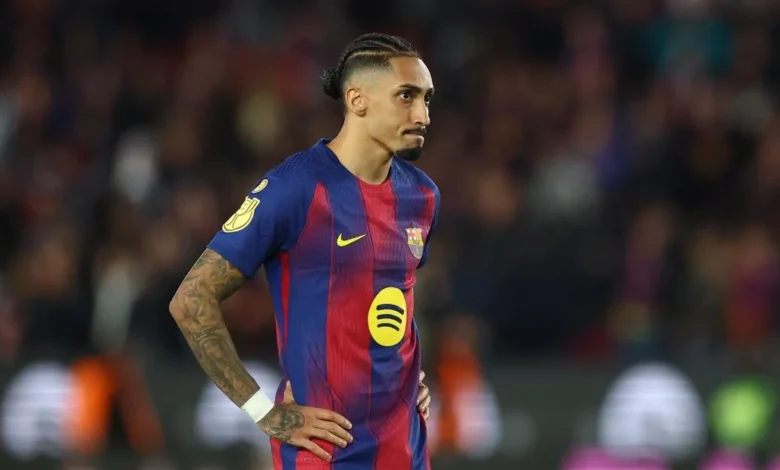
Madrid – Brazilian winger Raphinha is reportedly facing potential sanctions from UEFA following a heated post-match reaction to Barcelona’s elimination from the Champions League. The player expressed strong displeasure, alleging that Barcelona was "robbed" by the referee’s decisions during their quarter-final clash against Atletico Madrid, a sentiment that could lead to disciplinary action from the European football governing body.
Barcelona’s Champions League dream was brought to a definitive end by domestic rivals Atletico Madrid, who overturned a first-leg deficit to secure a 3-2 aggregate victory. After suffering a 2-0 defeat in the away leg at the Estadi Olímpic Lluís Companys, Barcelona managed only a 2-1 win in the return fixture at the Wanda Metropolitano on Wednesday, April 17th (local time). This outcome means Barcelona will not feature in the semi-finals of Europe’s premier club competition for the third consecutive season.
The second leg, played in the cauldron of the Wanda Metropolitano, proved to be a frustrating affair for Xavi Hernández’s men. Despite creating a number of clear-cut opportunities, Barcelona struggled to convert their dominance into goals. The task became significantly more challenging midway through the second half when defender Eric García was shown a straight red card for a late challenge on Atletico striker Alexander Sorloth. This red card, perceived by many as harsh, significantly disrupted Barcelona’s rhythm and tactical approach for the remainder of the match.
While Raphinha himself was not on the pitch during the decisive second leg, having been unavailable due to suspension, his frustration boiled over in the aftermath of the defeat. According to reports from Spanish sports publication Mundo Deportivo, Raphinha voiced his strong disapproval of the officiating, particularly singling out French referee Clément Turpin. The winger’s public comments, which characterized the match as a "robbery," have drawn the attention of UEFA.
Under UEFA regulations, players and officials are prohibited from making public comments that disparage or bring into disrepute the competition, its officials, or the governing body itself. Raphinha’s strong language, suggesting a deliberate injustice, could be interpreted as a violation of these rules. Such offenses can carry significant penalties, including match bans.
Potential Repercussions and Historical Precedents
The potential consequences for Raphinha are serious. UEFA has the authority to impose sanctions ranging from fines to lengthy suspensions. In cases of severe criticism or alleged disrespect towards match officials, a ban of up to three matches is a possibility. This type of sanction has precedent within European club competitions. Notably, Brazilian superstar Neymar faced a similar three-match ban from UEFA in 2019 after making derogatory comments about the referee following Paris Saint-Germain’s controversial elimination against Manchester United in the Champions League.
Beyond his verbal remarks, Raphinha’s actions off the pitch have also come under scrutiny. During the heated atmosphere at the Wanda Metropolitano, footage emerged of Raphinha seemingly responding to taunts from Atletico supporters by gesturing in a manner that suggested their team would ultimately be eliminated in the semi-finals. While this may have been an impulsive reaction to provocation, it adds another layer to the potential disciplinary scrutiny he faces.
If UEFA decides to impose a ban on Raphinha, it would have a significant impact on Barcelona’s future Champions League campaigns. The suspension would likely be served in the group stage of the 2026/2027 Champions League season, meaning he would miss several crucial matches as Barcelona navigates the initial phase of the competition. This would be a considerable blow for a player who has been a key attacking outlet for the Catalan club since his arrival from Leeds United.
The Context of Barcelona’s European Struggles
Barcelona’s exit from the Champions League this season marks another disappointing chapter in their recent European history. The club, accustomed to deep runs and multiple triumphs in the competition, has struggled to replicate its past glories in the post-Lionel Messi era. This season’s quarter-final exit follows a group stage elimination in the 2022/23 campaign and a round of 16 exit in the 2021/22 season. The financial constraints and squad rebuilding efforts have undoubtedly played a role, but the recurring pattern of early exits has fueled frustration among the fanbase and raised questions about the team’s competitiveness at the highest level.
The match against Atletico Madrid was particularly symbolic. Barcelona, a club with a rich attacking tradition, found themselves in a tactical battle against Diego Simeone’s famously resilient and defensively organized side. Atletico’s ability to absorb pressure and strike decisively, as they did in the first leg, proved to be their undoing. The red card incident involving Eric García further exacerbated Barcelona’s challenge, forcing them to chase the game with a numerical disadvantage.
Analysis of the Refereeing Decisions
While Raphinha’s comments are clearly problematic from a disciplinary standpoint, the debate surrounding the refereeing in the Atletico Madrid vs. Barcelona tie is multifaceted. The red card for Eric García was a pivotal moment. The defender was adjudged to have committed a reckless challenge, but replays showed that while contact was made, the severity of the foul and its impact on Sorloth’s immediate danger were points of contention. VAR reviewed the incident, and the on-field decision was upheld.
Furthermore, Barcelona fans and some media outlets pointed to other decisions throughout the match that they felt went against their team. These include a disallowed goal for what was deemed a foul in the build-up and a penalty appeal that was waved away. The emotional intensity of such high-stakes matches often leads to heightened scrutiny of every refereeing call, and the perceived injustices can quickly fuel widespread discontent.
The officiating in elite European football, particularly in the Champions League, is under immense pressure. Referees are tasked with making split-second decisions that can have profound consequences for clubs, players, and fans. While the introduction of VAR has aimed to improve accuracy, it has also led to its own set of controversies and debates about interpretation and consistency.
Broader Implications for Barcelona and Raphinha
For Barcelona, the Champions League elimination, coupled with the potential sanction for a key player, adds another layer of difficulty to an already complex season. The club is currently engaged in a tight race for the La Liga title and needs its full squad available for crucial domestic fixtures. A ban for Raphinha would undoubtedly impact their attacking options and depth.
The incident also underscores the pressure and emotional toll that elite football can take on players. Raphinha, known for his passion and flair on the pitch, clearly felt a strong sense of injustice. His outburst, while potentially leading to a ban, also reflects the deep emotional investment players have in their teams’ performance and their desire to succeed on the biggest stage.
Moving forward, Barcelona will likely be hoping for a swift resolution to the UEFA investigation, perhaps with a less severe punishment than initially feared. The club will also need to address internal communication strategies to ensure players are aware of the regulations regarding public statements. For Raphinha, the experience serves as a stark reminder of the responsibilities that come with being a high-profile athlete in the modern footballing landscape, where every word and action is closely observed and subject to scrutiny. The coming weeks will reveal the full extent of UEFA’s judgment and the consequences for both the player and his club.