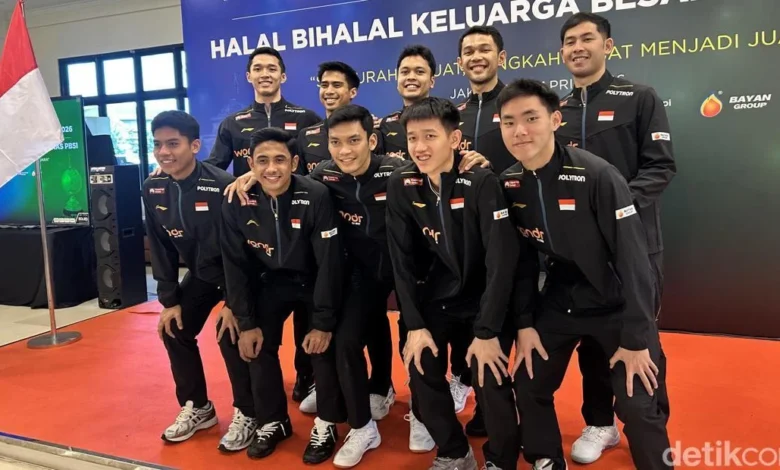
Jakarta – Badminton Association of Indonesia (PBSI) has officially named Fajar Alfian as the captain for the Indonesian men’s team at the prestigious Thomas Cup 2026. This marks Alfian’s second consecutive appointment to lead the squad, a role he humorously attributed to a narrow victory over fellow top player Jonatan Christie in a player-led voting process. Putri Kusuma Wardani will serve as the captain for the women’s Uber Cup team.
The announcement, made at the PBSI National Training Center in Cipayung, signifies a continued trust in Alfian’s leadership capabilities, especially given his extensive experience in international tournaments. The Thomas Cup, arguably the most coveted team championship in men’s badminton, demands strong leadership, unwavering team spirit, and the ability to perform under immense pressure. Alfian, a two-time All England champion, is expected to bring his seasoned presence and positive aura to the team as they aim for glory in 2026.
A Democratic Captaincy: The Voting Process
The selection of team captains for major international events like the Thomas and Uber Cups often involves a combination of PBSI’s strategic decisions and, in some cases, input from the athletes themselves. For the 2026 edition, PBSI opted for a more inclusive approach for the men’s team captaincy, initiating a voting process among the players.
Fajar Alfian recounted the behind-the-scenes dynamics of his appointment, revealing a closely contested election among the male athletes. "It was initially a voting process, a vote from a WhatsApp group. All of us athletes voted," Alfian stated. He further elaborated on the spirited competition for the leadership role, humorously adding, "And the voting was quite lively yesterday between me and Jonatan [Christie], but I won by one point."
When questioned about the specific individuals who cast their votes for him, Alfian, with a laugh, admitted his lack of detailed knowledge. "I don’t know who voted for me," he responded, chuckling. This lighthearted revelation underscores the camaraderie within the national team, where even leadership positions are subject to a degree of player consensus.
Second Term, Renewed Pride
This appointment as captain for the Thomas Cup 2026 is not Fajar Alfian’s first foray into leadership for the prestigious team event. He previously helmed the squad during an earlier edition, providing him with valuable experience in managing team dynamics and strategizing during high-stakes matches.
Despite having experienced the role before, Alfian expressed his enduring pride and gratitude for being entrusted with the captaincy once again. "Yes, being captain is certainly a source of pride, being trusted by the team, by my friends," he shared. "And also, this is not the first time I’ve been captain; it happened two years ago as well."
His confidence is bolstered by his extensive experience participating in the Thomas Cup. "Hopefully, this experience, my fifth time participating in the Thomas Cup, can further boost the spirit of my teammates and also spread a positive aura to the team," Alfian expressed, highlighting his commitment to fostering a winning mentality.
Thomas Cup: A Legacy of Excellence and Rivalry
The Thomas Cup, officially known as the Badminton World Federation (BWF) World Men’s Team Championship, is a biennial international badminton competition contested by the men’s national teams of the member associations of Badminton World Federation. Established in 1948, it is one of the most prestigious and sought-after team titles in the sport, often described as the "World Cup of Badminton." The tournament is renowned for its intense rivalries, dramatic upsets, and the collective display of national pride.
Indonesia has a storied history with the Thomas Cup, boasting a record 14 titles. This legacy places immense expectations on every Indonesian team that participates. The nation has consistently produced world-class talent, and the Thomas Cup represents their ultimate test of collective strength and strategic prowess. The competition format involves a knockout stage, with each tie comprising five matches: three singles and two doubles. This format emphasizes the importance of depth and consistency across the entire squad.
The recent editions of the Thomas Cup have seen fierce competition from traditional powerhouses like China, Denmark, and Malaysia, as well as emerging nations. The 2026 edition is anticipated to be no different, with teams vying for supremacy in what is expected to be a highly competitive field.
Uber Cup: The Women’s Equivalent of Elite Competition
Parallel to the Thomas Cup, the Uber Cup (officially the BWF World Women’s Team Championship) is the premier international team competition for women’s badminton. Inaugurated in 1956, it has also witnessed decades of thrilling encounters and the rise of dominant nations. China has been the most successful team in the Uber Cup’s history, securing numerous titles.
The appointment of Putri Kusuma Wardani as captain for the Indonesian women’s team signals PBSI’s confidence in her leadership and her potential to inspire the female contingent. Wardani, a rising star in Indonesian women’s singles, will be tasked with guiding her team through the challenges of the Uber Cup, aiming to replicate the success of their male counterparts.
Supporting Data: The Significance of Leadership in Team Events
The role of a captain in a team event like the Thomas or Uber Cup extends beyond mere on-court performance. A captain is often the bridge between the coaching staff and the players, responsible for maintaining morale, resolving minor conflicts, and fostering a cohesive unit.
Studies in sports psychology have consistently highlighted the impact of effective leadership on team performance. A captain’s ability to motivate, strategize, and provide a calming influence during tense moments can significantly influence the outcome of matches. In badminton, where individual matches can be decided by fine margins, a captain’s psychological impact can be a crucial differentiator.
Fajar Alfian’s previous experience as captain, coupled with his success at the highest level of the sport, positions him well to lead the Indonesian men’s team. His pragmatic approach, combined with his on-court prowess, can serve as a beacon for younger and less experienced players. His statement about spreading a "positive aura" reflects an understanding of this intangible, yet vital, aspect of team leadership.
Broader Implications for Indonesian Badminton
The early appointment of captains for the Thomas and Uber Cup 2026 provides a clear direction and leadership structure for the national teams. This allows for focused preparation and strategic planning well in advance of the tournament.
For Fajar Alfian, this second tenure as captain offers another opportunity to hone his leadership skills and contribute to Indonesia’s rich legacy in the Thomas Cup. His continued presence at the helm suggests a stable leadership for the men’s squad, which is crucial for building momentum and confidence.
Similarly, Putri Kusuma Wardani’s captaincy of the Uber Cup team signifies a commitment to nurturing the next generation of female leaders in Indonesian badminton. Her appointment, alongside Alfian’s, demonstrates PBSI’s dedication to strengthening both the men’s and women’s programs.
The success of the Thomas and Uber Cup teams has a ripple effect on the sport’s popularity and development within Indonesia. Strong performances inspire young athletes, attract sponsorships, and elevate the profile of badminton as a national sport. By appointing experienced and respected players like Alfian and Wardani, PBSI is strategically positioning the Indonesian teams for success on the international stage, aiming to add more chapters to the nation’s illustrious badminton history. The journey to the Thomas and Uber Cup 2026 has officially begun, with leadership firmly in place.