Jakarta, Indonesia – In a significant move aimed at stabilizing the domestic cooking oil market and ensuring equitable access to affordable staples, Indonesia’s Minister of Agriculture and Head of the National Food Agency (Bapanas), Andi Amran Sulaiman, has put forth a proposal to channel the entire distribution of Minyakita, the government-backed affordable cooking oil brand, exclusively through State-Owned Enterprises (BUMNs) such as Perum Bulog and ID Food. This strategic shift is being considered in response to persistent supply disruptions and price hikes that have plagued the market, pushing the price of Minyakita above its stipulated retail ceiling in several regions. The proposal, discussed in Jakarta on Wednesday, April 15, underscores the government’s intention to tighten control over the supply chain, minimize price volatility, and enhance accountability within the distribution network.
Background to Indonesia’s Cooking Oil Market Dynamics
Indonesia, as the world’s largest producer of palm oil, often finds itself in a paradoxical situation where its vast resources do not always translate into stable and affordable domestic supplies of cooking oil. Palm oil, a critical commodity for the Indonesian economy, serves both domestic consumption and lucrative export markets. The interplay between these two demands has historically led to periods of market instability, particularly when global prices surge. The domestic market, heavily reliant on palm oil derivatives for cooking oil, is sensitive to export policies, production quotas, and the efficiency of internal distribution.
The "Minyakita" brand was introduced in July 2022 as a direct government intervention to address the acute cooking oil crisis that gripped the nation in late 2021 and early 2022. This period saw unprecedented scarcity and soaring prices of cooking oil, leading to widespread public outcry and significant economic disruption. The crisis prompted the government to implement various measures, including a temporary export ban on palm oil and its derivatives, and the establishment of a Domestic Market Obligation (DMO) policy requiring palm oil producers to allocate a certain percentage of their production for domestic needs before exporting. Minyakita was designed to be an accessible, affordable option, packaged simply and sold at a mandated Highest Retail Price (HET) of Rp14,000 per liter (which was later adjusted to Rp15,700 per liter). Its introduction was a direct effort to stabilize prices and ensure supply, particularly for lower-income households and micro, small, and medium enterprises (MSMEs).
The Genesis of Minyakita and Current Distribution Challenges
Minyakita’s creation was a direct consequence of the government’s commitment to ensuring food security and price stability after the 2022 cooking oil crisis. This crisis was characterized by a severe shortage of cooking oil in traditional markets and supermarkets, with prices skyrocketing far beyond what many consumers could afford. The government’s multi-pronged response included the DMO policy for crude palm oil (CPO) and palm cooking oil, along with the imposition of a HET for various types of cooking oil, including bulk and packaged options. Minyakita was specifically launched to fill the gap for affordable, government-supervised packaged cooking oil.
Under the current framework, Minyakita’s distribution operates under a DMO scheme, which mandates that a minimum of 35 percent of its supply be channeled through BUMNs. This mixed distribution model was intended to leverage both state capacity and private sector efficiency. However, recent reports from various regions across Indonesia indicate that this model has not fully mitigated supply issues. Traders and consumers alike have reported difficulties in obtaining Minyakita, with some areas experiencing shortages for several months. These disruptions have inevitably led to prices creeping above the HET, eroding the very purpose of the affordable brand. Data from the Market and Basic Needs Monitoring System (SP2KP) corroborates these concerns, showing the national average price of Minyakita reaching Rp15,961 per liter, surpassing the HET of Rp15,700 per liter. This trend is not isolated, as prices for bulk and premium packaged cooking oils have also seen an upward trajectory.
Amran Sulaiman’s Proposal: A Shift Towards Full State Control
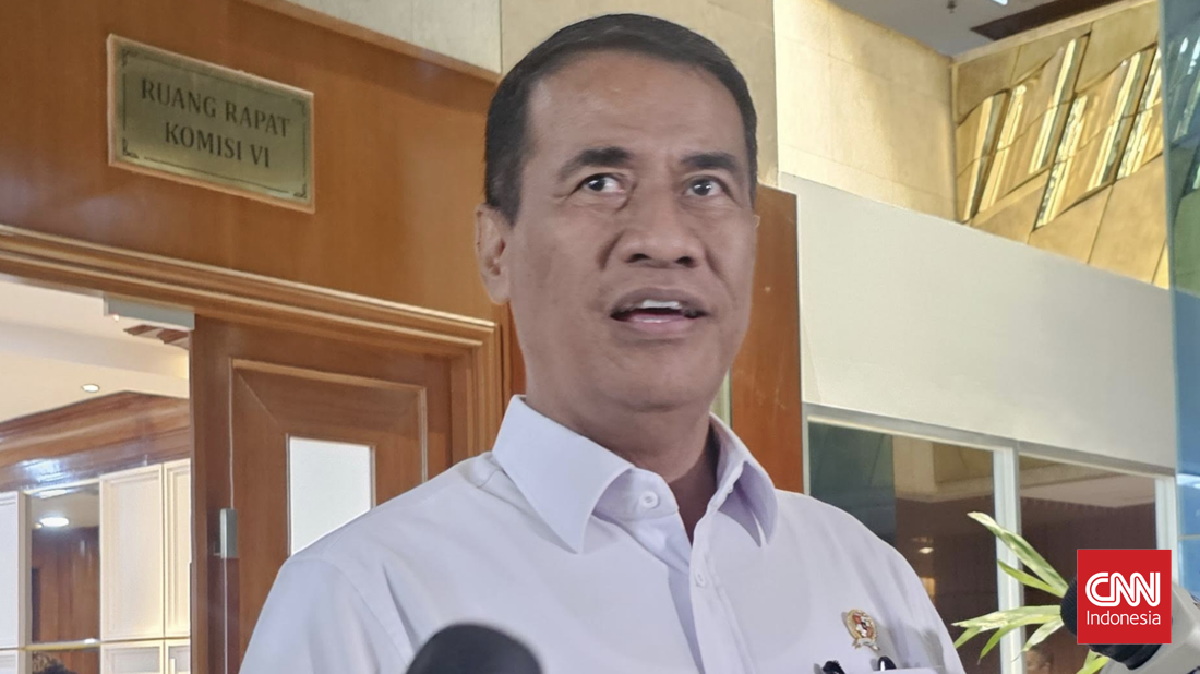
Minister Amran Sulaiman’s proposal signifies a potential departure from the current hybrid distribution model towards a more centralized, state-controlled system. "We ask that in the future, we have coordinated with the Minister of Trade (Budi Santoso), if possible, we increase [Minyakita distribution through BUMNs] to perhaps 65 percent to the government, BUMNs, or even 100 percent. I will observe the situation later," Amran stated from his office in South Jakarta. This statement indicates a clear intent to move beyond the current 35 percent BUMN allocation, signaling a stronger governmental hand in the commodity’s journey from producer to consumer.
The core rationale behind this proposed shift is to enhance control over the distribution process, making it easier to monitor supply chains and react swiftly to price fluctuations. Amran emphasized that increased BUMN involvement would make these entities directly responsible for price stability. "Yes, [Minyakita distributed through] BUMNs. So it’s easier to control. If there’s a price increase, then the BUMN is responsible," he explained. This approach aims to create a clear line of accountability, allowing the government to exert direct pressure on BUMNs if market prices deviate from the HET. Amran further illustrated this point, stating, "If it’s a BUMN, [the government can act], [I can say], ‘Hey, step aside. If you can’t stabilize prices.’" This firm stance suggests the government’s willingness to hold state-owned entities to a high standard regarding price and supply management.
Precedents and Strategic Rationale
The Minister drew a parallel to a similar policy implemented for frozen beef, where the government increased the import quota assigned to BUMNs over private entities. This measure was enacted to bolster government control over supply and pricing, particularly after observing that a predominantly private sector-led distribution system proved less effective in mitigating price volatility. The beef market, much like cooking oil, has experienced periods of significant price instability dueating to fluctuations in global supply and domestic demand, especially during major religious holidays. By entrusting BUMNs with a larger share of critical commodity distribution, the government aims to create a buffer against market speculation and ensure a more predictable supply, thereby preventing sharp price increases that disproportionately affect vulnerable populations.
The strategic thinking behind this move is rooted in the belief that BUMNs, operating under a public service mandate rather than solely profit motive, can prioritize national food security and price stability. While private distributors are crucial for market efficiency, their operational decisions are primarily driven by market forces and profit maximization. In times of scarcity or high demand, this can lead to higher prices, especially if regulatory oversight is insufficient. By empowering BUMNs like Bulog and ID Food, which have existing logistics networks and a mandate for public service, the government seeks to establish a more resilient and responsive distribution system capable of absorbing market shocks and ensuring that essential goods reach consumers at regulated prices.
Stakeholder Perspectives and Potential Implications
The proposal to expand BUMN control over Minyakita distribution elicits varied reactions from different stakeholders.
Government and Regulatory Bodies: Minister of Trade Budi Santoso has acknowledged the government’s consideration of increasing the BUMN quota beyond the current 35 percent minimum. This alignment between key ministries suggests a coordinated effort to address the persistent issues. The government views this as a necessary step to strengthen distribution and safeguard consumer interests against price volatility. The involvement of BUMNs like Perum Bulog, ID Food, and PT Agrinas Palma Nusantara in current Minyakita distribution highlights their existing infrastructure and capacity, though challenges such as limited supply and other operational assignments have hampered optimal performance.
Industry Players (Palm Oil Producers and Private Distributors): While Minister Amran affirmed that private businesses would still be involved in the supply chain, albeit with BUMNs as the primary distributors, the prospect of 100 percent BUMN distribution could raise concerns within the private sector. Private distributors might voice apprehension over potential market distortion, reduced competition, and the loss of business opportunities. They might argue that excessive state intervention could stifle innovation and efficiency, potentially leading to bureaucratic inefficiencies in the long run. However, Amran emphasized that the objective is price stability, and that private entrepreneurs would still play a role, particularly in the downstream segments, including supporting small businesses and UMKM. "Yes, it’s fine if [entrepreneurs] protest. The important thing is stable prices. It goes from entrepreneurs directly to BUMNs. All are entrepreneurs. In fact, we help small entrepreneurs," he reiterated, signaling that the move is not intended to exclude the private sector entirely but to redefine its role within a more controlled framework.
Consumers and Consumer Advocacy Groups: For consumers, especially those in lower-income brackets, the prospect of stable and affordable Minyakita is highly desirable. Consumer groups are likely to welcome any measure that ensures consistent supply at the HET. However, they might also be wary of potential monopolistic practices or inefficiencies if the BUMNs’ operational capacity is not robust enough to handle the expanded role. The current issues of scarcity and prices exceeding HET are precisely what consumers want to avoid, making effective implementation paramount.
Economic Analysts: Economists offer a mixed perspective. On one hand, increased state control can provide stability in essential commodity markets, prevent price gouging during crises, and ensure equitable access, which are crucial for social welfare and macroeconomic stability. On the other hand, a shift towards full BUMN distribution raises questions about market efficiency, potential for rent-seeking, and the long-term impact on the competitive landscape. Analysts might point to historical examples where excessive state intervention in commodity markets has sometimes led to inefficiencies, supply chain bottlenecks, and an inability to adapt quickly to market changes. The challenge for BUMNs would be to balance their public service mandate with operational efficiency, ensuring timely distribution without incurring excessive costs that could eventually burden the state budget or lead to higher prices indirectly.
The Path Forward and Implementation Challenges
The proposal to transition towards full BUMN control over Minyakita distribution is not without its complexities. Several critical factors will determine its success:
- BUMN Capacity and Logistics: Perum Bulog and ID Food, while possessing extensive networks, must demonstrate the logistical capacity to handle 100 percent of Minyakita’s distribution efficiently. This includes storage, transportation, and last-mile delivery to remote areas. Any bottlenecks in their system could exacerbate rather than solve the supply problems.
- Funding and Subsidies: Ensuring Minyakita remains affordable at the HET might require ongoing subsidies or financial support from the government, especially if global palm oil prices remain high. The financial sustainability of such a large-scale operation through BUMNs needs careful consideration.
- Coordination and Oversight: Effective coordination between Bapanas, the Ministry of Agriculture, the Ministry of Trade, and the various BUMNs involved will be crucial. Robust oversight mechanisms will be needed to prevent corruption, ensure transparency, and hold BUMNs accountable for their performance.
- Private Sector Integration: While BUMNs may become the primary distributors, the involvement of the private sector, particularly MSMEs, in the downstream segments (e.g., as retailers or sub-distributors) must be carefully managed to maintain market dynamism and support local economies.
- Market Monitoring and Adaptability: The government must maintain vigilance over both domestic and international palm oil markets to anticipate potential supply shocks and adjust policies accordingly. A rigid, centralized system might struggle to adapt quickly to unforeseen market dynamics.
The proposal by Minister Amran Sulaiman represents a significant policy debate within Indonesia’s food security strategy. It reflects a government keen on exerting greater control over essential commodity distribution to ensure affordability and stability for its citizens, particularly in the wake of past crises. While the intent is clear – to mitigate price volatility and ensure equitable access – the implementation will require careful planning, robust logistical execution, and a delicate balance between state intervention and market forces to achieve its desired outcomes without creating new challenges. The coming months will likely see intensive discussions and strategic planning as the government weighs the benefits and potential pitfalls of this ambitious shift in the distribution paradigm for Minyakita cooking oil.