Tracing the Revolutionary Footsteps of Tan Malaka in the Hidden Corridors of Kalibata and the Genesis of Madilog

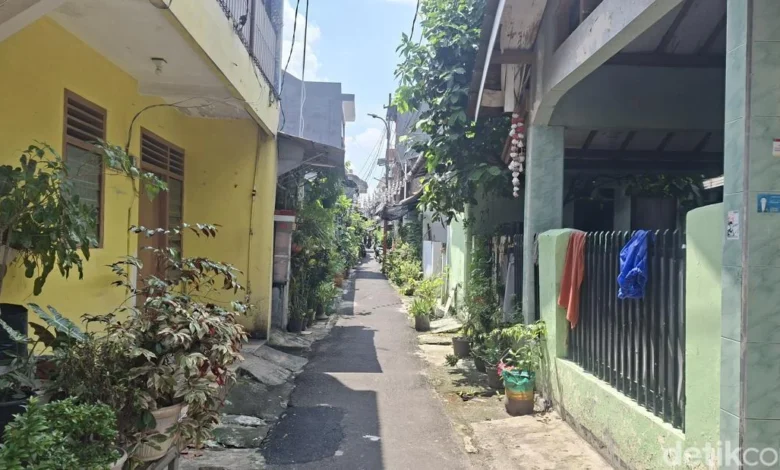
In the dense urban sprawl of South Jakarta, nestled behind the modern facade of Plaza Kalibata and the rhythmic clatter of the commuter rail line, lies the neighborhood of Rawajati, a district that holds one of the most significant secrets of Indonesia’s revolutionary history. Amidst the contemporary bustle of shopping malls, apartment complexes, and crowded residential alleys, a legendary figure of the Indonesian independence movement once lived in total anonymity, weaving a philosophical foundation for a new nation. Tan Malaka, often referred to as the "Father of the Republic of Indonesia," spent a critical period of the Japanese occupation hiding in this very neighborhood, where he authored his magnum opus, Madilog.
The legacy of Tan Malaka in Rawajati is not immediately apparent to the casual observer, yet it remains etched into the geography of the area through the naming of Gang Malaka I and Gang Malaka II. These narrow pathways serve as a silent testament to the months between July 15, 1942, and mid-1943, when a man known to the local community only as "Iljas Hussein" lived as a humble boarder in a rented room. This period of clandestine existence was not merely a flight from authority but a prolific intellectual retreat that produced a work intended to transform the Indonesian psyche from mystical traditionalism to scientific logic.
The Cloak of Iljas Hussein: A Life in the Shadows
Tan Malaka’s arrival in Jakarta in 1942 marked a return to his homeland after twenty years of wandering in exile across Asia and Europe. To evade the pervasive surveillance of the Japanese military police, known as the Kenpeitai, and the local police force, the Junsa, he adopted the persona of Iljas Hussein. This was not an isolated incident of deception; historians note that Tan Malaka utilized at least 23 different aliases throughout his life to navigate the treacherous waters of international espionage and colonial crackdowns.
In Rawajati, he lived the life of a commoner, blending seamlessly into the working-class fabric of the neighborhood. His neighbors saw him as a quiet, disciplined man, likely a clerk or a low-level employee, who kept to himself. This anonymity was essential. At the time, the Japanese occupation forces were ruthlessly suppressing any signs of intellectual or political resistance that did not align with their "Greater East Asia Co-Prosperity Sphere" propaganda. By living in a "kos-kosan" (boarding house), Tan Malaka was able to observe the plight of the Indonesian people under Japanese rule firsthand, which further fueled his drive to complete his theoretical framework for national liberation.
The Genesis of Madilog: 720 Hours of Intellectual Labor
The primary fruit of Tan Malaka’s time in Kalibata was the manuscript for Madilog, an acronym for Materialisme, Dialektika, dan Logika (Materialism, Dialectics, and Logic). The book was a monumental undertaking, written over approximately eight months of intense focus. Records and historical accounts suggest that he dedicated roughly 720 hours to the writing process, averaging about three hours of composition every day.

Madilog was envisioned as a guidebook for the Indonesian mind. Tan Malaka argued that for Indonesia to truly achieve and sustain independence, its people needed to abandon "logika mistika" (mystical logic)—a reliance on superstition, fate, and irrationality—and embrace a scientific worldview. He sought to synthesize Marxist dialectical materialism with the specific socio-cultural conditions of the Indonesian archipelago.
The writing process was fraught with danger. On at least two occasions, Japanese police officers conducted surprise inspections and searches of his small rented room. During these tense encounters, Tan Malaka had to rely on his wits and the unassuming nature of his surroundings to protect his work. Fortunately, the "Junsa" failed to recognize the revolutionary potential of the handwritten pages scattered in his room, and the manuscript of Madilog survived the threat of confiscation and destruction.
Chronology of the Rawajati Period
To understand the significance of this period, one must look at the timeline of Tan Malaka’s movements during the early 1940s:

- June 1942: Tan Malaka arrives in Jakarta from Sumatra, navigating a landscape newly occupied by Japanese forces following the Dutch surrender.
- July 15, 1942: He secures a modest room in the Rawajati area of Kalibata, adopting the name Iljas Hussein.
- Late 1942 – Early 1943: The peak period of writing for Madilog. He spends his mornings observing the social conditions in Jakarta and his afternoons or evenings writing by lamplight.
- Early 1943: Two separate police raids occur. Tan Malaka maintains his composure as Iljas Hussein, avoiding arrest.
- Mid-1943: Completion of the Madilog manuscript. Recognizing that his presence in Rawajati might eventually draw suspicion, he prepares to move to Bayah, Banten, where he would later work as a clerk at a coal mine to continue his revolutionary activities among the "romusha" (forced laborers).
Socio-Political Context: Jakarta Under the Rising Sun
The backdrop of Tan Malaka’s stay in Kalibata was one of extreme hardship for the local population. The Japanese occupation had replaced Dutch colonial rule with an even more militarized and extractive system. Food shortages were common, and the "romusha" system was beginning to conscript thousands of Indonesian men into grueling labor projects.
For Tan Malaka, Rawajati provided a strategic vantage point. It was close enough to the center of Jakarta to stay informed about political developments involving other nationalist leaders like Sukarno and Hatta, yet far enough on the periphery to remain "invisible." His choice of Kalibata—then a relatively rural and swampy outskirts of the city compared to the developed center—showed his mastery of "underground" living. This period highlights the dichotomy of the Indonesian struggle: while leaders like Sukarno chose to cooperate with the Japanese to gain political leverage, Tan Malaka remained in the shadows, building the intellectual foundations for a "100% independence" (Merdeka 100%) that would accept no compromises with any foreign power.
Analytical Implications: The Legacy of a "Hidden" History
The fact that the site of Tan Malaka’s intellectual labor is now marked by a "Gang" (alleyway) rather than a grand monument is emblematic of his complicated relationship with the Indonesian state. For decades, particularly during the New Order era under President Suharto, Tan Malaka’s contributions were marginalized or suppressed due to his Marxist leanings. However, his status as a National Hero (Pahlawan Nasional), granted by President Sukarno in 1963, was never officially revoked.
In recent years, there has been a resurgence of interest in Tan Malaka among Indonesian youth and historians. The alleys of Rawajati have become a site of pilgrimage for those seeking to understand the "forgotten" history of the revolution. Analysts argue that Tan Malaka’s emphasis on logic and scientific thinking remains highly relevant in contemporary Indonesia as the nation grapples with modern challenges like disinformation and religious radicalism.
The survival of the Madilog manuscript is regarded by many as a miracle of the revolution. Had those Japanese officers been more thorough, the most comprehensive philosophical work produced by an Indonesian revolutionary might have been lost to history. Instead, it was eventually published in 1946, serving as a beacon for activists and intellectuals during the armed struggle against the returning Dutch forces.
Modern-Day Rawajati and the Preservation of Memory
Today, the area behind Plaza Kalibata is a maze of high-density housing. Most residents of Gang Malaka I and II are aware of the name, but few know the harrowing details of the man who once walked those same paths. Local historians and community activists have occasionally proposed the establishment of a small museum or a commemorative plaque at the site of his former boarding house, though the exact building has undergone numerous renovations and changes in ownership over the last eight decades.
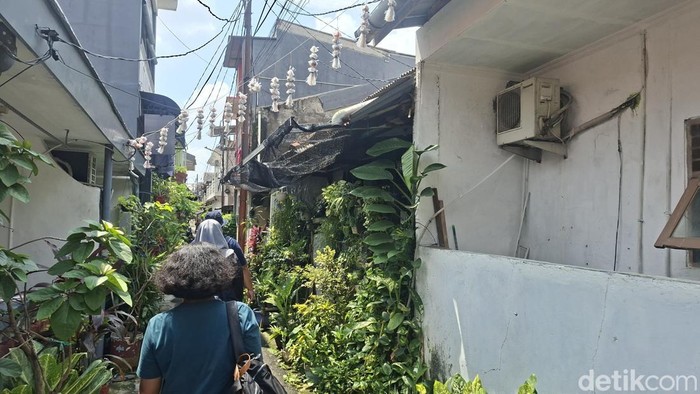
The naming of the streets serves as a "toponymic" memorial. In urban planning, naming a street after a historical figure is a way of anchoring the past to the present. For Tan Malaka, a man who spent his life without a permanent home, having his name attached to a humble alley in a working-class neighborhood is perhaps more fitting than a marble statue in a government square. It reflects his lifelong commitment to the "proletariat" and his ability to find a home among the common people.
Conclusion: The Silent Guardian of Kalibata
The story of Tan Malaka in Kalibata is a reminder that history is often written in the most unassuming places. Between the years 1942 and 1943, the future of Indonesian thought was being forged in a small, humid room in Rawajati. The 720 hours Tan Malaka spent writing Madilog were hours of defiance against both the immediate Japanese oppressors and the broader "magical" thinking that he believed held his nation back.
As Jakarta continues to modernize, with skyscrapers and transit hubs rising around the Kalibata area, the narrow alleys of Gang Malaka remain a sanctuary of historical significance. They remind us that the struggle for independence was not just fought with weapons on the battlefield, but with pens and logic in the shadows. Tan Malaka, under the guise of Iljas Hussein, proved that ideas are the most dangerous weapon a revolutionary can possess—and that even in the heart of an occupied city, the pursuit of truth and liberty can never be fully silenced.