Lion Air Cabin Crew Express Resilience and Commitment as Global Hajj Operations Commence Amidst Rising Middle East Geopolitical Tensions

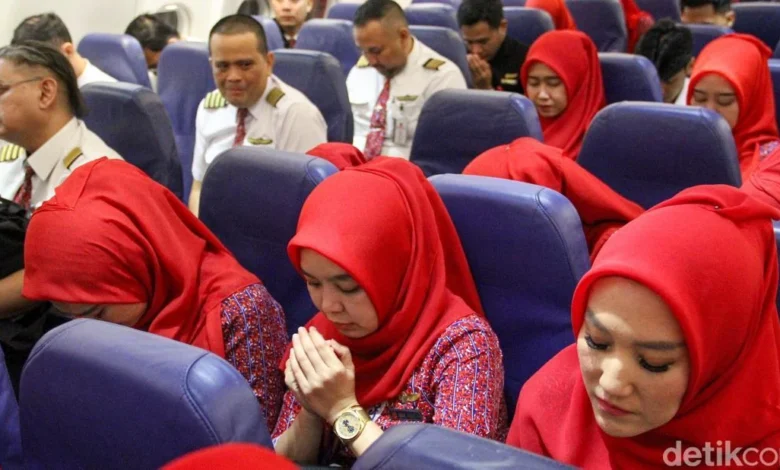
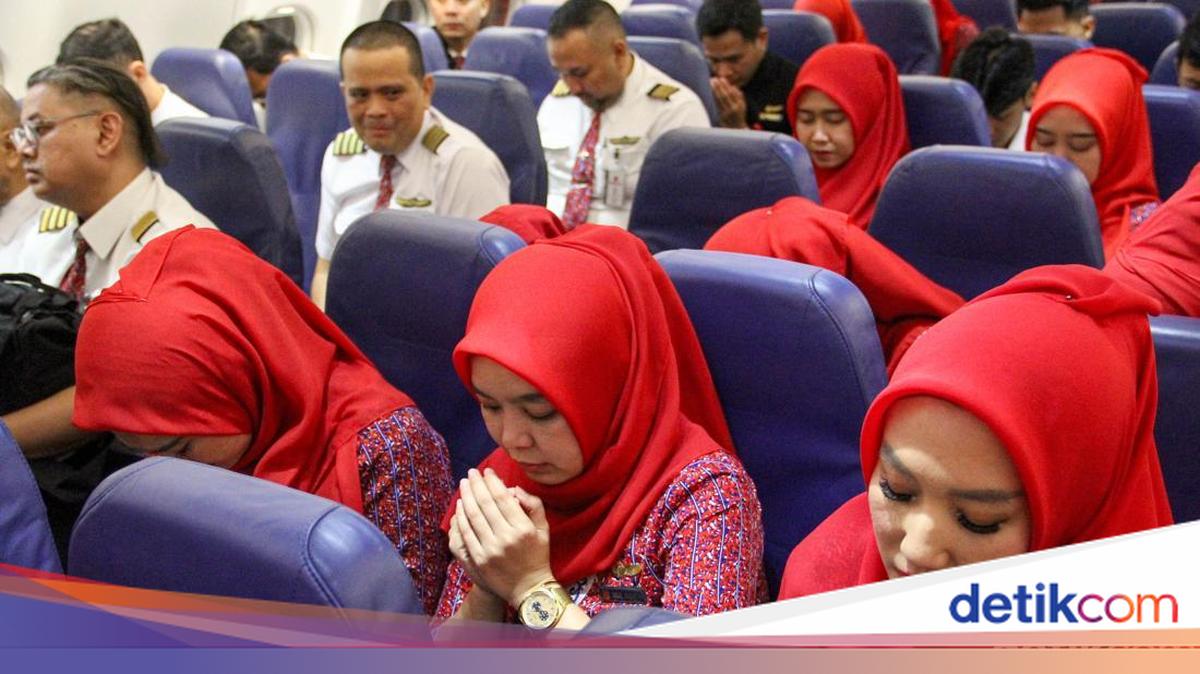
The deployment of Lion Air cabin crew for the 2026 global Hajj season comes at a pivotal and complex moment for the international aviation industry, as escalating geopolitical tensions in the Middle East cast a shadow over one of the world’s most significant annual migrations. During a formal send-off ceremony held at Soekarno-Hatta International Airport in Tangerang on Tuesday, April 14, 2026, the atmosphere was a blend of professional solemnity and spiritual dedication. As hundreds of flight attendants prepared to embark on their mission to facilitate the pilgrimage to the holy cities of Mecca and Medina, the conversation was dominated not only by the logistics of the journey but also by the precarious security situation currently unfolding in the Gulf region.
The Middle East, a central hub for global air transit, has recently seen a surge in volatility, with regional conflicts impacting flight corridors, increasing insurance premiums for carriers, and requiring constant vigilance from flight operations centers. For the crew members of Lion Air, an airline that has become a mainstay in both domestic and international Hajj transportation, the 2026 season represents a test of both operational safety and personal fortitude.
The Human Element: Balancing Fear and Professionalism
Among the crew members departing for the mission was Akbar Maulana, a flight attendant who shared his reflections on the challenges ahead. Speaking to members of the press, Maulana acknowledged that the current climate in the Middle East is a source of concern for many in the industry. However, he emphasized that for the crew, the mission transcends the standard boundaries of a job description.
"Naturally, as creations of God, we always pray that we are all granted protection and smoothness in our flights," Maulana stated. He did not shy away from the reality of the situation, admitting that a sense of apprehension is inevitable when flying into or near regions of active conflict. Yet, he noted that this fear is mitigated by a deep sense of professional duty and the belief that the work they are doing is a form of "ibadah" or worship.
Maulana’s sentiments were echoed by his colleague, Mevtorus Malia, who highlighted the psychological preparation required for such a high-stakes deployment. "Our mental state has been significantly strengthened," Malia explained. "We understand that our purpose here is not just to work, but to serve. The spiritual rewards of assisting pilgrims on their journey are immense." This perspective is common among Indonesian flight crews involved in Hajj operations, where the cultural and religious significance of the pilgrimage often provides a framework for resilience in the face of operational risks.
Strategic Risk Mapping and Corporate Safeguards
Lion Air management has reportedly taken extensive measures to ensure that the safety of its crew and passengers remains the paramount priority. According to Maulana, the airline has conducted comprehensive risk mapping for all flight paths involved in the 2026 Hajj operation. This involves real-time monitoring of geopolitical developments, close coordination with international aviation authorities, and the establishment of contingency protocols for various scenarios.
The airline’s strategy includes the possibility of flight delays or rerouting should a specific airspace be deemed unsafe. "We follow the directives from the company strictly," Maulana added. "If conditions in a particular country or region do not allow for a safe landing or transit, the company will inform us immediately, and the flight may be postponed or diverted. We trust that the company has meticulously planned for our safety."
This proactive approach is essential in an era where "Notice to Airmen" (NOTAM) alerts can change by the hour. Aviation analysts suggest that carriers operating in the Middle East must now account for a wider variety of threats, ranging from GPS spoofing and electronic interference to the physical dangers posed by missile activity or closed airspaces.
The Scale of Global Hajj Operations
The Hajj pilgrimage is a massive logistical undertaking that requires the coordination of dozens of airlines, thousands of flights, and millions of passengers. For Lion Air, "Global Hajj" refers to its participation in the international "wet-lease" market, where it provides aircraft, crew, maintenance, and insurance (ACMI) to other nations or organizations to help transport their pilgrims. This means Lion Air crews are not only flying Indonesian citizens but are often stationed abroad to serve pilgrims from Africa, South Asia, and other parts of the Middle East.
In 2026, the global Hajj quota returned to full capacity following years of incremental adjustments. With over two million pilgrims expected to converge on Saudi Arabia, the demand for wide-body aircraft and experienced crew is at an all-time high. Lion Air has historically deployed its fleet of Airbus A330-300s and A330-900neos for these long-haul missions, aircraft known for their efficiency and high seating capacity.
Key Data Points for the 2026 Hajj Season:
- Total Estimated Pilgrims: 2.5 million globally.
- Indonesia’s Quota: Approximately 221,000 pilgrims.
- Aviation Contribution: Over 500 dedicated charter flights from Indonesia alone.
- Fuel Considerations: Jet fuel prices remain volatile due to Middle East tensions, increasing operational costs by an estimated 12-15% compared to the previous year.
- Insurance: War risk insurance premiums for flights over certain Middle Eastern zones have seen a marked increase in early 2026.
Chronology of Preparation and Deployment
The deployment of the Lion Air crew is the culmination of months of rigorous preparation. A timeline of the 2026 Hajj aviation cycle provides context for the current operations:
- October 2025: Initial coordination meetings between the Indonesian Ministry of Religious Affairs and airline partners to determine fleet availability.
- December 2025: Lion Air begins specialized training for Hajj cabin crew, focusing on geriatric care (serving elderly pilgrims), emergency procedures in high-density cabins, and cultural sensitivity.
- February 2026: Escalation of regional tensions in the Gulf prompts a revision of flight paths. Airlines begin coordinating with the General Authority of Civil Aviation (GACA) in Saudi Arabia for alternative arrival corridors.
- March 2026: Final safety audits and "proving flights" are conducted to ensure all wide-body aircraft meet the stringent requirements for the 2026 season.
- April 14, 2026: Official send-off ceremony at Soekarno-Hatta International Airport for the first wave of cabin crew assigned to global stations.
Official Responses and Industry Sentiment
The Indonesian government, through the Ministry of Transportation and the Ministry of Religious Affairs, has expressed its support for the airlines involved in this year’s mission. Officials have emphasized that while the geopolitical situation is concerning, the diplomatic relationship between Indonesia and Saudi Arabia remains a cornerstone of safety.
"The safety of our pilgrims and the crews who serve them is our highest priority," a spokesperson for the Ministry of Transportation noted in a recent briefing. "We are in constant communication with international aviation bodies like ICAO and IATA to ensure that Indonesian-registered aircraft are operating under the safest possible conditions."
Industry analysts point out that Lion Air’s role in the global Hajj market is a significant revenue driver, but it also carries reputational risks. "Flying during a period of regional instability requires a sophisticated level of intelligence gathering and operational flexibility," says aviation consultant Aris Darmawan. "Lion Air’s ability to maintain these operations speaks to their growing maturity as a global player, but the human cost of stress on the crew cannot be overlooked."
Broader Impact and Geopolitical Implications
The continued operation of Hajj flights amidst regional conflict is a testament to the resilience of the aviation sector and the unique status of the Hajj pilgrimage. For Saudi Arabia, maintaining a safe and accessible environment for pilgrims is a matter of national prestige and a key component of its "Vision 2030" plan to expand tourism and religious travel.
However, the "conflict premium" is real. Airlines are forced to carry more fuel to allow for longer flight paths that circumvent restricted airspaces, which in turn reduces the number of passengers or amount of cargo they can carry. For the cabin crew, the impact is more personal. Extended layovers in foreign stations, the psychological toll of operating near conflict zones, and the physical demands of serving elderly pilgrims create a high-pressure environment.
Despite these challenges, the narrative from the crew remains one of steadfastness. The 2026 Hajj season will likely be remembered as one of the most difficult in recent history due to the external political climate, but for Maulana, Malia, and their colleagues at Lion Air, the mission remains clear. They are the frontline ambassadors of a journey that, for millions, represents the pinnacle of their spiritual life.
As the first group of crews boarded their flights on Tuesday, the roar of the engines served as a reminder of the industry’s persistence. In the face of uncertainty, the commitment to professional excellence and spiritual service continues to drive the aviation workers who bridge the gap between Indonesia and the holy lands, navigating the turbulent skies of the Middle East with a mixture of caution, prayer, and unwavering duty.