IHSG Surges Past 7,600 Mark Amidst Robust Daily Trading, Contrasting with Prolonged Quarterly and Year-to-Date Declines

Jakarta – The Jakarta Composite Index (IHSG), Indonesia’s benchmark stock market index, demonstrated a strong performance in early trading on Thursday, April 16, 2026, pushing firmly into the green zone. The index was observed strengthening significantly, crossing the 7,600 psychological level, signaling a notable daily rebound for investors. This upward movement provided a fresh dose of optimism following a period marked by more substantial longer-term contractions.
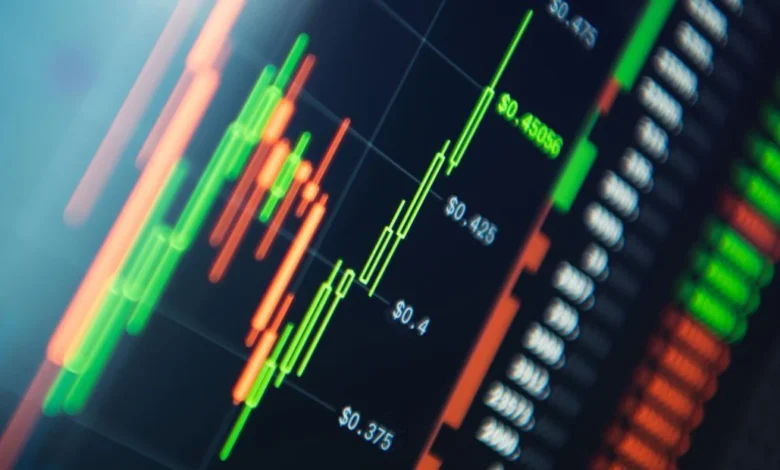
According to data compiled by RTI, as of 09:10 AM Western Indonesia Time (WIB) on the aforementioned date, the IHSG was trading at 7,680.00, registering an impressive gain of 56 points, or approximately 0.74%. The day’s trading commenced with the index opening slightly lower at 7,663.00, indicating an immediate surge in buying interest shortly after the market bell. This early momentum propelled the index to an intraday high of 7,705.00, while its lowest point for the session remained at the opening level of 7,663.00. The active trading session saw a robust transaction value reaching Rp 1.91 trillion, involving the exchange of 4.79 billion shares across 292,662 individual transactions, underscoring significant market participation and liquidity.
Daily Market Dynamics and Breadth
The morning’s trading activity painted a broadly positive picture across the market. Out of the listed companies, a substantial 367 stocks recorded gains, indicating widespread positive sentiment. Conversely, 159 stocks experienced a decline, while 186 stocks remained stagnant, reflecting a mixed but predominantly upward trend in market breadth. This robust performance on the day stands in contrast to the index’s more challenging trajectory over recent months, prompting market observers to closely scrutinize the underlying drivers of both short-term strength and long-term weakness.
The daily surge in the IHSG on April 16, 2026, can be attributed to a confluence of factors that typically influence investor sentiment in an emerging market like Indonesia. Potential drivers for such an intraday rally might include positive overnight cues from global markets, a technical rebound after previous sessions of consolidation, or specific sector-led buying. For instance, strong performance in key sectors such as banking, which often acts as a bellwether for the broader economy, or commodity-related stocks, given Indonesia’s significant role as a producer of coal, palm oil, and nickel, could have provided the necessary impetus. Furthermore, any optimistic news regarding domestic economic policies, corporate earnings outlooks, or even a stabilization in the rupiah exchange rate could have contributed to the renewed buying interest observed in the morning session.
Broader Context: Navigating Short-Term Gains Amidst Longer-Term Headwinds
While the daily performance was certainly encouraging, it is crucial to place it within the context of the IHSG’s performance over more extended periods. The index has shown commendable resilience in the short-to-medium term, registering a significant 5.12% gain on a weekly basis and a solid 3.95% increase over the past month. These figures suggest that the market has experienced a period of recovery and consolidation following earlier pressures, potentially driven by improving investor confidence, an easing of certain external pressures, or positive corporate developments.
However, a deeper dive into the index’s longer-term trajectory reveals a more challenging landscape. The IHSG has experienced considerable headwinds over the past few quarters. It recorded a substantial decline of 12.19% over the last three months and a 5.44% decrease over the past six months. Even more notably, on a year-to-date basis for 2026, the IHSG was still down by 11.16%. This prolonged period of weakness highlights the persistent challenges and uncertainties that have shaped the market environment for Indonesian equities throughout the current year.
Chronology of Market Performance: A Look Back at Key Milestones (Inferred)
To fully understand the current state of the IHSG, it’s essential to consider the factors that likely contributed to its quarterly, semi-annual, and year-to-date declines before the recent daily and weekly recovery.
- Late 2025 – Early 2026: The market likely faced initial pressure from global economic slowdown concerns, particularly from major trading partners. Persistent inflation in developed economies and the resulting hawkish stance from central banks, notably the U.S. Federal Reserve, could have led to capital outflows from emerging markets like Indonesia. Higher interest rates globally make riskier emerging market assets less attractive compared to safer, higher-yielding assets in developed markets.
- Q1 2026: Geopolitical tensions, such as ongoing conflicts in Eastern Europe or heightened uncertainties in the Middle East, could have exacerbated market volatility. Fluctuations in global commodity prices, while sometimes beneficial for Indonesia’s exports, can also create uncertainty, especially if demand outlooks are weak. Domestically, potential concerns over the rupiah’s stability or the impact of inflation on consumer purchasing power could have weighed on corporate earnings expectations, particularly for consumer goods sectors.
- March – Early April 2026: A period of slight stabilization or even a tentative rebound might have begun, perhaps due to expectations of an end to global monetary tightening cycles, or signs of resilience in Indonesia’s domestic economy. This nascent recovery would then have paved the way for the 5.12% weekly and 3.95% monthly gains observed leading up to April 16, 2026. The daily surge on April 16 could be seen as a continuation of this short-term positive momentum, possibly amplified by specific catalysts.
Key Factors Influencing the Indonesian Stock Market (Background Context)
The Indonesian stock market is a dynamic entity, influenced by a complex interplay of domestic and international factors. Understanding these drivers is crucial for interpreting its movements.
- Domestic Economic Fundamentals: Indonesia’s robust domestic consumption, driven by its large population and growing middle class, forms a strong economic backbone. However, factors like inflation, which impacts purchasing power, and Bank Indonesia’s (BI) monetary policy decisions (interest rates) significantly influence investment sentiment. Higher interest rates typically increase borrowing costs for businesses and dampen consumer spending, potentially affecting corporate profitability. Conversely, stable economic growth, often measured by GDP, provides a favorable environment for corporate expansion and earnings.
- Commodity Prices: As a major exporter of thermal coal, palm oil, nickel, and other commodities, Indonesia’s economy and stock market are highly sensitive to global commodity price fluctuations. A surge in prices can boost export revenues, strengthen the rupiah, and improve the balance of payments, positively impacting commodity-linked stocks. Conversely, a downturn can have the opposite effect.
- Government Policies and Political Stability: Policies related to infrastructure development, investment incentives, tax reforms, and regulatory frameworks play a critical role in attracting both domestic and foreign investment. Political stability and predictable policy environments are paramount for maintaining investor confidence.
- Corporate Earnings and Sectoral Performance: The performance of major listed companies, particularly those in systemically important sectors like banking, telecommunications, energy, and consumer staples, heavily influences the overall index. Strong earnings reports and positive outlooks from these corporate giants can uplift the broader market.
- Global Economic Environment: The health of the global economy, particularly that of major trading partners like China, the United States, and the European Union, directly impacts demand for Indonesian exports. Global interest rate movements, especially from the U.S. Federal Reserve, dictate the flow of international capital, with emerging markets often experiencing capital outflows during periods of global monetary tightening. Geopolitical events, trade wars, and global supply chain disruptions also contribute to market volatility.
Market Analyst Perspectives and Potential Official Responses (Logically Inferred)
Market analysts and economists are likely offering varied perspectives on the IHSG’s performance. Regarding the daily and weekly gains, analysts might attribute the positive momentum to a "technical rebound following an oversold condition," "renewed confidence in Indonesia’s economic resilience," or "selective buying in undervalued blue-chip stocks." Some might point to the possibility of improving sentiment regarding global inflation, suggesting that peak interest rates might be nearing, which would be positive for emerging markets.
However, the longer-term declines would undoubtedly be a subject of concern. Analysts would likely cite "persistent global economic uncertainties," "the impact of higher-for-longer interest rates on corporate debt burdens," and "potential for slower global demand affecting Indonesia’s export-oriented sectors" as primary reasons for the year-to-date weakness. They might also highlight the "need for stronger domestic catalysts" to sustain a more enduring rally. Concerns over the valuation of certain sectors or the impact of specific domestic policies could also be raised.
From an official standpoint, representatives from the Financial Services Authority (OJK), Bank Indonesia (BI), or the Ministry of Finance would likely emphasize the "fundamental strength of the Indonesian economy." They might issue statements reaffirming their commitment to "maintaining financial system stability," "managing inflation," and "fostering a conducive investment climate." Officials would likely underscore the government’s efforts in "implementing structural reforms" and "attracting foreign direct investment" to cushion against global headwinds and support long-term economic growth. They would also emphasize close monitoring of global developments and the readiness to deploy policy instruments to ensure market stability.
Implications and Future Outlook
The IHSG’s performance on April 16, 2026, serves as a microcosm of the dynamic and often contrasting forces at play in financial markets. For investors, the daily surge might present opportunities for short-term gains, while the longer-term declines underscore the importance of a strategic, long-term investment horizon and careful risk management. Diversification across sectors and asset classes becomes even more critical in such volatile environments.
The sustained weakness over several months indicates that while Indonesia’s fundamentals remain robust, the market is not immune to global pressures. The ability of the IHSG to sustain its recent short-term gains and reverse its longer-term downtrend will depend on several key factors:
- Global Economic Stability: A moderation of global inflation and a clearer path for major central bank policies would significantly reduce external pressures.
- Commodity Price Trends: Stable or favorable commodity prices would continue to support Indonesia’s export sector.
- Domestic Policy Effectiveness: The government’s ability to implement effective economic policies that foster growth, control inflation, and attract investment will be crucial.
- Corporate Earnings Resilience: Strong and consistent corporate earnings reports will be vital to underpin investor confidence.
Looking ahead, market participants will closely watch upcoming economic data releases, including inflation figures, GDP growth rates, and Bank Indonesia’s monetary policy decisions. The trajectory of global commodity prices and geopolitical developments will also remain significant external factors influencing the IHSG’s path forward. The market’s ability to build on its recent daily and weekly momentum will be a key indicator of whether the tide is truly turning for Indonesian equities in 2026. The journey for the IHSG, much like the global economy, remains one of cautious optimism amidst persistent challenges.