Respons Federasi Prancis soal Tantangan dari Timnas Indonesia, Ada Syarat Berat Jika Ingin Duel Lawan Mbappe Cs

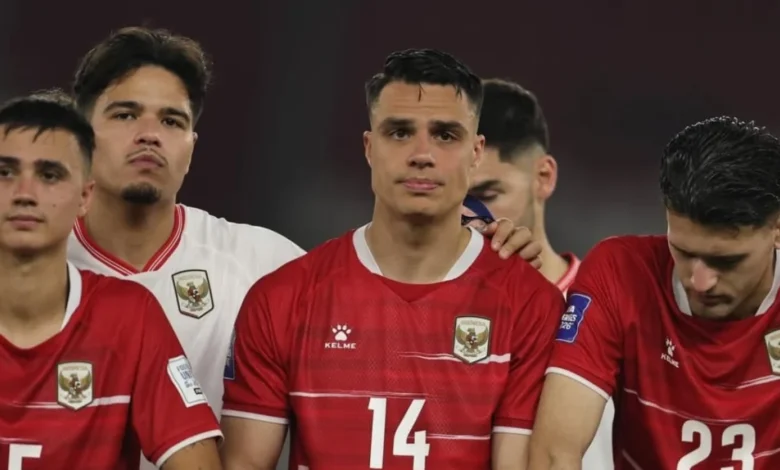
Paris, France – April 16, 2026 – 12:00 WIB – The Fédération Française de Football (FFF) has formally acknowledged the expressed interest from the Football Association of Indonesia (PSSI) regarding a potential friendly match between the senior national teams of France and Indonesia during the FIFA Matchday window in June 2026. While not outright dismissing the prospect, the French football governing body, through its representative Ludovic Debru, underscored the significant logistical complexities and the notoriously congested international calendar as primary obstacles, suggesting that cooperation at the youth level might present a more immediate and feasible pathway.
The revelation follows an ambitious declaration by PSSI Chairman Erick Thohir, who has consistently articulated a vision for elevating the competitive stature of the Indonesian national team, affectionately known as the "Garuda" squad. Thohir’s strategic imperative involves exposing Indonesian players to the highest echelons of global football, a philosophy successfully implemented with the high-profile friendly against reigning World Champions Argentina in June 2023. Building on that landmark achievement, France, a two-time World Cup winner and a perennial powerhouse in international football, has emerged as the next aspirational opponent on PSSI’s meticulously curated list of elite targets.
PSSI’s Strategic Imperative: Elevating Indonesian Football on the Global Stage
Under the leadership of Erick Thohir, PSSI has embarked on an aggressive program aimed at fundamentally transforming Indonesian football, from grassroots development to the senior national team’s performance. A cornerstone of this strategy is the deliberate pursuit of fixtures against top-ranked nations. The rationale is multi-faceted:
- Competitive Exposure: Playing against world-class opponents provides invaluable experience for Indonesian players, exposing them to higher tactical intelligence, technical prowess, and the intense physical demands of elite international football. This exposure is crucial for bridging the gap between regional and global standards.
- Performance Benchmarking: Such matches serve as critical benchmarks, allowing the coaching staff to accurately assess the team’s strengths and weaknesses against the very best, informing future training methodologies and player selections.
- Fan Engagement and Inspiration: High-profile friendlies generate immense public interest and enthusiasm, uniting the nation behind its team and inspiring a new generation of aspiring footballers. The sheer spectacle of hosting a global giant like France, featuring stars such as Kylian Mbappé, Antoine Griezmann, and Aurélien Tchouaméni, would undoubtedly ignite unprecedented passion across the archipelago.
- International Profile and Branding: Successfully hosting and competing against a team like France significantly boosts Indonesia’s standing within the global football community, enhancing its profile as a serious footballing nation capable of organizing major international events. This could pave the way for future hosting bids or increased investment.
- Commercial and Economic Benefits: Such matches attract substantial sponsorship, broadcasting rights, and tourism revenue, providing significant financial impetus for PSSI’s ongoing development projects. The Argentina friendly in 2023 demonstrated the immense commercial viability and public appetite for such events in Indonesia.
The proposal for a June 2026 friendly comes at a critical juncture for Indonesian football. The national team has shown significant progress, climbing steadily in the FIFA World Rankings and achieving notable successes in regional tournaments and World Cup qualifiers. PSSI believes that regular engagement with footballing giants is not merely an exhibition but an indispensable component of its long-term strategy to qualify for major international tournaments like the FIFA World Cup.
The French Perspective: A Calendar Fraught with Commitments
While PSSI’s ambition is commendable, the FFF’s response, articulated by Ludovic Debru, paints a realistic picture of the challenges involved. Debru’s statement, "This is a common question. The international calendar is very regular and not easy to organize," succinctly captures the core issue. For a nation like France, consistently ranked among the top five globally by FIFA, the international football calendar is a meticulously planned and heavily obligated schedule, leaving very little room for impromptu fixtures.
The French national team, often referred to as ‘Les Bleus,’ participates in a relentless cycle of major tournaments and qualification campaigns:
- FIFA World Cup: As a two-time winner (1998, 2018) and recent finalist (2022), France is always a strong contender, meaning deep runs in the tournament itself and rigorous qualification campaigns.
- UEFA European Championship (Euros): Another major continental competition, with qualification matches and the tournament proper every four years.
- UEFA Nations League: A relatively new competition that has added another layer of competitive fixtures, often replacing traditional friendlies. France, being in League A, faces other European giants regularly.
- FIFA World Cup Qualifiers: A demanding series of matches spanning multiple international windows over two years.
- European Championship Qualifiers: Similar to World Cup qualifiers, these require significant commitment.
- Mandatory FIFA Matchdays: Even outside of specific tournament qualifiers, FIFA designates specific windows for international friendlies. However, for top teams, these slots are often used for high-profile matches against other strong European or South American nations, or for preparatory camps before major tournaments.
Given this packed schedule, securing a slot for a friendly against a non-European or non-South American opponent requires extensive planning, negotiation, and often, compromises from all parties. Factors such as player availability, travel logistics across continents, potential for player fatigue or injury, and the commercial value of the match for both federations are all meticulously weighed.
Logistical and Commercial Hurdles for a Senior Match
Beyond the sheer volume of games, several other logistical and commercial considerations make such a friendly a complex undertaking:
- Player Release: European clubs are obligated to release players for FIFA Matchdays, but they often have concerns about long-distance travel and potential injuries, especially for key players like those in the French squad who are vital to their club’s success in domestic leagues and UEFA club competitions.
- Travel and Accommodation: Transporting an entire squad, coaching staff, and support personnel from Europe to Southeast Asia, ensuring optimal recovery and training facilities, presents a significant logistical challenge and cost.
- Commercial Agreements: Top national teams like France have extensive commercial partnerships and broadcasting rights agreements that dictate where and against whom they play. Any friendly match must align with these existing obligations and generate sufficient commercial value. The financial guarantee required to bring a team of France’s caliber to Indonesia would be substantial, likely running into several million Euros.
- Security and Venue: Ensuring world-class security and a suitable stadium infrastructure capable of hosting such a high-profile event are paramount. While Indonesia has experience, the scale of attention and the presence of global superstars would necessitate meticulous planning.
- Strategic Timing: The June 2026 window is particularly sensitive. Depending on their qualification status for the 2026 FIFA World Cup (which would have concluded its main qualification rounds by then) or preparations for other tournaments, France might prioritize specific types of opponents or training camps.
A Realistic Alternative: Cultivating Talent Through Youth-Level Cooperation
Intriguingly, the FFF representative, Ludovic Debru, did not end the conversation with a flat refusal but instead offered a constructive alternative: initiating cooperation at the youth level. "One of the best ways is through youth teams. They need to play and compete more," Debru stated. He elaborated that competitive experience at junior levels, such as U-17 or U-20, is a crucial foundation for building future national team strength, a philosophy that has underpinned France’s own prodigious talent development system. "Competition is not everything, but we learn a lot from it. There are times when they need to compete," he added, emphasizing the developmental benefits.
This suggestion is highly pertinent for both federations:
- For Indonesia: Engaging French youth teams (e.g., U-17, U-20) would provide Indonesian young talents with invaluable exposure to European footballing philosophies, tactical approaches, and individual technical prowess at a formative stage. This aligns perfectly with PSSI’s long-term strategy for player development, which includes sending young players to train abroad and participating in international youth tournaments. Matches against elite European youth teams could significantly accelerate the development curve of Indonesia’s next generation of stars.
- For France: While perhaps not as high-profile commercially, such youth exchanges could offer French young players exposure to different playing styles, cultural experiences, and potentially scouting opportunities in an emerging football market. It also aligns with the FFF’s broader commitment to fostering global football development.
- Reduced Logistical Burden: Youth team matches typically involve fewer logistical complexities, lower financial guarantees, and less disruption to senior club commitments, making them much more feasible to arrange.
- Building Relationships: Starting with youth-level cooperation can lay the groundwork for a stronger, long-term relationship between the two federations, potentially opening doors for senior team engagements in the future when circumstances are more favorable.
France has a well-documented history of producing world-class talent through its national academies and youth development programs, such as the Clairefontaine national football institute. Their emphasis on competitive play at young ages, coupled with a focus on technical skill and tactical understanding, has consistently fed a pipeline of exceptional players into their senior national team and top European clubs. Emulating or learning from this model, perhaps through direct engagement, could be immensely beneficial for Indonesia.
Broader Implications and the Path Forward
The FFF’s nuanced response signifies a polite yet firm acknowledgment of the complexities involved in arranging a senior international friendly of this magnitude. While the immediate prospect of Indonesia facing Mbappé and his teammates in June 2026 appears challenging, the door is not entirely closed for future considerations. The emphasis on youth-level cooperation, however, offers a tangible and strategic pathway for both nations to engage.
For PSSI, this interaction highlights the ongoing journey of Indonesian football’s ascent. The ambition to face global giants remains a powerful motivator, driving the federation to improve infrastructure, develop talent, and enhance its international standing. The successful staging of the FIFA U-17 World Cup in 2023 demonstrated Indonesia’s capability to host major international tournaments, bolstering its credentials for future high-profile events.
The dialogue between PSSI and FFF also underscores the global interconnectedness of modern football. As emerging football nations like Indonesia strive to reach higher levels, establishing relationships and learning from established powerhouses becomes crucial. Whether through senior friendlies, youth exchanges, or technical cooperation, such interactions are vital for the sport’s global growth and development.
In conclusion, while the dream of a senior clash between Indonesia and France in June 2026 faces considerable hurdles due to France’s packed international calendar, the constructive suggestion for youth-level engagement provides a pragmatic and potentially more impactful avenue for collaboration. This proposed path could lay robust foundations for player development in Indonesia and foster a deeper sporting relationship between the two nations, possibly leading to the coveted senior fixture at a more opportune moment in the future. The conversation has begun, and while the immediate outcome may differ from PSSI’s initial aspirations, the long-term benefits of sustained engagement could prove even more valuable.