Rising Tensions as Iran Threatens to Sink US Naval Vessels in the Strait of Hormuz Amid Escalating Blockade and Failed Diplomacy

The geopolitical landscape of the Middle East has reached a perilous boiling point as senior Iranian military officials issued a direct and chilling warning to the United States, vowing to destroy American naval assets in the Strait of Hormuz. This escalation follows a decision by Washington to implement a rigorous military blockade of the strategic waterway, a move intended to counter Iran’s recent attempts to control the flow of global energy supplies. The rhetoric from Tehran, characterized by threats of missile strikes and the potential taking of hostages, marks a significant breakdown in regional stability after weeks of intermittent conflict and failed diplomatic overtures.
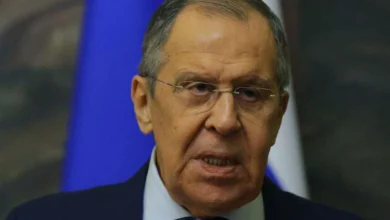
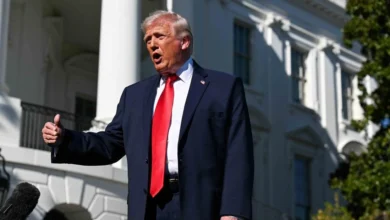
Mohsen Rezaei, a veteran figure in the Iranian military hierarchy and a newly appointed senior advisor to Mojtaba Khamenei—the son of the Supreme Leader and an increasingly influential figure in Iranian policy—spearheaded the verbal assault. Rezaei, who commanded the Islamic Revolutionary Guard Corps (IRGC) for sixteen years between 1981 and 1997, remains a staunch hardliner whose views often reflect the most aggressive factions within the Iranian establishment. Speaking on state television, Rezaei challenged the presence of the U.S. Navy, questioning the authority of President Donald Trump to act as a "policeman" in the region.
"Mr. Trump wants to be the policeman of the Strait of Hormuz. Is this truly your duty? Is this the task of a supposedly powerful military like that of the United States?" Rezaei remarked during a broadcast on April 15, 2026. He further asserted that American vessels are currently operating within the effective range of Iran’s sophisticated coastal defense systems. "These ships of yours will be sunk by our very first missiles. They have created a great danger for the U.S. military. They are certainly within reach of our missiles, and we possess the capability to destroy them entirely."
The Escalation of the Maritime Blockade
The current crisis stems from a series of aggressive maneuvers in the Persian Gulf that began nearly two months ago. Following a six-week period of active hostilities, which included skirmishes between Iranian fast-attack craft and U.S.-flagged vessels, a fragile two-week ceasefire was established. However, that peace proved ephemeral. When Iran attempted to assert unilateral control over the Strait of Hormuz—the world’s most important oil transit chokepoint—President Trump responded by ordering a comprehensive naval blockade of Iranian ports.
The blockade, which was fully implemented earlier this week, has effectively paralyzed Iran’s maritime commerce. According to statements from the U.S. Department of Defense, the blockade has successfully halted both the export of Iranian petroleum products and the import of essential industrial goods. The Pentagon maintains that the blockade is a necessary "defensive measure" to ensure the freedom of navigation for international shipping, which Iran had threatened to disrupt.
The U.S. Fifth Fleet, based in Bahrain, has reportedly increased its presence in the area, deploying additional carrier strike groups and littoral combat ships to enforce the perimeter. This "maximum pressure" tactic at sea is designed to force Tehran back to the negotiating table under terms favorable to Washington, specifically regarding Iran’s nuclear program and its regional missile development.
A Chronology of Diplomatic Failure
The shift from tentative ceasefire to total blockade followed the collapse of high-stakes diplomatic talks in Islamabad, Pakistan. Over the previous weekend, negotiators from both Washington and Tehran met in the Pakistani capital in a last-ditch effort to formalize a long-term truce. These talks were initially viewed with cautious optimism by the international community, as they represented the first face-to-face high-level engagement between the two nations in several months.
However, the "Islamabad Accord" remained unsigned. The primary point of contention centered on Iran’s refusal to halt its uranium enrichment activities. U.S. negotiators demanded a complete cessation of enrichment above 3.67% purity and the dismantling of advanced centrifuges at the Fordow and Natanz facilities. Iran, conversely, insisted on the immediate lifting of all economic sanctions as a prerequisite for any concessions on its nuclear sovereignty.
The deadlock in Islamabad led to an immediate hardening of positions. Upon the return of the American delegation, President Trump authorized the blockade, citing Iran’s "intransigence and continued pursuit of nuclear weapons capability" as a threat to global security. In Tehran, the failure of the talks empowered hardline elements like Rezaei, who has publicly voiced his opposition to any extension of the ceasefire, labeling the pursuit of peace as a secondary concern to the preservation of national pride and military readiness.
The Strategic Significance of the Strait of Hormuz
The Strait of Hormuz is a narrow waterway connecting the Persian Gulf with the Gulf of Oman and the Arabian Sea. At its narrowest point, the shipping lanes are only two miles wide, making vessels highly vulnerable to land-based artillery and anti-ship missiles. Its importance to the global economy cannot be overstated; approximately 21 million barrels of oil pass through the strait every day, representing roughly 21% of global petroleum liquid consumption.
Beyond oil, the strait is a vital artery for Liquefied Natural Gas (LNG), with nearly one-third of the world’s LNG trade originating from producers in the Gulf, such as Qatar and the United Arab Emirates. Any sustained disruption to this corridor would likely trigger a global energy crisis, sending oil prices well above $150 per barrel and causing severe economic contraction in energy-dependent nations in Europe and Asia.
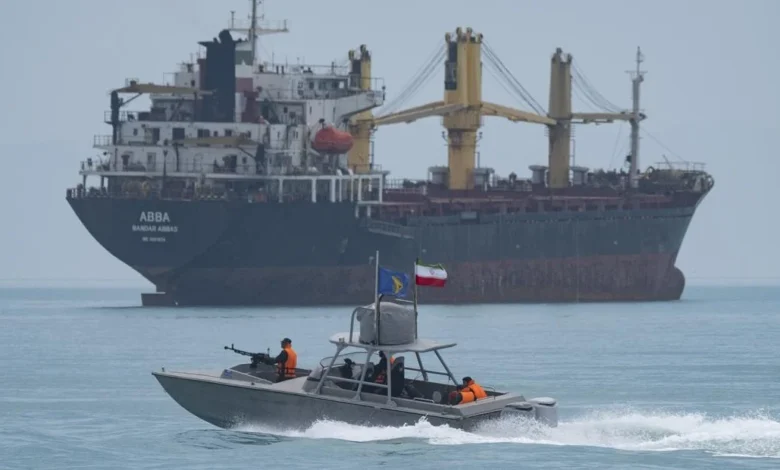
Iran’s strategy of "asymmetric warfare" in the strait involves the use of mines, swarming tactics by small, armed speedboats, and an extensive array of mobile missile launchers hidden along its rugged coastline. Military analysts suggest that while the U.S. Navy possesses overwhelming conventional superiority, the confined geography of the strait provides Iran with a significant tactical advantage in the opening stages of a maritime conflict.
Rhetoric of Hostage-Taking and Economic Ransom
Perhaps the most provocative aspect of Mohsen Rezaei’s recent statements was his suggestion regarding a potential U.S. ground invasion. Rezaei indicated that a land-based conflict would be welcomed by certain factions in Tehran as an opportunity to capture American personnel for financial leverage.
"It would be great if the U.S. launched a ground invasion," Rezaei stated. "We would take thousands of people hostage, and for each hostage, we would demand $1 billion."
While such comments are often viewed as psychological warfare intended for domestic consumption, they resonate deeply with the historical trauma of the 1979-1981 Iran Hostage Crisis. The mention of a specific "ransom" price reflects a cynical view of international relations, suggesting that the IRGC views human captives as a commodity to be traded for the relief of the very sanctions that the U.S. blockade is currently enforcing. This rhetoric has been condemned by international human rights organizations and has further alienated Iran from potential mediators in the European Union.
Broader Implications and Global Reactions
The international response to the escalating threats has been one of deep alarm. In London and Paris, maritime insurance markets have seen premiums for vessels traversing the Persian Gulf skyrocket, with some insurers refusing to cover tankers altogether until the situation stabilizes. This "de facto" closure of the strait through insurance hikes is already impacting global supply chains.
China, a major purchaser of Iranian oil and a key trade partner for many Gulf nations, has called for "maximum restraint" from both sides. Beijing finds itself in a difficult position, as it relies on the stability of the Strait of Hormuz for its energy security but also maintains a strategic partnership with Tehran. Chinese officials have criticized the U.S. blockade as a violation of international law regarding the freedom of the high seas, while simultaneously urging Iran not to take "irreversible actions" that would provoke a full-scale war.
Regional powers, including Saudi Arabia and the United Arab Emirates, have placed their militaries on high alert. These nations are particularly vulnerable to Iranian retaliation, as their oil infrastructure and desalination plants are within range of the same missile systems Rezaei referenced. The possibility of a "proxy war" spilling over into direct regional conflict is a primary concern for the United Nations Security Council, which is scheduled to hold an emergency session later this week.
Analysis of Military Capabilities and Risks
The threat to "sink" U.S. ships is not merely empty bluster. Over the last decade, Iran has invested heavily in its "Anti-Access/Area Denial" (A2/AD) capabilities. The IRGC Navy (IRGCN) operates a fleet of fast-attack craft equipped with Chinese and domestically produced anti-ship cruise missiles, such as the Noor and Qader. These missiles are designed to be launched in large numbers to overwhelm the Aegis Combat Systems found on U.S. destroyers and cruisers.
Furthermore, Iran’s submarine fleet, including Russian-made Kilo-class vessels and indigenous midget submarines, poses a stealthy threat in the shallow, acoustically challenging waters of the Persian Gulf. While the U.S. Navy has spent decades developing counter-swarm and anti-submarine technologies, the sheer volume of a potential Iranian assault remains a formidable challenge.
However, the risks for Iran are equally grave. A direct attack on a U.S. naval vessel would almost certainly trigger a massive retaliatory strike. U.S. doctrine in the region suggests that any attempt to sink a carrier or destroyer would be met with the systematic destruction of Iran’s coastal defenses, air force, and potentially its nuclear and command-and-control infrastructure.
Conclusion: A Path Toward Total Conflict?
The current situation in the Strait of Hormuz represents a classic security dilemma, where defensive actions by one side are perceived as offensive threats by the other, leading to a continuous cycle of escalation. The transition from diplomatic negotiations in Islamabad to a full-scale naval blockade and threats of missile strikes has narrowed the window for a peaceful resolution.
As Mohsen Rezaei’s comments illustrate, the influence of hardline military advisors in Tehran is currently at its zenith, fueled by the economic desperation caused by the blockade and the failure of diplomatic efforts. With the U.S. refusing to blink and Iran doubling down on its "asymmetric" threats, the world watches the narrow waters of the Strait of Hormuz with bated breath, fearing that a single miscalculation or a stray missile could ignite a conflict with global consequences.
The coming days will be critical. If the blockade remains in place without a diplomatic off-ramp, the likelihood of a kinetic engagement in the Persian Gulf increases exponentially. For now, the "policing" of the Strait remains a dangerous game of brinkmanship, with the global economy and thousands of lives hanging in the balance.