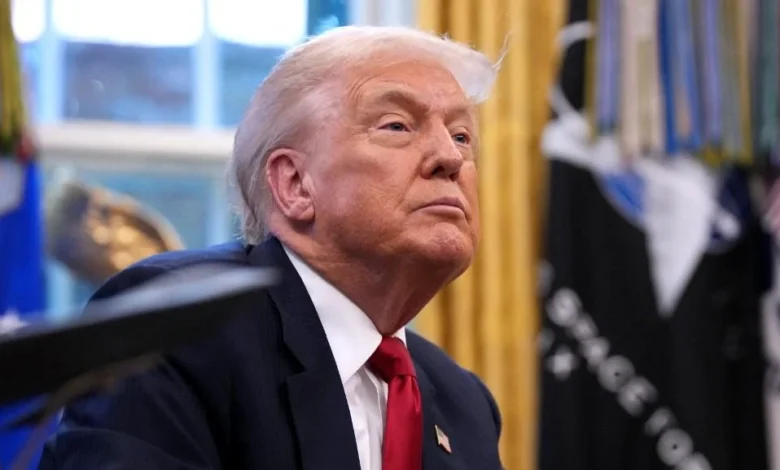
United States President Donald Trump has sparked significant international debate following a series of statements claiming that he has "permanently" reopened the Strait of Hormuz, a critical global maritime artery. In a series of posts on his social media platform, Truth Social, the President asserted that the Chinese government is "very happy" with the move, further claiming that Beijing has agreed to cease weapon shipments to Iran as part of a reciprocal arrangement. These claims, made on Wednesday, April 15, 2026, come amid a period of intense geopolitical friction and a week-long U.S. naval blockade of Iranian ports that had effectively paralyzed maritime traffic in the region.
The President’s assertions have introduced a layer of complexity to an already volatile situation in the Middle East. While Trump framed the reopening as a diplomatic victory and a benefit to global trade, his administration’s military officials continue to maintain that a strict blockade remains in force against Iranian-affiliated vessels. The discrepancy between the President’s rhetoric and the operational reports from the ground has left analysts, allies, and adversaries seeking clarification on the actual status of the world’s most important oil transit point.
The Context of the Hormuz Crisis
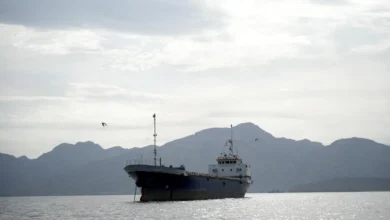
The Strait of Hormuz, a narrow waterway between Oman and Iran, connects the Persian Gulf with the Gulf of Oman and the Arabian Sea. It is the world’s most important oil chokepoint because of the huge volumes of oil that flow through it. According to data from the U.S. Energy Information Administration (EIA), roughly 20 to 30 percent of the world’s total oil consumption passes through the strait daily.
The current crisis escalated in late February 2026, when a series of military engagements broke out involving the United States, Israel, and Iran. During the height of the hostilities, Tehran significantly reduced traffic through the strait, utilizing its coastal missile batteries and naval assets to threaten commercial shipping. In response, the United States moved to secure the area, culminating in the imposition of a formal naval blockade earlier this week. The blockade was designed to isolate Iran economically, preventing the export of crude oil and the import of essential goods, thereby forcing the Islamic Republic back to the negotiating table.
Trump’s Claims of a Strategic Breakthrough
President Trump’s recent communications suggest a pivot from confrontation to a managed opening of the waterway, specifically aimed at satisfying the energy needs of major global powers like China. "China is very happy that I opened the Strait of Hormuz permanently. I did it for them too—and for the world. This situation will never happen again," Trump stated.
Perhaps the most startling aspect of the President’s claim is the alleged quid pro quo involving Chinese military exports. Trump asserted that in exchange for the U.S. ensuring the free flow of energy through the strait, Beijing has committed to halting its defense cooperation with Tehran. "They [China] have agreed to not send weapons to Iran," Trump claimed. If confirmed, such an agreement would represent a massive shift in the geopolitical landscape, as China has historically been one of Iran’s most significant economic and strategic partners.
Furthermore, Trump hinted at a personal diplomatic triumph involving Chinese President Xi Jinping. He noted that the two leaders are scheduled to meet in Beijing in the coming weeks for a high-stakes state visit. "President Xi will give me a big, warm hug when I get there in a few weeks. We are working together smartly, and very well!!" Trump wrote. He concluded his series of posts by contrasting his diplomatic efforts with the alternative of armed conflict, stating, "Isn’t that better than going to war??? BUT REMEMBER, we are very good at war, if necessary—far better than anyone!!!"
Internal Contradictions and Military Reality
Despite the President’s optimistic tone, the U.S. Department of Defense and senior administration officials have provided a more rigid assessment of the situation. A senior administration official, speaking on the condition of anonymity to The Hill, clarified that the naval blockade initiated by Washington remains "fully in effect and successful."
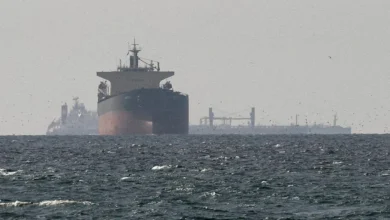
According to U.S. Central Command (CENTCOM), the blockade has been absolute in its execution since its inception. Military reports indicate that no vessels have successfully entered or exited Iranian ports since the enforcement began. The blockade specifically targets ships departing from or arriving at Iranian docks, while the U.S. Navy maintains a presence to ensure that "neutral" commercial traffic—particularly those carrying energy supplies to U.S. allies and partners—can move through the international waters of the strait.
"The President has made it clear that he wants the Strait open to facilitate the free flow of energy, and countries are also welcome to purchase oil from the United States," the senior official stated. This suggests that while the "blockade" targets Iran’s ability to trade, the "opening" the President refers to may be a strategic guarantee that non-Iranian oil shipments—including those destined for China—will be protected by the U.S. Navy. However, the lack of a formal policy document from the White House has left the shipping industry in a state of confusion regarding which vessels are permitted to pass and under what conditions.
China’s Response and Global Energy Implications
As of Thursday, the Chinese Ministry of Foreign Affairs has not officially confirmed the existence of a deal regarding weapon shipments to Iran. Prior to Trump’s social media posts, Beijing had been a vocal critic of the U.S. blockade. Chinese officials had previously labeled the U.S. naval presence as a move that "only worsens confrontation" and threatens global energy security.
China is the world’s largest importer of crude oil, and a significant portion of its supply originates from the Persian Gulf. Any disruption in the Strait of Hormuz poses an existential threat to China’s industrial stability. If Trump’s claim is accurate, it would suggest that China has prioritized its energy security and its broader relationship with the United States over its long-standing strategic ties with Iran.
Industry analysts are watching the situation closely. "If the U.S. is indeed ‘opening’ the strait for Chinese tankers while maintaining a blockade on Iranian exports, we are looking at a two-tiered maritime security regime," said Marcus Thorne, a senior energy analyst at a London-based think tank. "This would effectively make the U.S. Navy the guarantor of Chinese energy supplies in exchange for Beijing’s neutrality or cooperation in the Iranian theater. It is a high-stakes gamble."
Chronology of Recent Events
The timeline leading to this week’s developments highlights the rapid escalation of tensions in the region:
- February 24, 2026: Significant military skirmishes occur in the Persian Gulf and along the Iran-Iraq border involving U.S. and Israeli forces against Iranian-backed groups.
- March 10, 2026: Iran announces "restricted zones" in the Strait of Hormuz, leading to a 40% drop in commercial tanker traffic.
- April 1, 2026: The U.S. warns of "severe consequences" if freedom of navigation is not restored.
- April 12, 2026: The U.S. Navy, supported by regional allies, officially implements a naval blockade of all Iranian ports.
- April 14, 2026: CENTCOM reports that the blockade is 100% effective, with zero unauthorized transits.
- April 15, 2026: President Trump claims the strait is "permanently open" and announces a purported deal with China.
Strategic Analysis: A New Doctrine of Maritime Control?
Trump’s approach appears to blend aggressive military posturing with transactional diplomacy. By blockading Iran while simultaneously claiming to "open" the waterway for China, the administration is attempting to decouple Tehran from its most powerful international supporter.
However, the risks are substantial. A permanent U.S. naval presence tasked with "managing" traffic in the strait could lead to friction with other maritime nations who view the move as an infringement on the United Nations Convention on the Law of the Sea (UNCLOS), which guarantees the right of transit passage through international straits.
Moreover, the "weapons for oil" deal mentioned by Trump remains unverified. If China continues to provide covert support to Iran, the President’s diplomatic narrative could collapse, potentially leading to a renewed escalation. Conversely, if China has indeed agreed to Trump’s terms, Iran finds itself more isolated than at any point in the last decade.
Impact on Oil Markets
Global oil markets have reacted with extreme volatility to the conflicting reports. Following the initial news of the blockade, Brent crude prices surged toward $120 per barrel. However, following Trump’s claims of a permanent reopening and a deal with China, prices saw a sharp but erratic decline as traders weighed the possibility of stabilized supply against the uncertainty of the President’s "permanent" solution.
Shipping insurance premiums for the Persian Gulf remain at record highs. Lloyd’s of London and other major insurers have categorized the region as a "high-risk zone," and many private shipping firms are still hesitant to send tankers through the strait without explicit, written guarantees from both the U.S. Navy and regional coastal authorities.
Looking Ahead to the Beijing Summit
The upcoming meeting between President Trump and President Xi Jinping will likely be the definitive test of the claims made on Truth Social. International observers will be looking for a joint statement or a formal memorandum of understanding that outlines the new rules of engagement in the Middle East.
For now, the Strait of Hormuz remains a flashpoint of global tension. While the President speaks of hugs and cooperation, the reality on the water remains one of warships, blockades, and a delicate balance of power that could shift with a single miscalculation. The world remains on edge, waiting to see if Trump’s "permanent" opening is a lasting peace or merely a temporary lull in a much larger storm.