Donald Trump Publicly Rebukes Italian Prime Minister Giorgia Meloni Over Iran Strategy and Tensions Involving the Papacy

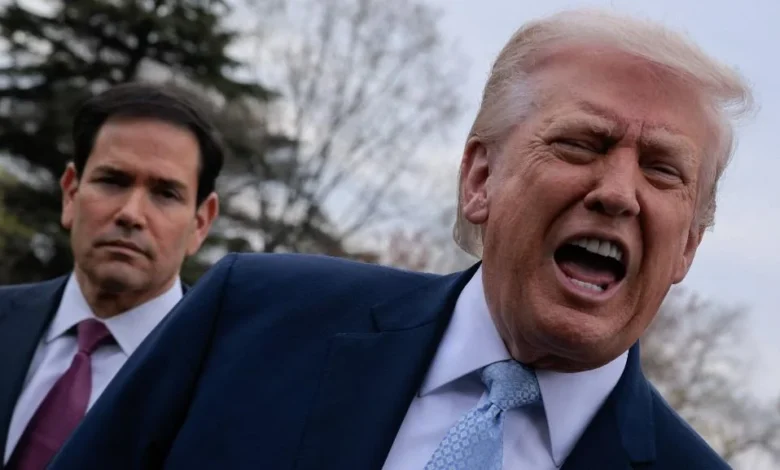
In a significant departure from their previously robust political alliance, former United States President Donald Trump has launched a scathing critique of Italian Prime Minister Giorgia Meloni, signaling a deepening rift between two of the Western world’s most prominent conservative figures. The friction centered primarily on Italy’s refusal to join a proposed military coalition against Iran and a heated disagreement regarding the role of the Vatican in international diplomacy. Speaking in an exclusive interview with the prominent Italian daily newspaper Corriere della Sera on Tuesday, April 14, 2026, Trump expressed profound disappointment in the Italian leader, questioning her political resolve and her commitment to global security.
The criticism marks a turning point in a relationship that has, since Meloni took office in October 2022, been characterized by mutual admiration and shared ideological goals. Trump, who has frequently praised Meloni’s "America First"-style approach to Italian sovereignty, told the publication that he was "shocked" by her recent foreign policy decisions. He suggested that her reluctance to engage in a more aggressive stance toward Tehran was a sign of weakness rather than strategic caution. The rhetoric used by Trump—asserting that he "thought she had courage" but was "wrong"—suggests a personal sense of betrayal that could have lasting implications for the Transatlantic alliance and the unity of right-wing movements across the globe.
The Genesis of the Conflict: A Religious and Diplomatic Clash
The immediate catalyst for this public falling out appears to be a disagreement over the conduct of Pope Leo XIV. In recent months, the Pontiff has become an outspoken advocate for an immediate cessation of hostilities in the Middle East, frequently calling for diplomatic de-escalation in regions where Trump has advocated for "maximum pressure" or direct military intervention. Trump’s previous criticisms of the Pope—whom he characterized as being out of touch with the realities of modern security threats—were met with a sharp rebuttal from Rome.
One day prior to Trump’s interview, Prime Minister Meloni issued a statement defending the Papacy, describing Trump’s attacks on Pope Leo XIV as "unacceptable." Meloni, whose political identity is deeply rooted in traditional Catholic values and the defense of Italian heritage, positioned herself as a protector of the Holy See’s moral authority. This defense, however, incensed Trump, who used his interview with Corriere della Sera to flip the script, labeling Meloni’s own foreign policy as the truly "unacceptable" element of the equation.
Trump’s grievances extend beyond the religious sphere into the realm of nuclear proliferation. He accused the Italian Prime Minister of being indifferent to the possibility of Iran obtaining a nuclear weapon. According to Trump, Meloni’s refusal to support a military front against Iran suggests a lack of foresight regarding the existential threat a nuclear-armed Tehran would pose to Europe and the Mediterranean.
Italy’s Energy Dilemma and the Geopolitics of Oil
Central to the disagreement is the economic reality of Italy’s energy sector. During the interview, Trump pointed out that Italy remains heavily reliant on oil and gas imports from the Middle East. He argued that it is in Italy’s direct national interest to ensure that Iran does not dominate the region or disrupt the flow of maritime trade through the Strait of Hormuz. Trump’s logic posits that by refusing to participate in a military coalition, Italy is essentially "free-riding" on the security provided by the United States while remaining vulnerable to the whims of the Iranian regime.
Data from the Italian Ministry of Environment and Energy Security indicates that as of late 2025, Italy still imported a significant percentage of its crude oil from the Middle East and North Africa. While Rome has made strides in diversifying its energy sources—largely in response to the volatility caused by the war in Ukraine—the Mediterranean nation remains sensitive to any disruptions in the Persian Gulf. Trump leveraged this fact to argue that Meloni is failing to protect her own citizens’ economic stability by avoiding a confrontation with Iran.
However, analysts in Rome suggest that Meloni’s stance is precisely the opposite. From the Italian perspective, a full-scale war with Iran would lead to a catastrophic spike in global oil prices and a potential refugee crisis in the Mediterranean, both of which would be devastating for the Italian economy and Meloni’s domestic standing. By acting as a mediator rather than a combatant, Meloni has attempted to balance Italy’s loyalty to the U.S. with the practical necessity of maintaining regional stability.
A Timeline of the Trump-Meloni Relationship
To understand the weight of this fallout, one must look at the chronology of their political partnership:
- October 2022: Giorgia Meloni is sworn in as Italy’s first female Prime Minister. Trump praises her victory as a win for "patriotism" and "common sense."
- 2023-2024: Meloni visits Washington multiple times, positioning herself as a bridge between the European Union’s institutional leadership and the "MAGA" movement in the U.S. She successfully navigates the complexities of being a pro-NATO leader while maintaining support from her right-wing base.
- Late 2025: Tensions rise in the Middle East. The U.S. begins rallying allies for a potential "pre-emptive" strike on Iranian nuclear facilities. Italy, along with France and Germany, expresses significant reservations.
- Early 2026: Pope Leo XIV issues a series of encyclicals and public addresses calling for peace, which Trump interprets as an obstruction to his foreign policy goals.
- April 13, 2026: Meloni publicly rebukes Trump’s comments on the Pope.
- April 14, 2026: Trump retaliates in the Corriere della Sera interview, marking the most significant public rift between the two leaders to date.
Official Reactions and Domestic Fallout
The reaction in Italy has been swift and divided. Members of Meloni’s "Brothers of Italy" (Fratelli d’Italia) party have largely closed ranks around the Prime Minister, emphasizing that Italy’s foreign policy is dictated by Rome, not Washington. "Italy is a sovereign nation and a loyal ally, but loyalty does not mean blind obedience," said one senior official within the Italian cabinet. "The Prime Minister’s duty is to the Italian people and the stability of our region."
Conversely, the Italian opposition, led by the center-left Democratic Party, has used the spat to highlight the perceived dangers of Meloni’s alignment with Trump-style populism. Opposition leaders argued that Meloni’s "flirtation" with Trump has left Italy isolated, caught between a volatile American ally and a skeptical European Union.
In the United States, the comments have resonated within the Republican Party. While many of Trump’s staunchest supporters agree that Europe must do more for its own security, some foreign policy hawks expressed concern that alienating Meloni—one of the few European leaders who was genuinely sympathetic to the Trump administration’s goals—could leave the U.S. with no reliable partners on the continent.
Implications for Transatlantic Security
The public nature of this dispute has broader implications for NATO and the G7. Italy has traditionally played a vital role in Mediterranean security and serves as a host to several key U.S. military bases, including Aviano Air Base and the U.S. Sixth Fleet in Naples. If the relationship between the two leaders continues to deteriorate, it could complicate military cooperation and intelligence sharing regarding Middle Eastern threats.
Furthermore, this rift highlights a growing ideological divide within the global right. While both Trump and Meloni share a focus on national sovereignty, border control, and traditional values, their views on the mechanics of global power are diverging. Meloni’s approach is increasingly defined by "Atlanticism"—a belief in strong, institutional ties between Europe and North America—whereas Trump’s approach remains rooted in a transactional "America First" philosophy that views traditional alliances as potentially burdensome.
Expert Analysis: The Risks of Escalation
Foreign policy experts suggest that Trump’s remarks are a calculated attempt to pressure Meloni into submission. By questioning her "courage," Trump is appealing to the very traits that made Meloni popular with her base. However, this tactic may backfire. Unlike other European leaders who have folded under American pressure, Meloni has built her career on a reputation for being unyielding.
"Trump is applying a domestic political playbook to a sensitive international diplomatic issue," said Dr. Elena Rossi, a senior fellow at the Institute for International Affairs in Rome. "By attacking the Pope, he touched a nerve in Italy that transcends politics. By attacking Meloni’s courage, he is forcing her to choose between her international standing and her domestic credibility. In the current Italian climate, she will choose domestic credibility every time."
The nuclear issue remains the most volatile variable. If Iran continues to advance its enrichment capabilities, the pressure on Italy and other European nations to take a definitive stand will only increase. Whether that stand involves the military action Trump desires or the continued diplomacy Meloni advocates will likely be the defining question of the 2026-2027 geopolitical calendar.
Conclusion: A Fragile Future
As of mid-April 2026, the "special relationship" between Donald Trump and Giorgia Meloni appears to be in a state of deep freeze. The interview with Corriere della Sera has set a new tone for U.S.-Italy relations, one characterized by public recrimination rather than private negotiation. For Meloni, the challenge will be to maintain her role as a European power broker without losing the support of the American right-wing movement she once championed. For Trump, the risk is the further alienation of a key European ally at a time when global tensions are reaching a breaking point.
The world now watches to see if this is a temporary tactical disagreement or a permanent schism in the conservative international order. With the Middle East on the brink and the moral authority of the Vatican hanging in the balance, the stakes for both leaders—and their respective nations—could not be higher. The coming weeks will likely see a flurry of diplomatic activity as both sides attempt to manage the fallout of an interview that has fundamentally reshaped the political landscape.